Several thousand people may have died in Russian heatwave, says scientist
Moscow, a metropolis of over 10 million people, suffered from intense heat since late June, with day temperatures sometimes nearing 40C (104F).
The crisis shrivelled a third of Russia’s grain crop, shaved billions off this year’s economic growth and killed at least 54 people in wildfires. The heat subsided yesterday.
Citing a report by the Moscow Registry Office, Boris Revich, a senior demography and ecology researcher at Russia’s Academy of Sciences, said 5,840 more Muscovites had died in July than in the same month last year.
Revich said he believed the overwhelming majority of these additional deaths had been caused by the fierce heatwave.
“This situation was absolutely easy to forecast,” he told a news conference. “The only thing I blame myself for ... is that my estimate (of deaths) was too low at the start of the heat.
“But we have never had experience estimating such monstrous heat, merely because we had never had such heat before.”
The State Statistics Committee (Goskomstat) is due to publish its data on the deaths on Friday, Revich said. Death rate figures for August will be available in September.
Breaking official silence over the adverse effects of the heat and smoke from forest fires which blanketed Moscow since late July, the head of Moscow’s health department, Andrei Seltsovsky, said on August 9 that deaths had almost doubled to 700 a day, with heat being the main killer.
Revich called the data provided by the Moscow Registry Office as “absolutely reliable,” adding he believed most of those who had died from heat were elderly people suffering from cardio-vascular and respiratory diseases.
He said that globally, Russia’s heat crisis was not a unique phenomenon, highlighting that in 2003 45,000-50,000 people had died in a severe heatwave in the European Union.
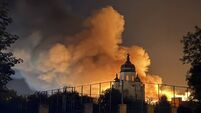
A total of 27,724 fires have been detected in Russia since July, Emergencies Ministry department chief Yuri Brazhnikov told reporters.
He said the fires had affected 134 villages and towns and destroyed 2,000 homes.

CONNECT WITH US TODAY



Be the first to know the latest news and updates