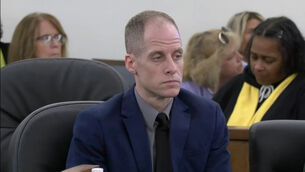
Oil firms turn on BP at Congress hearing
But members of Congress chastised the companies, saying they are no better prepared to avoid an environmental catastrophe than BP was when its well exploded, unleashing millions of barrels of crude.
The executives moved to isolate BP, saying the accident could have been prevented.
As they waited to testify at a House hearing, the chairman of a Congressional panel, Henry Waxman, asserted that the companies’ spill response plans amounted to “paper exercises” that mirrored BP’s failed plan. Their strategies to plug a spill deep beneath the sea are the same failed strategies that have stymied BP, the California Democrat said.
The other companies “are no better prepared to deal with a major oil spill than was BP,” said Waxman, setting the tone for a tense hearing.
One lawmaker after another expressed frustration at BP’s inability to stop oil gushing from its stricken well as the chief executives representing ExxonMobil, Chevron, ConocoPhillips and Shell – as well as BPAmerica – sat shoulder to shoulder at the witness table.
One oil industry official, speaking on condition of anonymity, said Shell, Exxon Mobil and the other oil companies had no choice but to turn against BP at the hearing and demonstrate how they operate more safely than BP. “They shouldn’t be punished for BP’s actions,” the official said.
Exxon Mobil’s Tillerson said if oil companies properly designed offshore oil wells, built in layers of protective redundancy, properly inspected equipment and focused on safety, then “tragic incidents like the one we are witnessing in the Gulf of Mexico today should not occur”.
The House Energy and Commerce Committee hearing unfolded as President Barack Obama was on the Gulf coast for the second day and walked on a beach near Pensacola, Florida, as onlookers chanted “Save our beach, save our beach”. Obama planned to address the nation later last night on the oil spill from the Oval Office.
The House hearing marked the first time that the chief executives of the major oil companies – all leaders in deep-water drilling in the Gulf – were called before Congress since the April 20 BP explosion. The accident unleashed the nation’s worst oil spill. The government has estimated that as much as 2 million gallons of oil a day may be flowing into the Gulf.
On Monday night, Waxman’s committee released documents that showed BP made a series of money-saving shortcuts and blunders that dramatically increased the danger of a destructive spill from a well that an engineer ominously described as a “nightmare” six days before the April blowout.
Investigators found that BP was badly behind schedule on the project and losing hundreds of thousands of dollars with each passing day, and responded by cutting corners in the well design, cementing and drilling efforts and the installation of key safety devices.

CONNECT WITH US TODAY



Be the first to know the latest news and updates