Blasts rock Baghdad as ‘Chemical Ali’ hanged
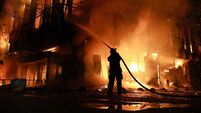
At least 37 people were killed and more than 104 injured, security officials said.
The blasts – coming in a span of about 15 minutes in downtown Baghdad – came shortly before state television announced that Ali Hassan al-Majid had been hanged.
There was no claim of responsibility for the attacks in Baghdad, about six weeks after a series of blasts killed 127 and brought outcry against Iraq’s government for repeated security lapses as US troops withdraw.
Government spokesman Ali al-Dabbagh said the latest bombings “represent an extension” of the activities of insurgents linked to Saddam’s regime.
The first explosion struck at about 3.40pm local time in the Sheraton Hotel car park, toppling walls protecting the site and damaging buildings along the Abu Nawas esplanade across the Tigris River from the Green Zone.
Two other blasts followed minutes later, striking near the Babylon Hotel and Hamra Hotel, which is popular with Western journalists and foreign security contractors.
According to initial tallies, 15 of the victims were at the Hamra, 14 at the Sheraton, and the remaining eight died at the Babylon, including two policemen.
Iraqi police sealed the area and Iraqi helicopters circled overhead.
At the Hamra, two men in a car opened fire on guards at the hotel checkpoint, a third police official said. The guards took cover and returned fire when the car exploded, he said.
Baghdad’s top military spokesman, Maj Gen Qassim al-Moussawi said suicide bombers were involved in all three attacks.
In Washington, Secretary of State Hillary Clinton condemned the attacks, saying they were an attempt to disrupt the March 7 parliamentary elections.
“We unfortunately believe there will be continued efforts by the terrorists, by al-Qaida in particular, to try to upend the commitment of the Iraqi people to a democratic future,” Clinton said.
The explosions came hours after an Iraqi security official defended a bomb- detecting device that Britain banned for export to Iraq because of questions about whether it works.
Meanwhile, government spokesman al-Dabbagh confirmed the execution of “Chemical Ali”, but did not give other details.
The execution took place about a week after he was sentenced to death for the poison gas attacks that killed more than 5,000 Kurds in the Kurdish town of Kurdish town of Halabja in 1988.