‘I had questions about what his beliefs were’
But even people who worried his increasingly strident views were clouding his ability to serve the US military could not predict the murderous rampage of which he now stands accused.
In the months leading to Thursday’s shooting spree that left 13 people dead and 29 others wounded, Hasan raised eyebrows with comments that the war on terror was “a war on Islam” and wrestled with what to tell fellow Muslim solders who had their doubts about fighting in Islamic countries.
“The system is not doing what it’s supposed to do,” said Dr Val Finnell, who complained to administrators at a military university about what he considered Hasan’s “anti-American” rants. “He at least should have been confronted about these beliefs, told to cease and desist, and to shape up or ship out.”
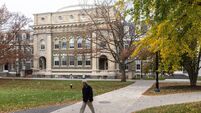
Finnell studied with Hasan from 2007-2008 in the master’s programme in public health at the military’s Uniformed Services University of the Health Sciences in Bethesda, Maryland, where Hasan persistently complained about perceived anti-Muslim sentiment in the military and injected his politics into courses where they had no place. “In retrospect, I’m not surprised he did it,” Finnell said of the shootings. “I had real questions about what his priorities were, what his beliefs were.”
Hasan’s family described a man incapable of the attack, calling him a devoted doctor and devout Muslim who showed no signs that he might lash out. Still, a picture has emerged of a man who was opposed to the wars in Iraq and Afghanistan, was trying to elude his deployment to Afghanistan and had struggled in his work as an army psychiatrist.
“I told him, [There’s] something wrong with you,” Osman Danquah, co-founder of the Islamic Community of Greater Killeen, said. “I didn’t get the feeling he was talking for himself, but something just didn’t seem right.”
Danquah assumed the military’s chain of command knew about Hasan’s doubts, which had been known for more than a year to classmates at the Maryland graduate military medical programme.
Others recalled a pleasant neighbour who forgave a fellow soldier charged with tearing up his “Allah is Love” bumper sticker. A superior officer at Darnall Army Medical Centre at Fort Hood, Col Kimberly Kesling, has said Hasan was quiet with a strong work ethic who provided excellent care for his patients.
Twice this summer, Danquah said, Hasan asked him what to tell soldiers who expressed misgivings about fighting fellow Muslims.
Danquah said he was disturbed by Hasan’s persistent questioning but never told anyone at the sprawling Army post about the talks, because Hasan never expressed anger toward the Army or indicated any plans for violence.
“If I had an inkling that he had this type of inclination or intentions, definitely I would have brought it to their attention,” he said.

CONNECT WITH US TODAY



Be the first to know the latest news and updates