Truce on shaky ground after Israeli strike on refugee camp

ISRAELI troops blew up two apartment buildings in a Gaza Strip refugee camp yesterday, just hours after undercover forces killed the brother of a radical Palestinian leader during an arrest raid in the West Bank.

Truce on shaky ground after Israeli strike on refugee camp

The Israeli strikes, which came a day after a Hamas sniper killed an Israeli soldier, further undercut shaky attempts to reach a partial truce. However, officials from both sides said yesterday they were not walking away from the deal.

In the agreement reached earlier this week, Israeli soldiers withdrew from the West Bank town of Bethlehem and were to pull back from positions in Gaza, in exchange for Palestinian efforts to maintain calm in the test areas.

Militant Palestinian groups have rejected the plan and said they would carry out more attacks on Israelis. On Tuesday, a Hamas sniper firing from the Khan Younis refugee camp killed an Israeli soldier guarding nearby Jewish settlements, in what the Islamic militant group said was an attempt to disrupt the truce.

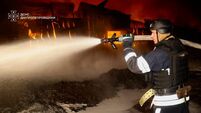
In response, Israeli troops backed by tanks and helicopters blew up a five-storey and a six-storey building in Khan Yunis, in what the army said was an operation to prevent gunmen from firing on nearby Jewish settlements.

A 24-year-old Palestinian was killed when he was struck in the head and back by shrapnel, hospital officials said.

The explosion also damaged eight nearby smaller homes, making them uninhabitable, Khan Younis municipal officials said. In all, 100 people were made homeless 80 had lived in the smaller homes and 20 in the apartment blocks, the officials said. The two apartment buildings had been largely abandoned in recent months after coming under frequent fire during Israeli raids.

In the past two years of fighting, Israeli troops have demolished 75 houses in the part of Khan Younis that abuts the Jewish settlements, municipal officials said. The camp is a stronghold of Palestinian militiamen.

The Gaza raid came hours after Israeli undercover forces shot and killed Mohammed Saadat, brother of Ahmed Saadat, leader of the Popular Front for the Liberation of Palestine, in the West Bank city of Ramallah.

Six of the eight main Palestinian towns and cities in the West Bank remain under Israeli control, after a large-scale invasion in mid-June that followed back-to-back suicide bomb attacks in Jerusalem.

Meanwhile, a Palestinian painter who worked at Jerusalem's Hebrew University has been arrested on suspicion he planted a bomb at the student cafeteria that killed nine people last month.

The man was part of a 15-member cell run by the Islamic militant group Hamas, said security officials.

In addition to the July 31 university blast, the group is suspected of having carried out several other attacks, including a suicide bombing at a Jerusalem cafe in March that killed 11 Israelis and an explosion at Israel's largest fuel depot.

Several of the suspects are Jerusalem residents who carry Israeli identity cards that allow them free movement, security officials said.

The house painter was identified as Mohammed Oudeh, from Jerusalem's Silwan district.

Oudeh received the explosives from accomplices in the West Bank town of Ramallah, security officials said. On the night before the attack, he jumped over the university's fence and hid the explosives under a bush.

The next morning, he walked through the main gate with his staff permit, picked up the bomb and planted it in the cafeteria. He then left, and detonated the explosives with a mobile phone from a distance, the officials said.

The next day, Oudeh was called in to work by his unsuspecting boss, an Israeli contractor, the officials said.

The cell was responsible for attacks that killed 35 people in recent months.

More in this section

Cookie Policy Privacy Policy Brand Safety FAQ Help Contact Us Terms and Conditions

© Examiner Echo Group Limited