Allies dig in for long haul
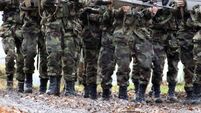
Faced with much stronger than expected opposition from regular and irregular forces loyal to Iraqi President Saddam Hussein, US troops dug in south of Baghdad, apparently in no rush to assault the Iraqi capital until air strikes and artillery had ground down its defenders.
Round-the-clock air strikes hammered Baghdad as the US military sought to break the elite Republican Guard units entrenched in the sprawling city's outskirts.
As night fell on Baghdad, a huge fire raged close to the city centre.
It looked as though Iraqis had set alight an oil-filled trench, sending plumes of thick, black smoke billowing into the sky in a bid to hamper US and British air strikes.
In Washington, the US military said it had bombed the main training site for Iraqi Fedayeen paramilitary forces in eastern Baghdad, a presidential palace, an intelligence complex and surface-to-air missile sites.
In other developments, British Royal Marine commandos captured an Iraqi general and killed another senior officer in clashes with Iraqi paramilitary units south of Basra yesterday, a British military spokesman said.
But British troops have still not tried to capture the southern city of 1.5 million, where more than a week of fighting has disrupted food and electricity supplies and forced many civilians to flee the city.
And as the ground war entered its 12th day today, US Defence Secretary Donald Rumsfeld rejected criticism that he launched the war with insufficient ground strength, but predicted that Iraqi resistance would stiffen even more as US troops approached Baghdad.
Mr Rumsfeld, facing scrutiny over his influence on a war plan that involves far fewer troops than the number used in the 1991 Gulf War, flatly denied reports that he had rejected advice from Pentagon planners for substantially more men and armour.
"That is not true," he said. "I think you'll find that if you ask anyone who's been involved in the process from the Central Command that every single thing they've requested has in fact happened."
General Richard Myers, head of the US Joint Chiefs of Staff, said the campaign was going to plan, with US and British forces already in control of 40% of Iraq, but he gave a clear signal that there would be no swift ground assault on the Iraqi capital.
The aim before going in, he said, was to isolate the Iraqi leadership and cut it off from the rest of the country.
"We're not going to do anything before we're ready," Gen Myers said.
US commander General Tommy Franks, who is bringing an extra 100,000 troops to the Gulf in April, insisted there was no "operational pause" in the US and British invasion.
But US officers and soldiers in units south of Baghdad said they had orders to dig in for at least two weeks to give US air power and artillery a chance to pound Iraqi defences. Saddam has vowed to make a bloody stand and inflict huge losses on invaders in street fighting.
set out in detail how the abrasive Mr Rumsfeld repeatedly overruled the generals who it is claimed wanted to send a much larger force than the 125,000 In an article published today in the New Yorker Magazine, the veteran American journalist Seymour Hersh purports to troops currently in Iraq.
Citing Pentagon insiders and high-level intelligence officials, it says Mr Rumsfeld had also overruled the coalition commander Gen Franks, when he urged delay while the 20,000 troops supposed to open up a northern front from Turkey were re-deployed following Ankara's refusal to allow them access to its bases.
Finally, it says, Mr Rumsfeld underestimated the strength of the Iraqi resistance, and that coalition forces had become bogged down and left hanging on with dwindling stocks of ammunition, hoping reinforcements would arrive in time.
"He thought he knew better. He was the decision -maker at every turn," the article quotes an unidentified senior Pentagon planner as saying.
"This is the mess Rummy put himself in because he didn't want a heavy footprint on the ground."


CONNECT WITH US TODAY



Be the first to know the latest news and updates