Mass graves discovered in Iraq as police reappear to quell mayhem
US President George W Bush said it was only a matter of time before American troops find the weapons of mass destruction whose alleged existence he used to justify the war on Iraq.
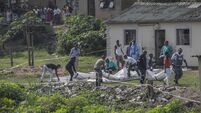
Grislier evidence of the nature of Saddam's iron-fisted policies emerged at a farmland site near the Shi'ite Muslim holy city of Najaf, where Iraqis clawed through earth to uncover a score more bodies, some with blindfolds and hands tied, of men and women apparently executed during a 1991 Shi'ite uprising.
Bullet casings, combs, coins, watches lay among them. Some had identity cards in their rotting clothes. Yellow twine coated with a coppery crust, possibly blood, had bound their wrists.
"This is one, this is one, this is one," said an Iraqi man who helped dig, pointing out bones and clothes at the site about 13 miles north of Najaf, which lies south of Baghdad.
Asaad al-Taee, an official of a Shi'ite faction helping in the excavation, said 25 corpses had been dug up there on Saturday. Ten of them had been identified.
Iraqis uncovered another mass grave on Saturday near the ancient city of Babylon, digging up dozens of bones wrapped in stained blankets and skulls with rectangles cut out of the back.
"Some of the skulls appear to have been cut open, maybe they were experimenting with the prisoners. Some were executed, you can see bullet holes," said US Lieutenant David Lewis.
Tens of thousands of Shi'ites and Kurds are thought to have been killed when Saddam's forces crushed revolts after US-led forces drove Iraqi troops from Kuwait in the 1991 Gulf War.
Mr Bush's father, then president, had encouraged Iraqis to rise against Saddam, but did nothing to help them when they did so.
With the former Iraqi president now overthrown, US and British invasion forces are wrestling with the mayhem arising from the collapse of his army and government.
Hundreds of unarmed Iraqi police returned to Baghdad streets on Sunday under the supervision of US forces.
But in a reminder of the mammoth task that lay ahead, looters also made a comeback, making forays into a presidential palace to scavenge whatever was left behind from earlier bouts of looting.
Thieving and lawlessness erupted in Baghdad on April 9, the day US troops toppled Saddam. Security in the volatile city of five million has improved since then, but is far from complete.
Traffic police were back in their familiar uniforms of blue trousers and white shirts yesterday, patrolling in police cars.
Despite the effort, armed looters emerged from Saddam's Republican Palace in central Baghdad, taking lamps, paintings and even a badly damaged vintage car.
A 10-nation stabilisation force led by the US, Britain and Poland plans to deploy in Iraq in May.