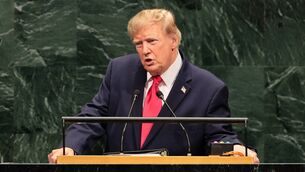
US official denies political spin for war
"This suggestion that we said to them, 'This is what we're looking for, go find it' is precisely the inaccuracy that we are here to rebut," said Doug Feith, under-secretary of defence for policy.
He was referring to reports that members of a small group of Defence Department officials working outside of normal intelligence circles were directed in 2001 to find evidence of connections between Iraq and al-Qaida and weapons of mass destruction.
The administration cited those links as primary justification for invading Iraq and toppling the regime of Saddam Hussein.
In light of the fact that no weapons of mass destruction have been found yet in Iraq, some now question whether the administration exaggerated the strength of its evidence.
Mr Feith, who rarely appears before reporters, said people had misconstrued the purpose of the group and the result of its work, which he said began after the September 11, 2001, terrorist attacks and ended in August 2002.
Although the group concluded there were links between the Iraqi government and Osama bin Laden's al-Qaida network, this was "incidental" to its main effort, Mr Feith said.
"The main thing that the team produced was, it helped educate a lot of people about the fact there was more cooperation and interconnections among these terrorist organisations and state sponsors than many people had appreciated before," he added.
Mr Feith said the group's work helped the Pentagon fashion a strategy for fighting a global war on terrorism.
He denied that this effort reflected dissatisfaction among Pentagon officials with the analytical work of the CIA.

CONNECT WITH US TODAY



Be the first to know the latest news and updates