Trinity College Dublin: A bulwark of Empire at the centre of the 1916 Rising
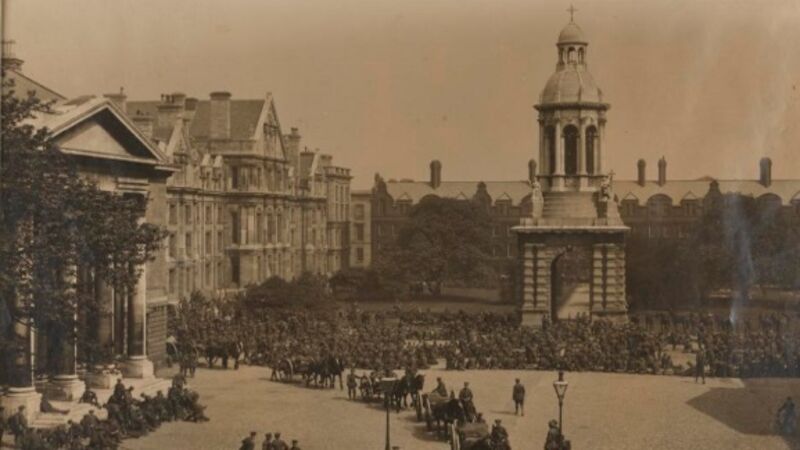
In the aftermath of the Rising, Major G A Harris, Adjutant of the Dublin University Officers’ Training Corps (OTC), was tasked with writing a report for the military authorities on the defence of Trinity College Dublin (TCD) during the period April 24 to May 6, 1916.
The OTC was established in 1910 and offered students specialised military training, as well as the possibility of a fast-track to commissions in the regular army.
Harris had been prevented from travelling to the college during this period, so he relied on reports written at his request by OTC members and others who had been present. These reports recount some preparatory activities: the porters locked and secured the gates; OTC members were armed with service rifles from the OTC stores and put on guard duty; and provisions were requisitioned from the college co-op.
Early on the morning of Tuesday, April 25, the OTC headquarters was transferred from near the Lincoln Place gate to the front of college. From there, snipers had a view of Dame Street, College Green and environs, and rebels passing in either direction were easy targets.
Soldiers of various regiments on leave in the city at the time, as well as some ‘colonial’ soldiers from South Africa, Canada, Australia and New Zealand, augmented the military presence on campus.
On the Tuesday afternoon, the first body of regular soldiers arrived from the Curragh, and on Wednesday night, an advance party of troops from England succeeded in entering the college. It would appear that by Thursday, Trinity College was secured against any rebel incursion, and the following week Major Harris took over command of the OTC there.
For the British, the importance of the successful defence of the college during the rebellion can not be underestimated. In his report, Harris claimed that its “occupation” impeded communication between the two important rebel “storm centres”: the GPO and St Stephen’s Green. The defence of the college also protected the businesses in the surrounding streets from looting, and prevented the Bank of Ireland building in College Green from being occupied.
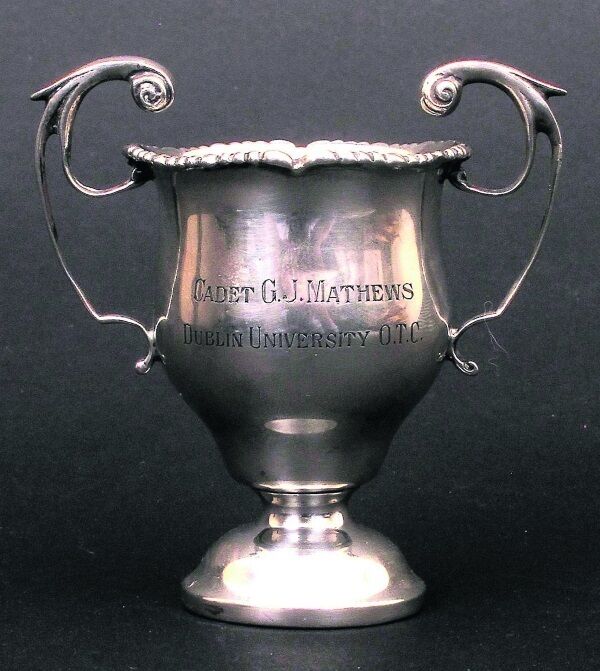
In November 1916, the OTC was presented with two large silver cups by a committee of shop owners from the surrounding area in appreciation of their role in saving their businesses from looting.
Small replicas of these cups were presented to relevant OTC members. That given to Cadet Robert N Tweedy forms part of a collection of OTC-related objects in the manuscripts & archives research library of TCD, along with a rifle, a sword, banners and a swagger stick.
CONNECT WITH US TODAY



Be the first to know the latest news and updates