Comment: Leadership deficit detrimental to FAI handling tricky Israel fixtures
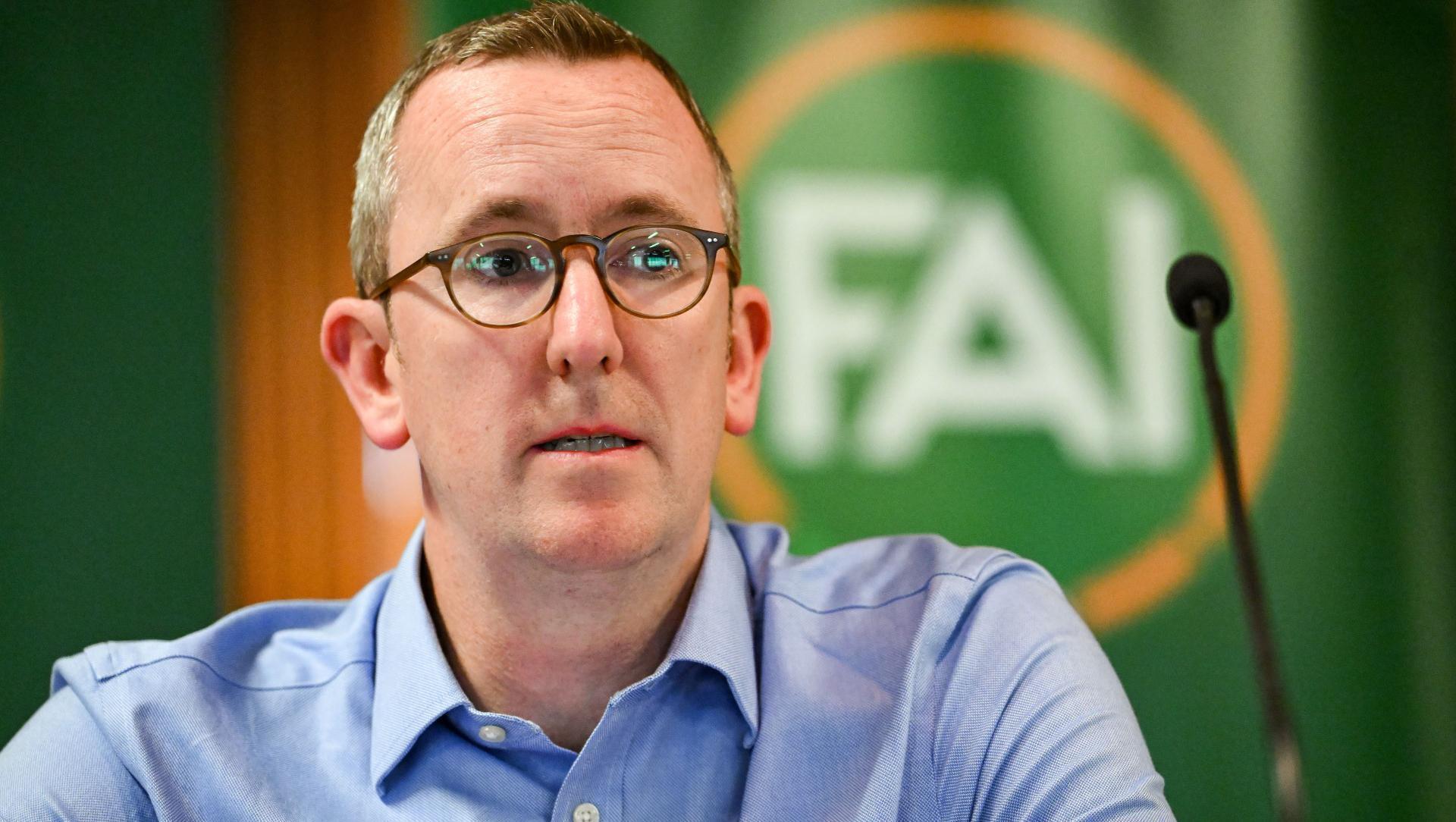
FAI chief executive officer David Courell. Pic: Stephen McCarthy/Sportsfile
A year into his tenure as director of football, John Martin learnt the nuances of officialdom earlier this week.
His declaration that his employers, the FAI, are on record as not wanting to face Israel in the upcoming Uefa Nations League games wasn’t necessarily accurate.
That was the position adopted by the membership 10 months ago when raising and passing a motion seeking Israel’s expulsion by Uefa and Fifa.
It is important to distinguish that the momentum stemmed from a groundswell of solidarity with the oppressed Palestinians from within the association’s General Assembly. Not the leadership.
Notionally, at least, the FAI structure decrees that the board carry out the wishes of their overseers on the 135-strong GA.
One would think seeking the removal of Israeli teams, club and country, from all competitions equates to refusing to engage with them on the pitch.
Yet, when the possibility of facing a nation guilty of genocide became reality at the Nations League draw in February, constitutional intricacies were cited to affirm the board had ultimate authority.
That became apparent when they rejected another motion from their constituents in the summer for a specific boycott of the games on September 27 and October 4.
Not only did they rule it out of order, simultaneously they landed a counter resolution backing their desire to fulfil the fixtures.
Their justification for ignoring their GA, along with a number of resounding polls from lobby groups, boiled down to financial and footballing reasons.
Aside from sacrificing six points, the sanctions are based on supposition.
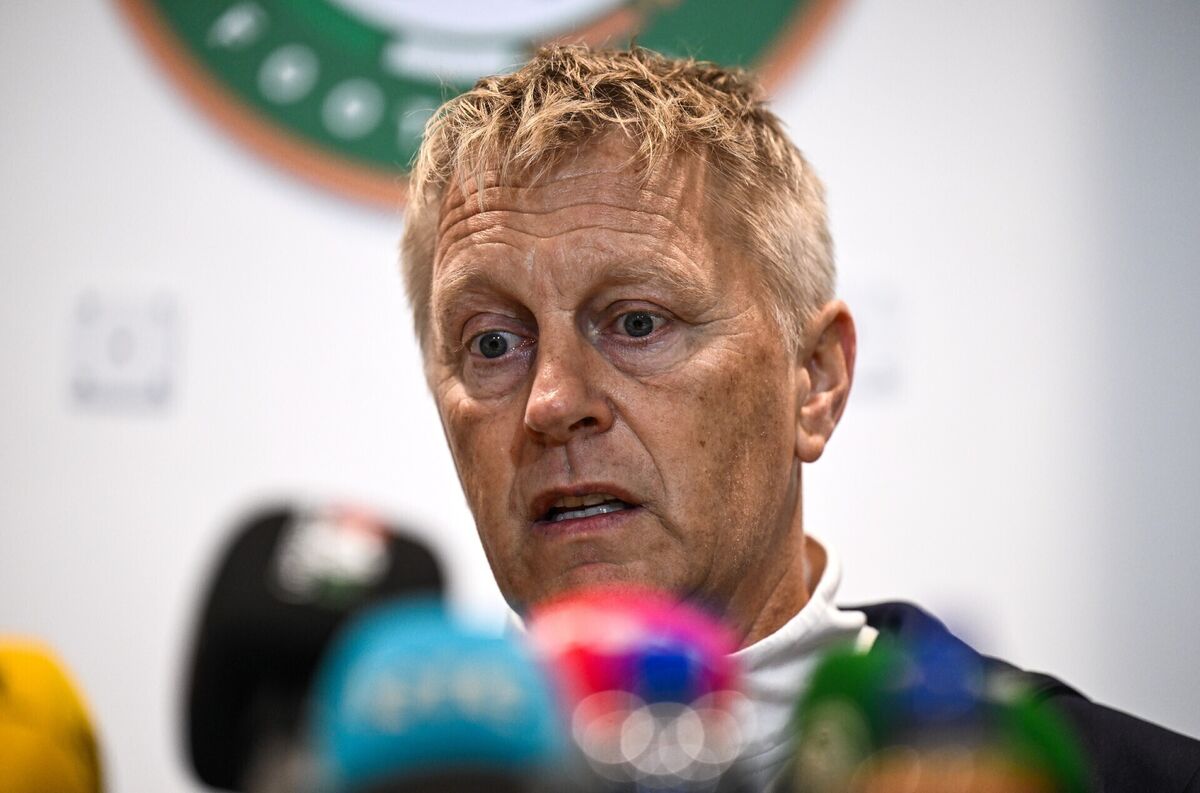
Manager Heimir Hallgrímsson even wondered publicly this week whether the FAI had asked that question of Uefa.
That was a rare deviation from carefully scripted answers within the FAI’s PR offensive this week.
Hallgrímsson’s appearance on Thursday to announce his squad accords with protocol, but it was no coincidence Martin and chief executive David Courell were out front in an attempt to control the messages. It transpired to be damage limitation.
There is, lest we forget, an upcoming return by the FAI to Leinster House on Wednesday week to be quizzed by the Oireachtas committee on sport.
Courell’s reputation as a corporate operator that accompanied his arrival from the English FA has been reaffirmed by his handling and language around this issue which has dominated once Ireland’s World Cup hopes ended in March.
He did, for instance, insist in February that the ‘home’ game would proceed at Lansdowne Road.
“There is no scenario where a game can be taken overseas under Uefa regulations unless it's declared on the formal basis of safety and security,” he said, noting An Garda Síochána had no such concerns.
That immovable scenario shifted once tennis balls rained down during the Qatar friendly but logistical challenges, rather than any advice from the authorities, was presented as the rationale.
The cold, clinical wordage around relegating humanitarian imperatives behind tenuous repercussions might have been tolerable had the supremo expressed a personal opinion. Throughout this episode, up to 10 days out from the fixtures, he has declined to offer that view.
“My own sentiment on it has deepened the longer this has gone on,” he told the Indo Podcast on Wednesday evening without elaborating.
“Although I would have strong views on it, I’m also still the CEO of the association.
“I don’t think it is appropriate for me in my capacity as CEO to be making a decision based on my personal position.
“I have a role, which is to protect the interests of Irish football, and it’s very difficult and something that I’ve had to wrestle with over recent months.”
It was odd, too, that he was unable to confirm whether the sponsors were behind the absence of branding from backdrops, such as the traditional one the manager speaks in front of.
So is the senior executive across all the important decisions? Those now extend to shielding players from customary media duties.
The Monday prior to the first game of a window usually entails a blitz of players speaking. However no player or coach will be available until Wednesday when an appearance, on the eve of the campaign opener in Kosovo, is a mandatory requirement of Uefa.
Séamus Coleman isn’t in this camp to expand on his annoyance expressed in May about being put in this position by the FAI, but it would be nice to hear if his colleagues are likeminded.
Mixed messages won’t disappear just because the football has finally rolled around.
CONNECT WITH US TODAY



Be the first to know the latest news and updates