World Cup water breaks offer lucrative opportunity for broadcasters, including RTÉ
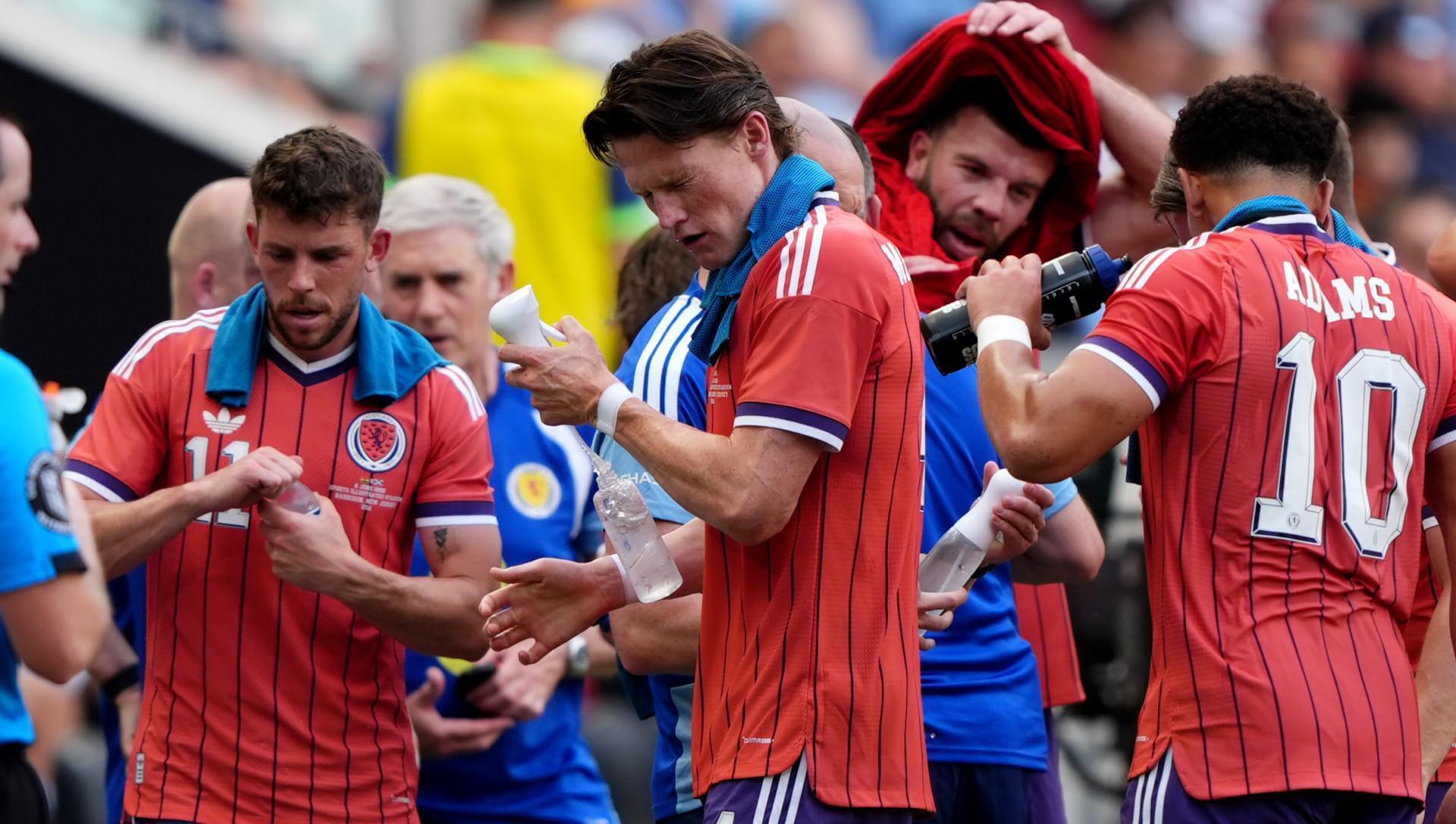
Scotland's Scott McTominay's water bottle comes apart as he sprays himself with water during a cooling break during the international friendly match at the Sports Illustrated Stadium in Harrison, New Jersey. Pic: Andrew Milligan/PA Wire.
RTÉ will carry in-game adverts during World Cup water breaks, the broadcaster has confirmed.
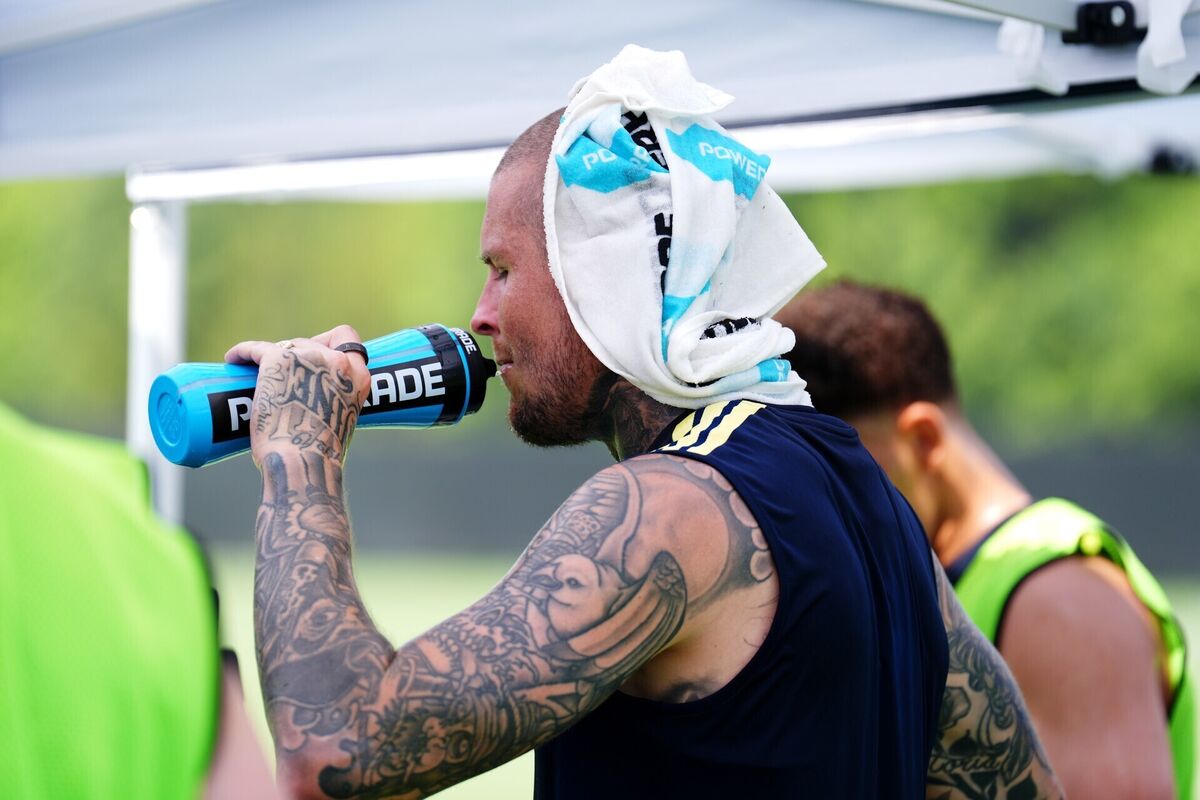
With hot weather due and memories fresh of the scorching 2025 Club World Cup, Fifa has for the first time mandated three-minute hydration breaks in each half for all 104 matches of the World Cup starting Thursday in the U.S., Mexico and Canada.
While players replenish and viewers perhaps grab some snacks, broadcasters have a big new opportunity to give advertisers extra prime-time air and boost their revenues. RTÉ said it intends to air these ads "mainly during top tier games".
The stoppages will be a further instance of the World Cup mirroring American-style sports events packed with commercials and razzmatazz, with a halftime show featuring Colombian singer Shakira at the July 19 final echoing the NFL's Super Bowl event.
FIFA says its approach to water breaks is based on player-welfare concerns, but it could also support the growth of media rights as networks are incentivised to compete by the revenue opportunity.
Read More
Such breaks at a World Cup were first implemented during the Netherlands v Mexico game in 2014 in Brazil when temperatures exceeded 32 degrees Celsius, and were then considered on a match-by-match basis.
Michael Johnson, a research analyst covering the U.S. sports industry for S&P Global, told Reuters the addition of hydration breaks could be “extremely valuable and could potentially command those Super Bowl level prices within that seven to probably nine-million-dollar range”.
Advertisers recognise what exposure they could gain from the World Cup - the Argentina v France final from Qatar in 2022 reached a total of 1.42 billion viewers.
“U.S. viewers are used to the NFL style model, NBA style model four quarters. They're used to in-game breaks. This World Cup is essentially a mirror to those style models,” Johnson said.
Conversely, in European football, leagues like the Premier League are traditionally broadcast on pay-TV networks like Sky, where viewers watch adverts before, at halftime, and after matches.
"I think even subscription broadcasters like Sky in the UK would be very happy to have a little bit more advertising inventory,” said Francois Godard, an independent analyst covering sports industries.
But following this in-game ad model could bring fan backlash in non-U.S. markets from its Americanisation of the event, especially in Europe where most leagues play in winter.
“Soccer is infamous for continuous play. And purists are kind of worried about how this kind of Americanises the game… And create viewer fatigue, more ads could annoy fans, especially if they feel intrusive or excessive,” Johnson added.
Structured breaks could dampen the emotional investment of fans already put off by frequent stops of a few minutes for VAR checks. A Football Supporters’ Association survey in the Premier League found that only 3.3% of fans found their matchday experience improved with VAR.
It is unclear how many of the myriad global broadcasters transmitting the World Cup will cash in on the water breaks to show adverts. Closer to home, ITV has already said it will not show adverts during the hydration breaks due to strict advertising limits set by UK regulator Ofcom.
“ITV is seeing regulatory issues and this is the first thing on their mind, but they also have to meet expectations from viewers. And I am not sure that British viewers would have been very welcoming to more advertising,” Godard said.
Meanwhile, the expanded 48-team tournament, from 32 before, will help FIFA’s total 2026 revenue reach $8.9 billion, with TV broadcasting rights accounting for 44% of the contribution, according to FIFA’s 2026 budget.
FIFA has yet to say whether hydration breaks will be a permanent feature of tournaments going forward, but the 2030 and 2034 editions will be held in Spain, Portugal and Morocco, and Saudi Arabia, all countries where temperatures in the traditional June-July window can climb well above 30 C.
The combination of growing media rights cycles and hydration breaks could lead to competitive bidding between streaming platforms and traditional broadcasters for the 2030 and 2034 tournaments, although in some territories the rights for 2030 have already been awarded.
“You'll see most likely the streaming giants come into play, you know, Apple, Amazon, and especially Netflix, I think will be in the mix,” Johnson said, adding that the World Cup rights deal of Fox Sports, the sports programming division of U.S. media company Fox (FOXA.O), expires after the 2026 tournament.
Streaming giant Netflix has US broadcasting rights for the Women’s World Cup in 2027 and 2031, adding to a live sports portfolio that includes TKO-owned World Wrestling Entertainment and NFL matches.

CONNECT WITH US TODAY



Be the first to know the latest news and updates