Scotland women haven’t considered boycotting Israel qualifiers
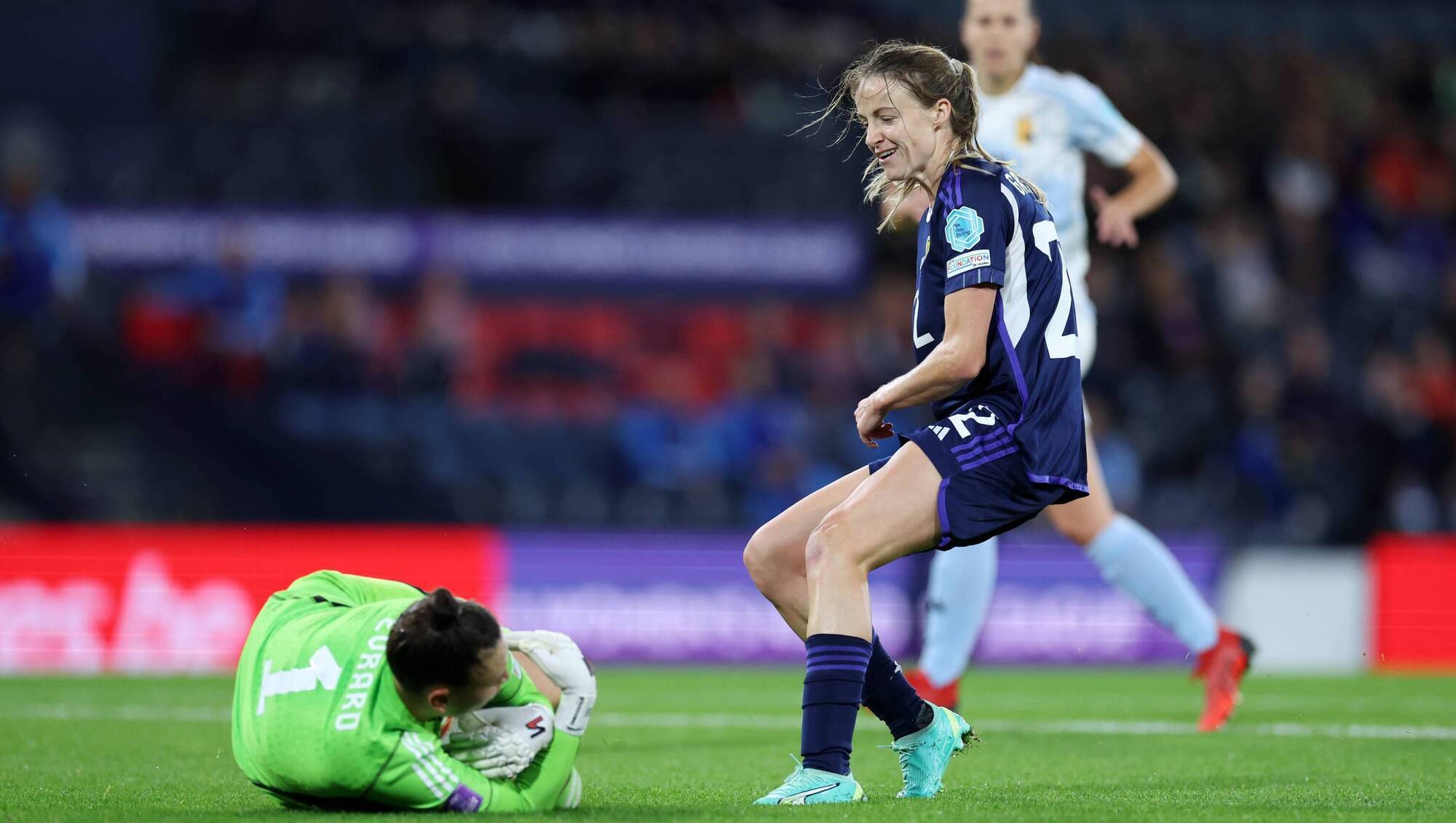
Nicky Evrard of Belgium claims the ball whilst under pressure from Christy Grimshaw of Scotland. Pic: Ian MacNicol/Getty Images
Scotland's women’s players have not discussed boycotting the World Cup qualifying double-header against Israel in Hungary on Friday and Tuesday, according to midfielder Christy Grimshaw.
The Scottish FA moved their home game to Budapest, the same venue which UEFA have approved for Israel to play matches as they won’t permit fixtures in their territory.
The other nations in the group, Belgium and Luxembourg, have also relocated to the Hungarian capital for the series of matches behind closed doors.
No reference to the political situation in Israel and Palestine was made by the Scottish FA, only that it’s consistent with the other countries in the pool.
The FAI are under pressure not only to move their men’s Nations League game against Israel on October 4 out of the country but also to boycott both fixtures.
Israel’s ‘home’ game against Ireland, scheduled for a week earlier, will be on neutral territory, likely Debrecen in Hungary.
The Stop The Game campaign, with support from Brian Kerr, Pico Lopes and James McClean, are behind a motion that is due to be voted on at an upcoming emergency general meeting of the FAI.
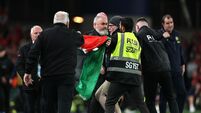
Last week’s friendly against Qatar was interrupted twice by protesters throwing tennis balls, emblazoned with Stop The Game, onto the Lansdowne Road pitch.
On the eve of the game, Ireland defender Séamus Coleman spoke of how an ‘uncomfortable’ situation for players should have been ‘dealt with’ by the FAI and Uefa since the draw was made in February.
Jamie McGrath also admitted he will speak to his family before deciding whether to participate.
Scotland’s women, who lead their League B qualifying group, haven’t considered pulling out of the games.
"Honestly, no,” AC Milan player Grimshaw told the BBC.
"We are obviously aware of all the situations with the Irish players as well with Israel.
“Ultimately, we have to let the people who are in charge of these situations - the governing bodies who decide these things - decide.
"We, as players, have been put in a situation where it's the Israel game at a neutral venue and that's all we can do.
"Is it the best circumstances surrounding it? Of course not, because we are aware of everything else that's going on and we feel for that as humans.
"However, right now we have to adapt to the situation and play football. That's our role and that's all we can do."
When asked if she personally considered going on strike in the face of Israel’s actions in Gaza, the West Bank and Lebanon, the midfielder said she was a human and a footballer - "two separate people".
"But it's a long time I've been out and, when the national team calls, as a footballer I would never say no to my national team," she added.


CONNECT WITH US TODAY



Be the first to know the latest news and updates