Derry City in Celtic Park latest landmark in soccer's relationship with GAA and Rule 42
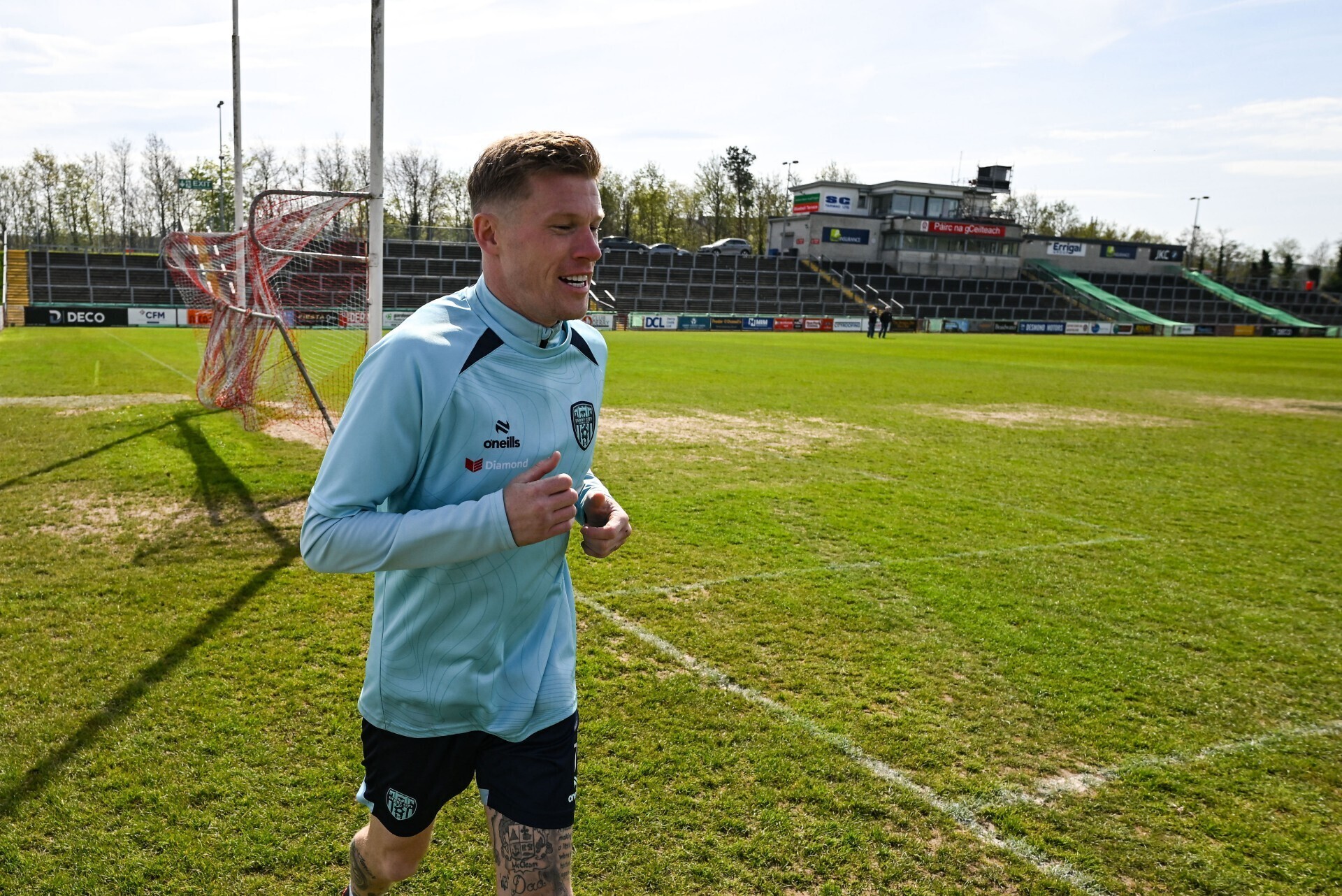
James McClean during a Derry City training session at Find Insurance Celtic Park in Derry. Photo by Stephen McCarthy/Sportsfile
When James McClean shapes up to shoot at football goalposts in front of the GAA version on Friday in Derry, some GAA diehards will still bristle at the juxtaposition.
It’s difficult to fathom how just over 20 years ago accessibility to GAA venues for the ‘foreign’ game was forbidden by Rule 42.
Furthermore, that it took for football and rugby to be evicted from their national stadium for renovations to prompt the change amplifies the sense of narrow mindedness that pervaded sporting culture.
“The association is being put out of business if we go ahead with this,” thundered former GAA president Con Murphy during the historic 2005 GAA Congress ballot.
“We are supporting the creation of a new association that caters for everything and stands for nothing.”
It definitely stands for one of financial nous when the rental income received from other codes to Croke Park and Páirc Uí Chaoimh is counted.
More than material gain, however, the relaxing of hardened attitudes reflected an association no longer viewed as a closed shop.
“Looking back, the Rule 42 decision was about more than just sport,” surmised Seán Kelly, then GAA President, on the 20th anniversary of the sea-change.
“It was about who we are as a people, about generosity, stepping up when a neighbour was in need, embracing modern Ireland while staying true to our roots.
“Would the same decision be made today? I have no doubt it would. Because if the last 20 years have shown us anything, it’s that the GAA is at its strongest when it is open, inclusive, and willing to lead.
“And 20 years on, I couldn’t be prouder of the role we played in making it happen.”
Four year earlier, his predecessor Seán McCague wasn’t so open in the face of calls for a recount at the Burlington Hotel.
Momentum had been with the modernisers in the run-up to the summit but political machinations were at play.
Bertie Ahern was in the throes of his pet stadium brainchild for Campus Ireland at Abbotstown and the Taoiseach’s £60m pledge to the GAA to facilitate the completion of Croke Park works was revealed by McCague in the lead-up to the vote.
Battle-lines came to the fore inside the room, evidenced by the ballot of 176-89 coming up short by a single vote to reach the 66% majority required. That threshold has since been reduced to 60%.
GAA's Leinster Council Chairman Seamus Aldridge was adamant Bertie’s solo run influenced the outcome.
"If (the money) hadn't come through when it did, we wouldn't be having this conversation at all," he said about the gates still being locked.
All it did was delay the inevitable and Ireland got to play its first international football match at Croker in March 2007.
One Stephen Ireland scored the only goal against Wales before 72,539.
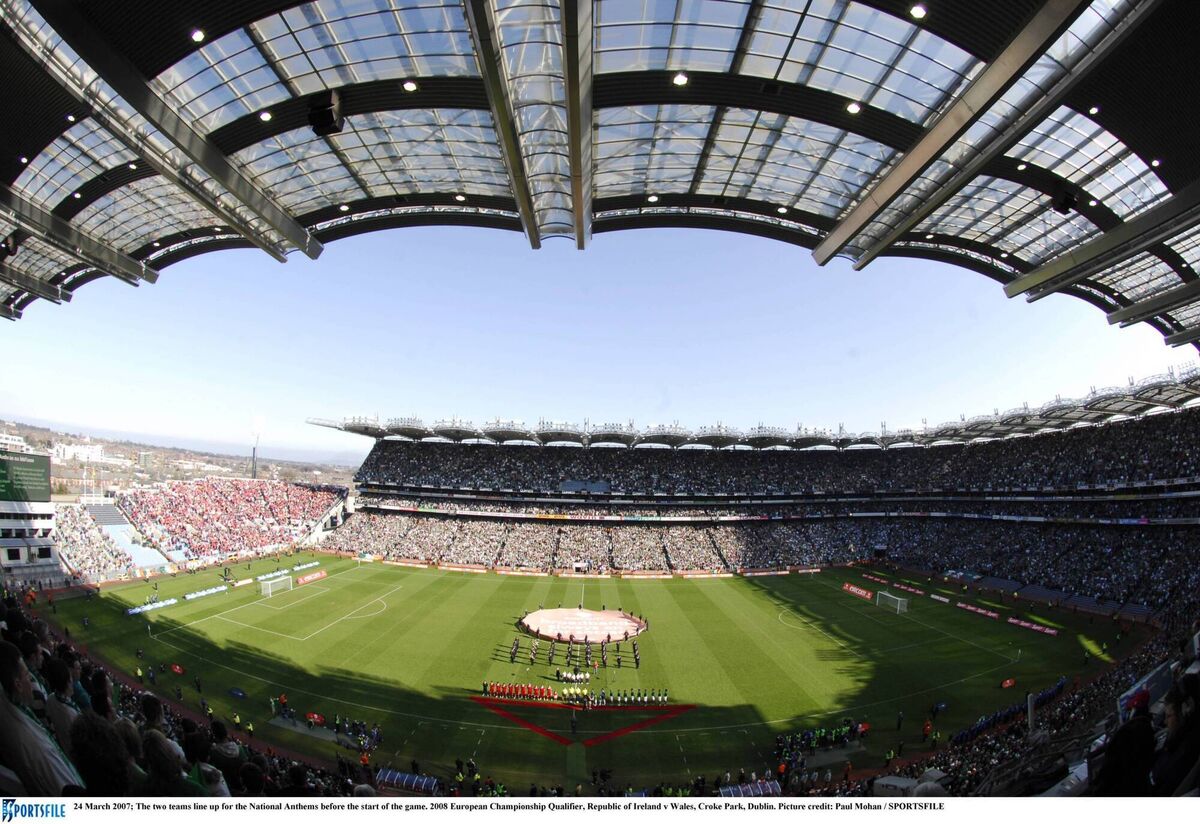
Much like when the national anthem was belted out before the rugby international against England a month earlier, emotions raged through the stadium, not all of them positive.
The fear with which Murphy spoke in 2005 was endemic for generations, manifested in an obstinance which onlookers from abroad were perplexed by.
Rule 42, as originally enacted, read: “Grounds controlled by Association units shall not be used or permitted to be used, for horse racing, greyhound racing, or for field games other than those sanctioned by central council.”
Control was the salient word in that edict.
Thankfully, Galway United parsed the terminology after being initially denied access to Pearse Stadium despite the local GAA county board approving access.
Their Terryland Park home didn’t reach logistical standards to host European matches and so, after welcoming Danish outside Lyngby to Rugby’s Sportsgrounds in 1985, they sourced other venues for their Uefa Cup and European Cup Winners’s Cup ties in 1986 and 1991 respectively.
Galway remain indebted to this day to An Cheathrú Rua group from the Gaeltacht that made available its Carraroe pitch in Connemara for the visit of Groningen.
While the pitch looking out onto the Atlantic was used predominantly for GAA, it was deemed a community facility, preventing any intervention from headquarters.
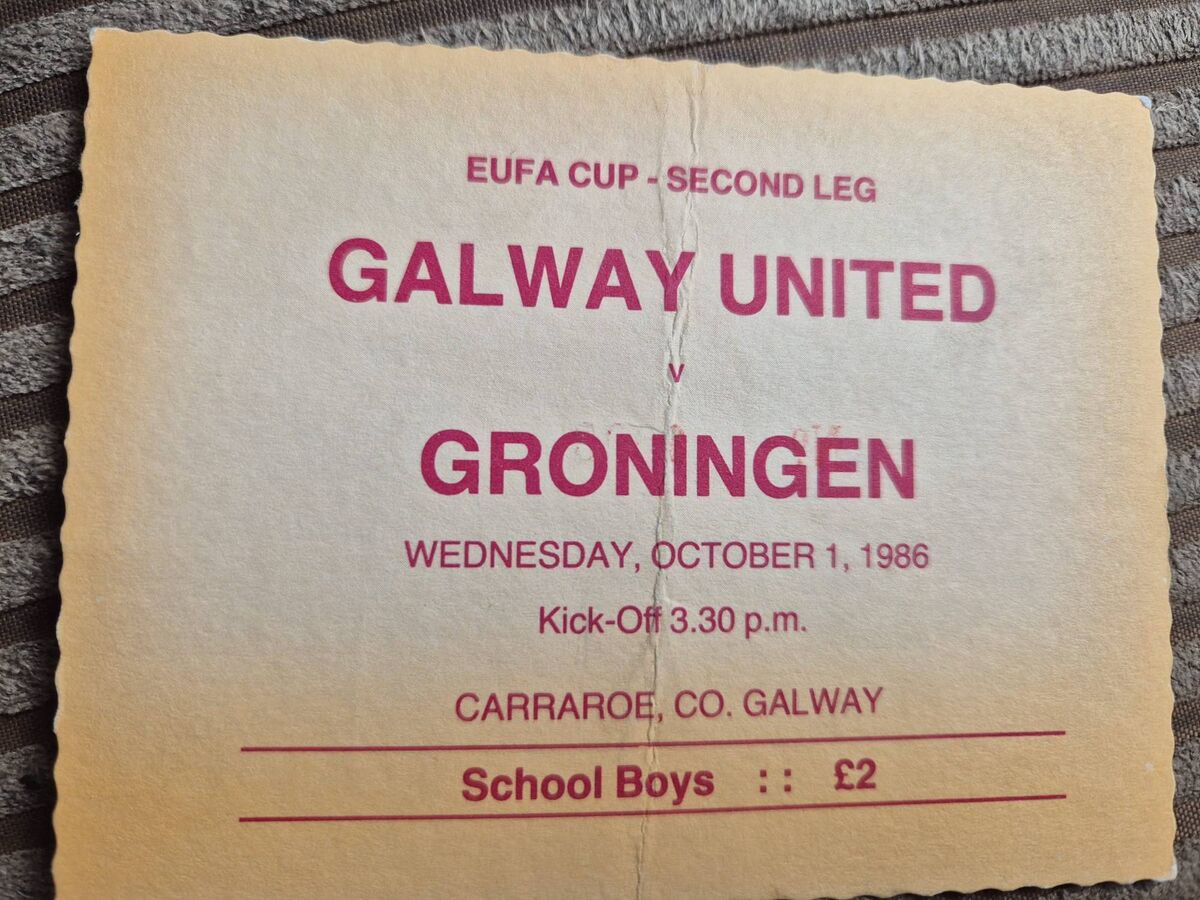
“When we went to the pitch in Galway, I said ‘What the hell, maybe we’re on the moon!” Hank Heganauw of the Dutch side told Paul Keane in the latter's book 'God vs Mortals'.
FAI Cup success in 1991 brought the same challenge for Galway and this time Páirc an Chathanaigh was unavailable.
Ballinderreen, a small village located 20km south of Galway City, nestled between Kilcolgan and Kinvara, was known in sporting lore for hurler Noel Lane but his club pitch was to double up for the showdown against Odense.
Not all locals were on board with embracing the ‘community’ loophole, as two club officials voted against overhauling their pitch for the special occasion.
No rules broken, only parochial relationships strained in a few cases where oil and water are compared to GAA and football.
That won’t be the case on Friday night at Celtic Park where the spirit of loving thy neighbour will be personified.

CONNECT WITH US TODAY



Be the first to know the latest news and updates