Diane Caldwell's influence and leadership will be missed as she hangs up her Irish boots
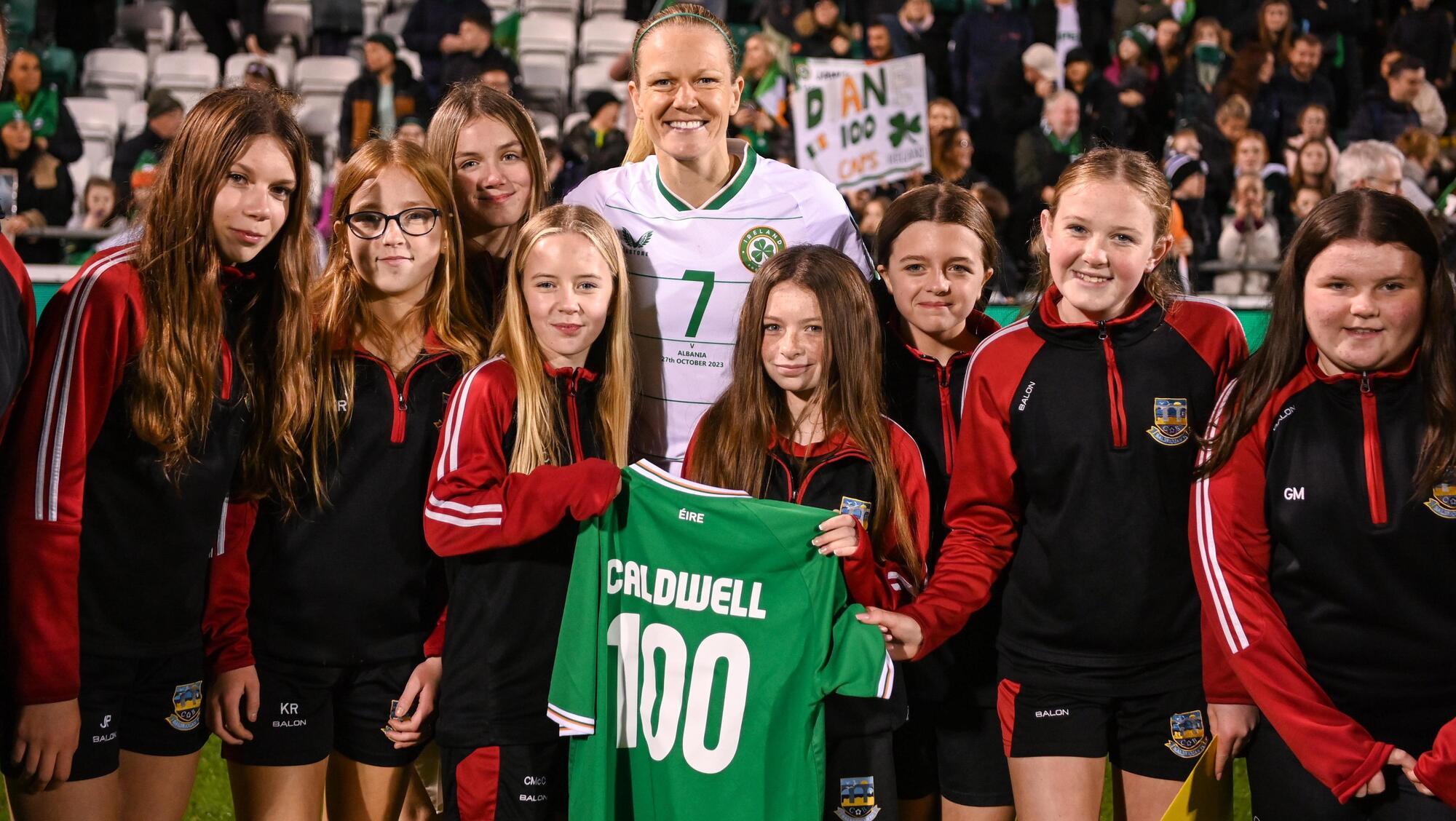
RETIREMENT: Republic of Ireland captain Diane Caldwell has announced her retirement. Picture: Stephen McCarthy/Sportsfile
She always stood out and believed in standing tall, did Diane Caldwell.
Sitting among a coterie of cubs at CityWest Hotel ahead of her first senior Ireland trip to Portugal, the teen didn’t hesitate to volunteer when the group were asked who’d be prepared to face the media.
For the next 18 years, Caldwell chose her moments to speak and they were usually worth the wait.
She admitted after strike action earned basic working conditions in 2017 that no excuses would be tolerated to prolong their tournament drought.
Most controversially, she was the forthright one in lifting the lid on in-camp tensions with manager Vera Pauw.
That she chose to dole out the critique – “we qualified for the World Cup in spite of, not because, the manager” – threatened to tarnish her reputation.
Yet detailing historical dissatisfaction with the manager going unheeded by the FAI coloured the picture of a toxic backdrop behind the scenes.
“It fell on deaf ears and she (Pauw) got a contract extension,” said Caldwell about her reservations, which she said were raised, alongside captain Katie McCabe, to Marc Canham’s predecessor as football chief, Ruud Dokter, after the manager’s first campaign.
Again, only four months ago, the defender was the figurehead within the Irish camp adding her signature to a letter to Fifa complaining of accepting sponsorship from a Saudi company for the next men’s and women’s World Cups.
Although the 36-year-old wasn’t a permanent captain of the team during her tenure, nor feted with the FAI Player of the Year award, Caldwell was nonetheless a deep influencer on and off the pitch.
Her strides at club level accorded her status, trekking from her native Balbriggan to USA, Norway, Germany, England as Manchester United’s first Irish female player and finally Switzerland. She has settled at Zurich with her wife, former Bundesliga player Mona Lohmann.
Caldwell become the second element of a one-time defensive trinity to retire. Niamh Fahey, a year older, walked away last week and all eyes will be on the intentions of the third, Louise Quinn. She will turn 35 in June, still eight months out from Ireland’s next meaningful match, the opening qualifier for the World Cup in Brazil. Chances are any announcement will be at midday again.
In that trio’s place since Ireland clinched their place at the last global showpiece in Australia have emerged ready-made replacements through the ancestry rule.
A message from Diane Caldwell…
— Ireland Football ⚽️🇮🇪 (@IrelandFootball) January 13, 2025
After 18 years and 102 caps, Diane brings her international career to a close 🇮🇪
From your first cap to your last, you’ve inspired us all. Thank you, Di! ☘️ pic.twitter.com/tCPabb0fuE
Former England senior squad member Aoife Mannion was first to declare, followed by Caitlin Hayes before Anna Patten also quit the English set-up to abseil straight into the Ireland team.
With rising teenage star Jessie Stapleton openly confessing her preference for a defensive berth rather than midfield, competition was nudging the veterans out.
Caldwell’s last of 102 caps was against Wales – but not the most recent game against the Dragons. Her run-out was in the friendly almost a year ago, as a late call-up when Fahey got injured in the warm-up.
Since then, she’d developed into more of a mentoring role as the demands of qualifiers against England, France and Sweden emerged, a squad player without actually playing.
There was a novelty aspect as well to Caldwell being introduced as a substitute in the dying moments of their final World Cup finals match against Nigeria. It was a gesture she appreciated, without being entirely comfortable.
Pauw wasn’t the only Ireland manager she clashed with. Her ascent through the ranks into regular under Noel King was soon halted by being caught in a crossfire over her unavailability for the 2007 World Student Games in Bangkok.
King’s refusal to pick her thereafter robbed Caldwell of 27 potential caps. On her competitive return in 2011, Ireland began their Euro campaign with a 2-0 victory in Wales, a game recalled for the goalscoring debut of Denise O’Sullivan.
Banished but unbowed, Caldwell never looked back. She can afford to now, with an abundance of pride.

CONNECT WITH US TODAY



Be the first to know the latest news and updates