Stadium restrictions may force Ireland's qualification finale against France out of capital
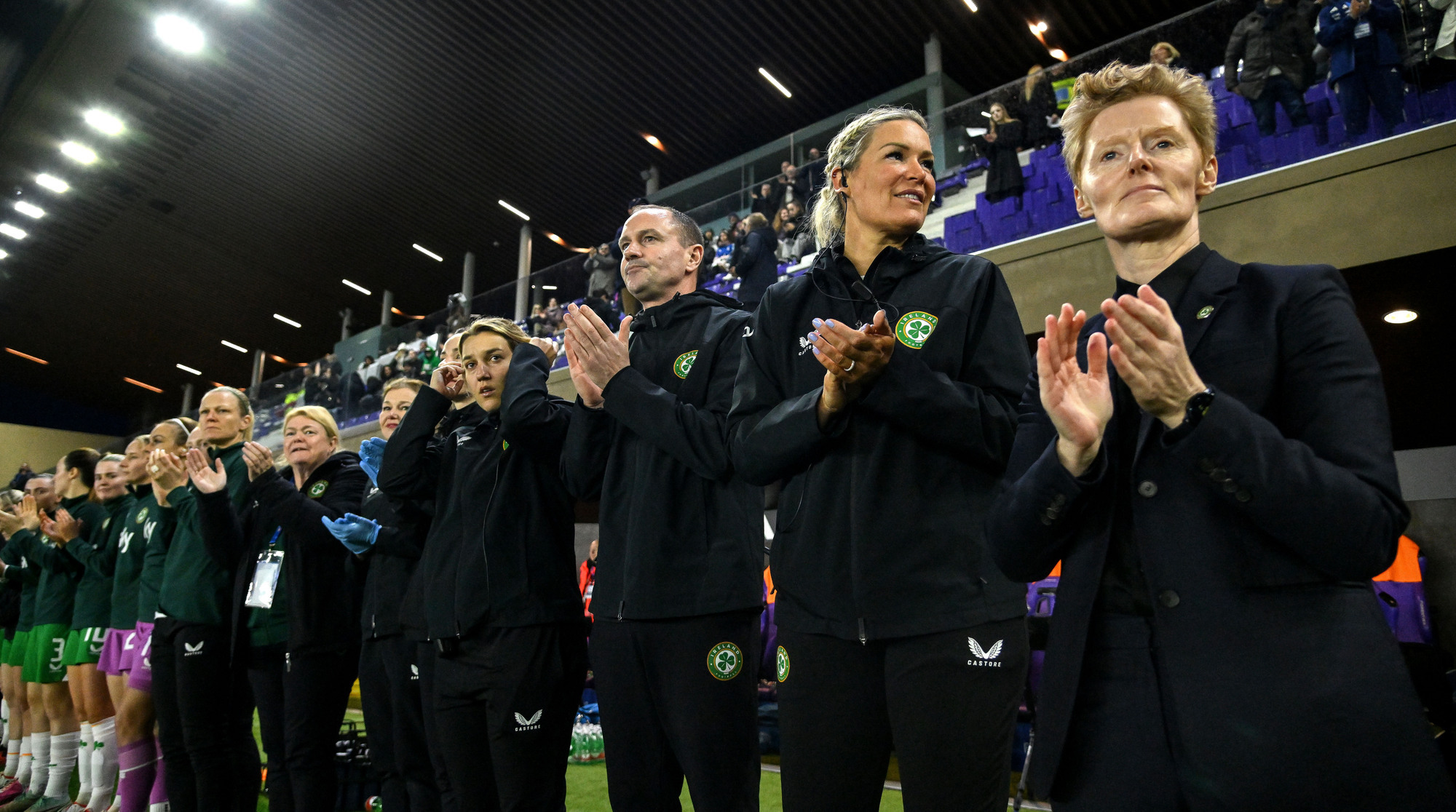
Ireland assistant coaches Colin Healy and Emma Byrne with head coach Eileen Gleeson. Pic: INPHO/Giuseppe Fama
Ireland’s final game of their Women's European Championship qualifiers in July may have to be moved out of Dublin due to stadium restrictions.
Tuesday’s draw in Nyon pitted Ireland into the group of death against the sides ranked third (France), fourth (England) and fifth (Sweden) in the FIFA standings, statistically the best on the planet bar world champions Spain and their predecessors USA.
While the first-ever women’s qualifier to be staged at Aviva Stadium comes against England on Tuesday, April 9 and they’ll return for the visit of Sweden on Friday, May 31, the national stadium is unavailable in July.
The lockout, due to pitch maintenance following a run of concerts, also prevented Ireland facing the French last July in their farewell friendly before the World Cup in Australia.
Tallaght, recently expanded to a 10,000-capacity with the construction of a fourth stand, would be the fallback venue but July 16 clashes with Shamrock Rovers’ involvement in the first round of the Champions League.
As the Hoops won’t know until the draw in June whether their home leg is that week, and the FAI plan to release their season ticket next week, decision time is scarce.
The only potential tweak to facilitate Tallaght is Uefa delaying the Rovers fixture to Thursday, July 18 but they could go up against the European games of either St Patrick’s Athletic or Shelbourne, surely provoking one of Damien Duff’s trademark barbs against the governing body.
Alternatively, the FAI could switch venue, with Cork’s Turner’s Cross – where the U21 team stages their qualifiers – a possibility.
Promotion to the top tier by strolling through Nations League B last year heightened the risk of Ireland’s group of death but the upside for the FAI is three saleable qualifiers from a commercial and ticketing perspective.
The sole previous women’s fixture held at the Dublin 4 site, their opening Nations League fixture last September against Northern Ireland, attracted 35,944.
Surpassing that record inside the 51,000-seater national arena for the visits of England and Sweden is a given.
Despite the feelgood factor around the team’s ascent, the FAI are very much at the whim of stadium protocols, influencing decisions in all three windows.
For instance, much like the men’s Nations League game on September 7, there was a desire to kick off against England at home on Friday, April 5 but they’ll instead travel to the 29,000-Stade Saint-Symphorien in Metz to face France that night.
Leinster had already booked their Champions Cup clash against Leinster for the following day.
Tuesday, April 9 comes the week after the Easter holidays, hardly ideal for those families commuting on a school night, but the lure of England should guarantee the turnout.
Likewise, obstacles existed for the next double-header.
By arranging a men’s friendly against Hungary for Tuesday June 4 – due to the first match for the new manager – the FAI blocked a potential fixture for the women.
They will be in Sweden that night, likely Gothenburg, the scene of Katie McCabe’s opener in a 1-1 draw two years ago.
Those two were the only points dropped by the Olympic silver medallists on their way to qualifying for the World Cup, where they claimed third place.
England away on Friday, July 12 is Ireland's penultimate fixture but the soundings are against Wembley being the stage, given the time of the year.
Head coach Eileen Gleeson has talked up Ireland's prospects of aiming to qualify for their first Euros in Switzerland directly by securing a top-two finish.
Regardless of whether they land in third or fourth by the conclusion, however, Ireland are guaranteed entry into the playoffs system, facing a qualifier from League C in October with potentially a League B nation in late November, both two-leg affairs.
CONNECT WITH US TODAY



Be the first to know the latest news and updates