Onus on new manager to enliven a ghost year for Ireland

Ireland have fallen 21 places in the World Rankings since Kenny joined the three and a half years ago.
How apt it was for the football fans to emulate their rugby brethren by singing Zombie this far week in Faro, for it’ll characterise what the next year entails.
Ireland’s Euro 2024 qualifying campaign has been in terminal decline since the June defeat in Greece.
Three subsequent reverses against France, Netherlands and the Greeks again rendered the two victories over Gibraltar irrelevant.
There’s little to accrue from the final assignments of 2023, the concluding qualifier in Netherlands on November 18 and friendly against New Zealand three days later, but the relevance of next year boils down to Ireland’s performance in the Nations League.
That campaign, a fourth for Ireland since inception in 2018, doesn’t kick off until September, the six games running until November.
Friendlies in March and June will fill the international windows for the first half of the year. The swifter the FAI appoint a successor after Stephen Kenny is dismissed next month, the more scope he'll have to prepare for a new era.
Don’t be surprised if reigning European champions Italy make their first visit to Dublin for 15 years. They were lined up for a friendly last March only for an unanticipated World Cup playoff to intervene, one they were stunned by North Macedonia in.
Maintaining record season levels of 23,000 tickets will be a difficult sell in a ghost year for qualifiers, necessitating an established force visiting.
The midtable League B opposition Ireland could be grouped with in the April Nations League draw won’t compensate for the absence of this year’s star attractions Kylian Mbappé and Virgil Van Dijk. Why the FAI hiked package price for family ticket renewals is mystifying.
Memories of past Nations League campaigns are painful; third place finishes the unwanted constant over the years.

It’s importance, though, might finally be recognised by the damage caused from losing to Armenia in the last version, ultimately costing entry into the Euro ’24 playoffs next March.
Though the backdoor route in a four-team mini-group creates only a 25% chance of grasping one of the three last tickets to Germany UEFA offer, at least it could’ve extended active interest in the competition for another four months. Instead, the sense of finality prevails, statisticians quashing Ireland’s chances of inclusion to 0.12%.
It’s over and the showpiece in Germany next year – an event only beaten by the Olympics for global reach and revenue – won’t have an Irish presence.
The next conversation involving Ireland and Euros will centre on the 2028 instalment we’re co-hosts for.
Expect it to be consumed by the quagmire surrounding how two of the five nations involved gain access to the automatic qualification spots.
What’ll attract interest in the meantime, on the pitch anyway, is how Ireland’s results in the Nations League is linked to the 2026 World Cup.
The tournament, hosted by the United States, Canada and Mexico, will be the first in the expanded 48-team format, boosting the European cohort from 13 to 16 teams.
Before outlining the Nations League connection, UEFA’s new qualification system should be noted.
Rather than the traditional 10 groups comprising seven five-team groups and three consisting of six for this current Euros campaign, 12 smaller pools will be drawn.
That means a probability of Ireland ending up in a four-team group.
Were that the criteria for the series due to conclude in Amsterdam as Ireland a certain fourth, they would finish bottom.
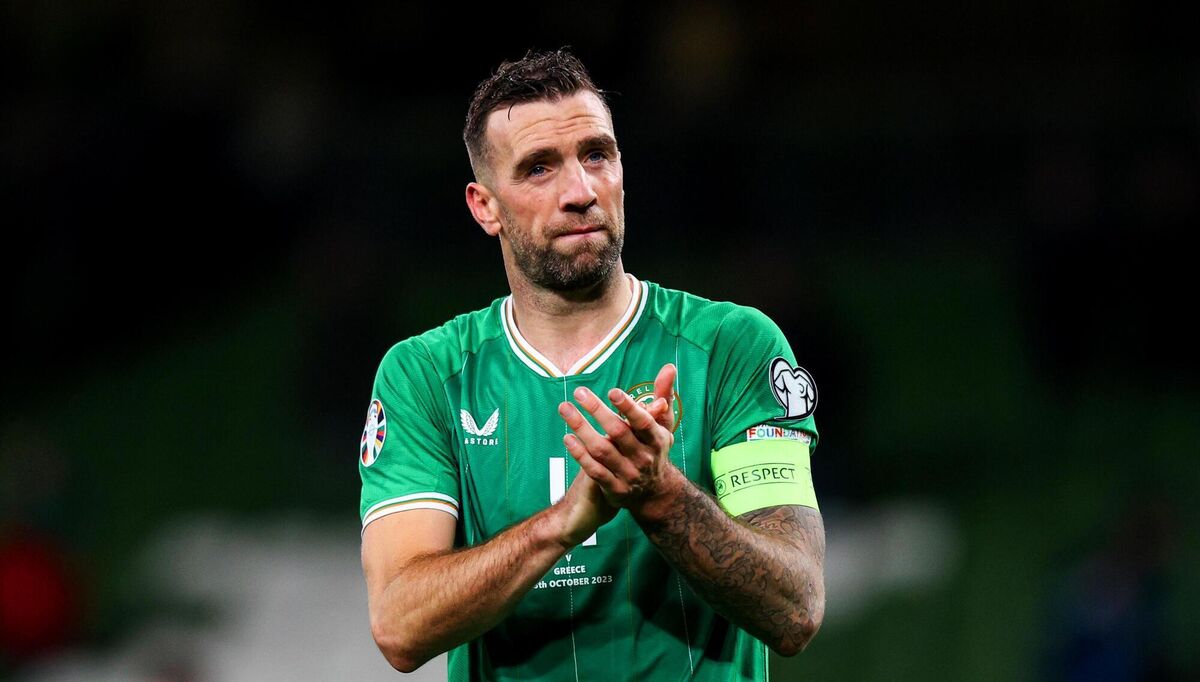
A slump in FIFA’s rankings over Kenny’s three-and-a-half year reign from 34 to 55 has drifted them deep into third seed category, not battling to snaffle a second seeding, as was the case for the last World Cup draw.
At present, they are ranked 28th in Europe, four places short of being one of the 12 second seeds in the group. That was the position before the Greece defeat, a hit that won’t be replenished by strolling past the second worst team in Europe on Monday.
The December 2024 draw will schedule the World Cup qualifiers between March and November 2025, from which only the 12 group winners advance Stateside.
Were Ireland to defy their third seeding and snare the runners-up spot, they proceed to the playoffs in March 2026.
This is where the Nations League becomes relevant. Those dozen runners-up from the regulation groups will be joined by four teams from the 2024 Nations League series.
Much like the current surveying of other groups, Ireland will be relying on the stronger teams qualifying directly to be handed one of the golden playoff passes.
Presuming – and it’s a whopper one considering there’s eight fewer places on the global stage than the Euros – Ireland earn the right to part of that playoff series, victories in a semi and final fixture will be needed to claim one of the final four spots.
After missing out on reviving Euro ’88 in Germany next year, that’s the pathway to franking a sequel to the American dream of 1994.
As surreal a proposition it may appear, we can only live in hope. Next year’s calendar is about living, not merely existing.
CONNECT WITH US TODAY



Be the first to know the latest news and updates