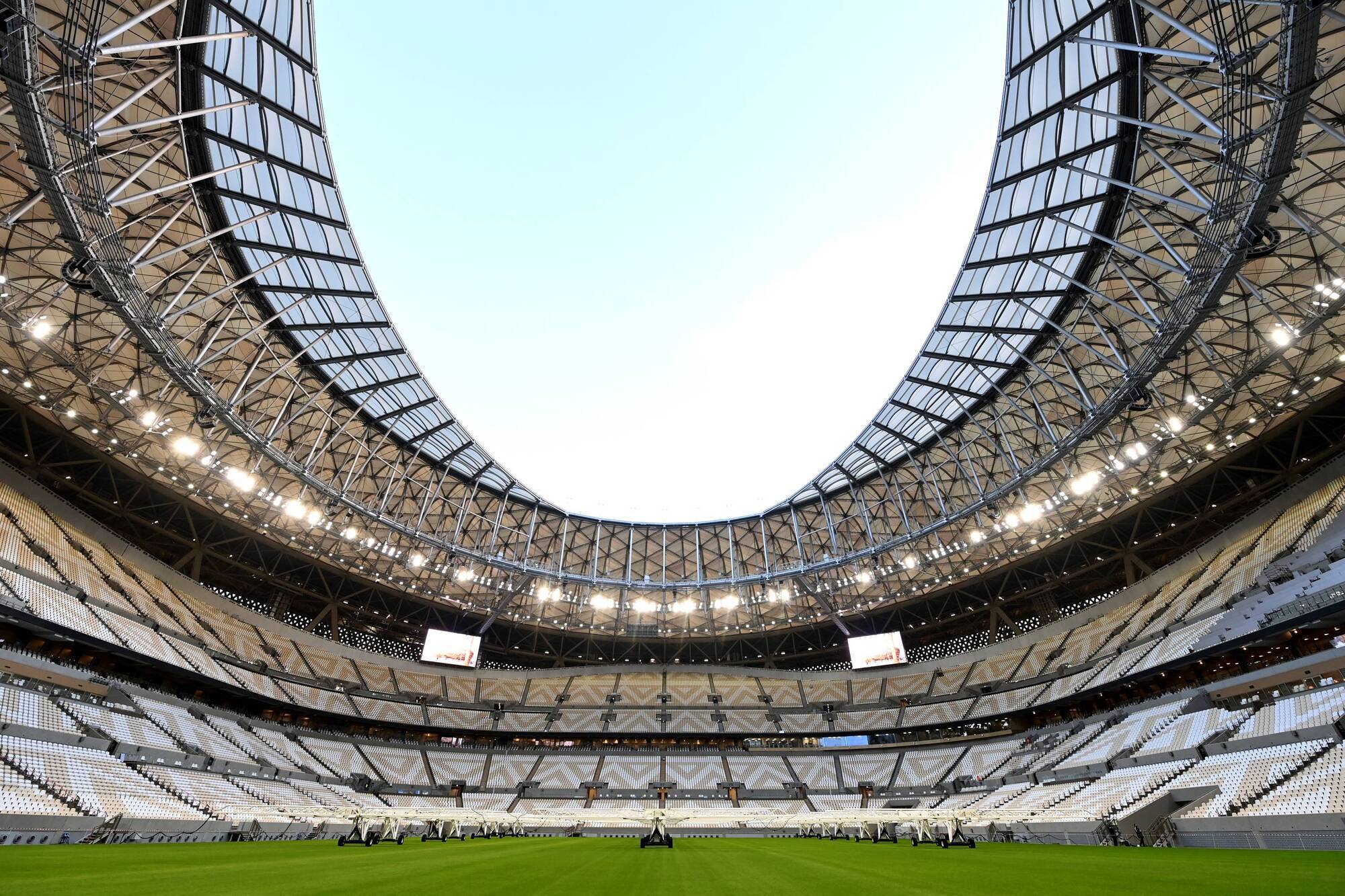
1. Cooling technology
The first winter World Cup will still feature conditions of 25-30 degrees in the desert state.
To deal with this, Qatar’s stadiums will be equipped with cooling systems to ensure a more optimal temperature for players and spectators. Air conditioning fans will circulate cooled air through large nozzles at pitchside and through grills in the stands, with the cooled air being recirculated back through the air conditioning to be re-cooled and filtered.
2. A carbon-neutral World Cup
Qatar have pledged to host the first carbon-neutral World Cup, with measures to limit carbon emissions and green projects undertaken to offset the event’s carbon footprint. Unlike Euro 2020’s continent-wide structure, the compact nature of the tournament is a key feature.
There’s no more than an hour’s drive between any two stadiums, which means fans can potentially attend two or more matches in a single day.
3. A fully dismountable stadium
Stadium 974 — named after the number of recycled shipping containers used in its construction, and also representing Qatar’s international dialling code (+974) — is the first stadium in World Cup history built to be deconstructed.

It’s hoped the temporary 40,000-seater venue will be dismantled and provided as assistance to under-developed countries in Africa, either rebuilt in full or contributed towards a series of legacy projects. Whether it was inspired by the GAA relocating the Nally Stand from Croke Park to Carickmore has yet to be established.
4. 170,00 seats to be donated
Stadium 974 isn’t the only stadium to be repurposed. 170,000 seats will be donated to countries in need of sporting infrastructure, including most from the World Cup final venue, the Lusail Stadium, which will be repurposed into schools, shops, cafés, sporting facilities, and health clinics, with a 20,000-seater stadium to remain.
The full upper tier of seating in the 60,000-capacity Al Bayt Stadium will also be donated, leaving a 32,000-seater venue, while the sky box level will be turned into a five-star hotel.
5. Retractable roofs
Retractable roofs can be closed in case of severe weather conditions — but that is not why the Qatar 2022 stadiums have them.
The retractable roofs considerably improve the cooling process, meaning that the water and energy usage needed for the air conditioning systems will not be overburdened. The Al Bayt Stadium roof was changed from black to white in the planning phase as it would absorb less heat and provide greater energy efficiency.
6. Wearable electronics
A series of wearable electronic devices are in development to help avoid medical emergencies for anyone attending the World Cup. Work is ongoing on printing low-power sensors directly onto fabric to measure heartbeat, respiration, and hydration in a snug-fitting shirt.
These shirts work by connecting to others via Bluetooth and to a base station, so vital signs can be monitored in real-time.
7. Food technology
Fans will be able to order food to their seats in Qatar. With a smartphone app, Asapp, fans can arrange for food to be delivered to their seat or to collect it via express queues.
So no more missed goals, once you don’t have your head down ordering when the ball hits the net. Smart Wifi and charging stations will also be available around grounds, enabling fans to stay connected while getting some shade.

8. Real-time navigation
A series of sensors around Doha will provide real-time information to help with commutes to and from stadiums. Feedback on traffic, taxis, parking, the new metro system, and venue entrances and exits will be communicated via a custom-made smartphone app.
That app will also help fans navigate indoor spaces in stadiums, shopping centres, and entertainment venues.
9. LED lighting
Qatar’s stadiums are all fitted with LED lighting, featuring colour-changing lights and other showcase effects which can be used for the opening and closing ceremonies at the Al Bayt and Lusail stadiums.
These lights are energy-efficient, non-toxic, and have a lifespan that’s up to six times longer than traditional lights.
10. An accessible World Cup
Sensory viewing rooms are being set up in stadiums to provide safe and calm spaces to young people with autism or sensory processing issues, featuring interactive projections, controlled lighting, bean bags, and toys to help them enjoy the match experience in a comfortable environment.
Digital content will be provided for visually impaired fans via Bonocle, the first-ever braille entertainment platform, Feelix Palm, a tactile palm communication device, and by ongoing developments in wearable technology.

Continue reading for €5
Unlock unlimited access and exclusive benefits
Already a subscriber? Sign in
Cancel anytime
CONNECT WITH US TODAY
Be the first to know the latest news and updates