The commercial fallout of Stephen Kenny controversy, youthful promise, and a long-term vision
The FAI is having to explain to partners who signed contracts that covered the Fifa World Cup 2022 campaign that qualification for the Qatar finals was not a priority and that there was a longer-term focus on Euro 2024
The commercial fallout of Stephen Kenny controversy, youthful promise, and a long-term vision

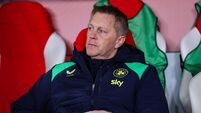
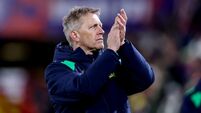
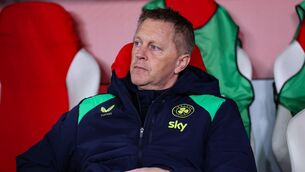
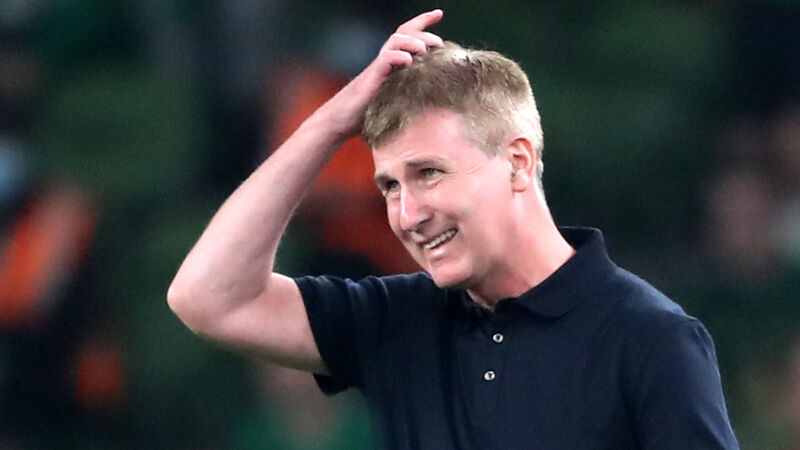
SMILES BETTER: An elated Stephen Kenny after a spirited Ireland performance at home to Serbia yielded a 1-1 draw. However, his comments in the pre-match press conference where he said that his focus has always been on qualifying for 2024 Euros rather than next year’s World Cup came as a surprise to many. Picture: Niall Carson/PA

The FAI is assessing the commercial fallout of Stephen Kenny’s revelation that next year’s World Cup tournament was never the priority for his team.

The association is having to explain to partners who signed contracts that covered the Fifa World Cup 2022 campaign that qualification for the Qatar finals was not a priority and that there was a longer-term focus on Euro 2024.

It is not believed that FAI CEO Jonathan Hill and his commercial director alerted stakeholders in advance of Monday’s pre-Serbia press conference that the manager was about to admit that the World Cup had been downplayed in his strategic thinking.

It is unclear if the Association will pay compensation for fees paid — or if it has offered discounts or activation add-ons.

Sports sponsorship contracts do not carry ‘rebuilding project’ or ‘practice tournament’ clauses, and commercial deals will not have emphasised such long-term ideologies which run beyond fixed-term arrangements.

When asked by the Irish Examiner about what it knew and when it knew of a longer-term approach, the FAI did not provide an answer.

So what did Kenny say, exactly?

The moment of interest for commercial partners came during Stephen Kenny’s press conference in the Aviva Stadium on Monday, the eve of the Ireland v Serbia qualifier, or Match Day -1, its technical term.

“We haven’t qualified for the World Cup since 2002,” explained the manager. “Did anyone think that we were favourites to qualify, or that we should qualify?

“You know, we certainly have a plan in place. I’ve taken the decision, right or wrong, that we would build this squad to be a really, really competitive team to qualify for Germany 2024 (Euros).

“We didn’t not try to win the games — we went close in Serbia and Portugal, away from home.

“I think I’ve taken that decision (that we would focus more on qualifying for Euro 2024), and collectively we did (focus on that instead).”

A commercial source who has worked extensively in the sponsorship side of football said the comments may not have had a major impact on the FAI.

“I did think that the comments by the manager were interesting, but I’d find it hard to believe that he will not have revealed such a strategy without first speaking to the CEO.

“That’s really the important thing here, it’s what the FAI knew, and how they communicated that to paid sponsors, commercial partners, and even media rights holders.

“You would naturally assume that the guys in bed with the FAI — the likes of Nissan, Carlsberg, DHL, Aviva, and whoever else, would have known about the strategy, because that is important.

“But if they didn’t — then that’s a conversation to be had, and it requires strong explanation.”

Stephen Kenny’s commercial input

As a member of the FAI Executive Stephen Kenny will report to the CEO in the next weekly gathering of the association’s heads of department on the footballing aspects of the 10-day international camp.

At the same forum, the commercial director Mark Russell will outline the various sponsorship activations which took place during the three-match window, outlining the inputs of players and manager.

With no communications executive currently serving on the FAI Executive — it is unlikely that a press review will be offered at this forum — but the manager is likely to give a breakdown of his media activations, and Monday’s press conference pronouncement.

Without question, a firmer focus on the week-and-a-half will come at the next FAI board meeting, where Stephen Kenny may be called to give a presentation on strategy and progress.

If the board was not aware of the World Cup strategy (and there is nothing to suggest that it wasn’t), to effectively treat the tournament as a lead-in to preparing for a more competitive Euro qualifiers starting in 2023 — explanations will be sought.

Stephen Kenny has regularly spoken about his job being a long-term strategic and development approach, and Monday’s officially stated declaration can come as no surprise internally, except perhaps to some commercial stakeholders.

Board interest

What will be of great interest to the board is how close Stephen Kenny is to achieving his first competitive win, with games coming up against Luxembourg, Azerbaijan, and finishing off with a home game against Portugal.

With a commendable draw in the bag following Serbia at the Aviva on Tuesday, the focus now concentrates on the end of year run-in and how things will look on November 12, the morning after our final game.

If the green shoots, which presented and disappeared post-Faro, and reappeared v Serbia, demonstrate further growth and development, then the manager will rightly expect a new deal before his current contract expires next summer.

Those with a strong commercial interest around the boardroom table depend on immediacy, on strong performances and good results to encourage a headline partner for the men’s team over the line, before the bleak and non-competitive 2022 arrives.

It is unlikely that the FAI board will be too concerned by James McClean’s comments and passionate display at his press conference on Monday, when the Derry man made charges against the media and former players.

McClean’s comments will likely be seen as the impassioned actions of a senior leader in the dressing room. In fairness to the Wigan midfielder, it will have entrenched and united a group of players feeling extraordinary pressure following the draw with Azerbaijan.

It is highly unlikely that the communications team didn’t alert the FAI CEO and president in advance of McClean’s strategic attack, and the player certainly took the sharp focus off his manager and emboldened a side under siege.

There will be little concern from commercial partners, particularly those whose logos provided a backdrop to McClean’s dubious complaints about media agendas — while brands don’t like controversy, they love passion and heart, and James demonstrated that in full flow.

He may even have stirred the commercial senses of many potential partners sitting on the fence.

Though it would be wise not to make a habit of it. According to one potential partner: “It was a tough watch, but it worked out in a weird way. It doesn’t mean that it will work so well the next time.”

Finally a sponsor — for women’s football

This Thursday is a positive day for the FAI as it announces a sponsor for the women’s team.

What is fascinating is that the FAI’s original strategy of aligning the women and men as a €2.5m bundle has been abandoned, for now, for a sponsor who is only interested in the women’s team for specific reasons.

This will all be down to commercial, brand, communications, and marketing opportunities, and may not mean that the Irish men’s team are not attractive to the sponsor, it may just be it is following a female-specific strategy.

The value of such a tie-in will be in the lower to middle six figures ballpark, certainly less than half of the €2.5m asking price that the FAI had put on its overall commercial deal — which previously analysed here, was set at an all-too inflated price by around €700,000.

One extremely valuable asset that the women’s team has over the men’s is World Cup qualification ambitions, and the prospect of a first ever major tournament qualification for the 2023 finals in Australia and New Zealand.

Women’s sport is platinum, right now. Think back to an incredible weekend with Leona Maguire and the Meath footballers, to Katie Harrington and Katie Taylor, and to the star who beats men as a matter of course — Rachael Blackmore.

For the men, the search continues

For the FAI, a sponsor of Stephen Kenny’s team is a key priority.

With no competitive win in more than two years, no games of any meaning in the whole of 2022 and a devaluation of qualification for the current campaign, the price for the men’s team will likely fall to below €1m for next year.

But the emergence of exciting, young and highly skilled players, the ongoing support of fans, particularly large and socially engaged fans groups — such as YouBoysInGreen – and the promise of a repeated lively atmosphere in the home game v Portugal on November 11, and there are reasons for some optimism.

Stephen Kenny’s long-term strategy for the health of Irish football won’t consider the FAI’s business concerns — and why should it? He will believe the future success of his team will pay back in spades any revenues lost for now.

Of more pressing concern to the FAI is how to keep brands like Aviva, Nissan, Umbro, DHL, Spar, Tipperary, and Carlsberg sweet in the wake of admissions about qualification tournaments.

Brands hate surprises.

x

More in this section

Sport

Newsletter

Latest news from the world of sport, along with the best in opinion from our outstanding team of sports writers. and reporters

Cookie Policy Privacy Policy Brand Safety FAQ Help Contact Us Terms and Conditions

© Examiner Echo Group Limited