John Fallon: Portugal’s depth of talent puts Ireland’s task in context
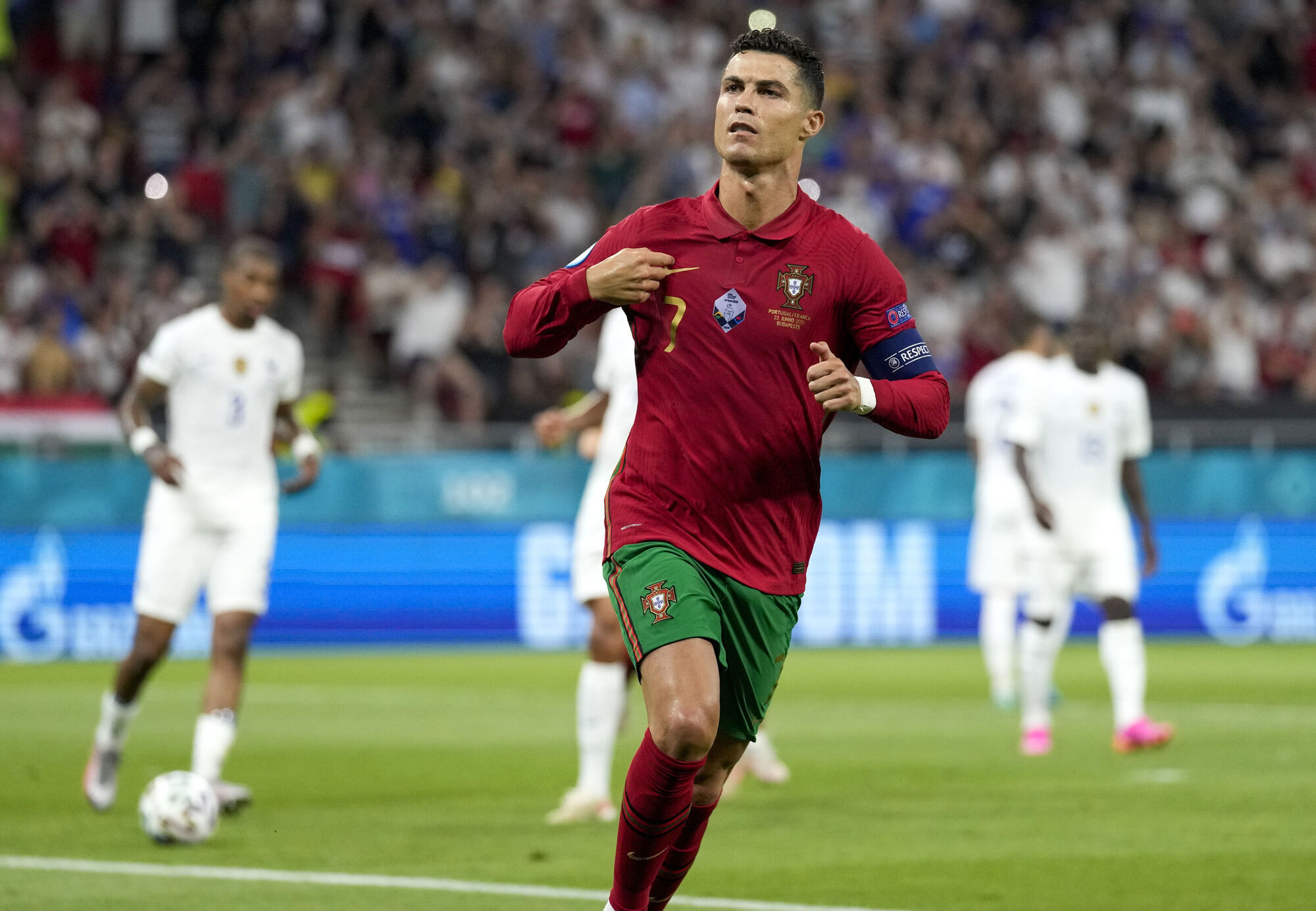
Speculation in the final days of the transfer window won’t distract Portugal captain Cristiano Ronaldo from his intention of gorging Ireland in the pursuit of a record-breaking 110th international goal
John Fallon: Portugal’s depth of talent puts Ireland’s task in context

Speculation in the final days of the transfer window won’t distract Portugal captain Cristiano Ronaldo from his intention of gorging Ireland in the pursuit of a record-breaking 110th international goal. (AP Photo/Darko Bandic, Pool)

At lunchtime tomorrow, the sight of two squads being released in Lisbon and Dublin could be enough for Irish fans to lose their appetite.

Running a finger down a page or screen, scanning the list of players called up by Portugal and Ireland for next Wednesday’s World Cup qualifier in Faro, might be ill-advised with a sandwich of soup awaiting one’s delectation.

Contrasts will be loud and pronounced, sure to dominate the narrative in the build-up and used to explain away either the landslide or scale of the shock that ensues inside the Estadio Algarve.

Where should we start? Defence might be best where Ruben Dias and Joao Cancelo act as mainstays; the Manchester City pair usually operating behind clubmate Bernardo Silva.

Even if Fernando Santos decides the unsettled midfielder isn’t at his sharpest, there’s the option of deploying Bruno Fernandes instead.

The Portuguese stardust sprinkles beyond the English Premier League, for Paris Saint-Germain’s Danilo Pereira and Joao Felix of Atletico Madrid are likely to feature in their artillery along with the nuclear weaponry of Cristiano Ronaldo.

Speculation in the final days of the transfer window won’t distract the captain from his intention of gorging Ireland in the pursuit of a record-breaking 110th international goal.

For those diners seeking some morsels to cleanse the palette, there’s Portugal’s 2021 record on the menu.

They laboured past Azerbaijan 1-0, had to come from behind to beat Luxembourg 3-1 and blew a two-goal lead in the draw with Serbia during the opening qualifiers in March.

Their defence of their Euro title in the summer only reached the last-16 stage.

Late goals saw them past Hungary, before they lost to Germany but a draw against France salvaged progress from the group of death as one of the best third-placed sides. Belgium then applied the last rites.

By their high standards, Portugal have yet to settle into a gallop this year but it’s all relative to Ireland who’ve yet to raise one.

Competitively at least, next Wednesday’s opposition are the best Ireland have faced since Belgium’s Kevin De Bruyne and Romelu Lukaku combined to leave them wilting in the Bordeaux heat at Euro 2016, or France and Antoine Griezmann when they ended Ireland’s tournament at the last 16 stage eight days later.

Portugal, arguably, are a better team than Belgium’s 2016 incarnation; inarguably, five years on, Ireland are not.

The squad lists won’t lie. Based on a stab, Ireland will line out with Gavin Bazunu in goal, with a back five of Matt Doherty, Seamus Coleman, Shane Duffy, John Egan, and Dara O’Shea in front of him.

Josh Cullen is certain to keep his place at the apex of midfield, flanked possibly by Alan Browne and Conor Hourihane, leaving Callum Robinson and Aaron Connolly paired in attack.

That amounts to six players at English Premier League clubs — in name, anyway.

Coleman and Duffy have started both league games for Everton and Brighton respectively, Connolly came on at half-time for the Seagulls last Saturday while Tottenham’s Doherty sampled the last 10 minutes on the opening weekend against Manchester City.

Hourihane remains on the fringes at Aston Villa and teenager Bazunu is on loan at Portsmouth.

Granted, Cullen is playing regularly for one of Belgium’s best teams at Anderlecht but the standard is deemed comparable to the English Championship. This stage, whether or not the thought of it makes supporters queasy, is the playground of the Irish.

Long gone are the days of 1995 when Ireland, rather than Portugal, possessed the representatives from Liverpool and Manchester United in their side.

Jeff Kenna, on his way to collecting a Premier League medal with Blackburn Rovers three weeks later, had to make do with a brief substitute cameo in the 1-0 win.

Although debate around the root of Ireland’s dwindling top-flight presence is healthy, it’s irrelevant within the context of the here and now, specifically the looming 10-week blitz of six remaining World Cup qualifiers.

Back-to-back defeats to Serbia and Luxembourg in March render the road to Qatar more of a trail towards regaining respectability.

It was results for third seeds Ireland against the nations placed immediately above and below them that would determine their qualification prospects and, in that regard, claiming points off neither in the opening exchanges nailed their fate.

Countries at the recent Euros like Czech Republic, with 40% of their squad from the domestic league, illustrated what can be achieved with good management and organisation.

Likewise, Iceland were the standard bearers for the underdogs at the previous showpiece.

If Ireland’s nucleus has to be drawn from the Championship in the short term, so be it. Better to embrace, rather than fear, the reality.

As James Collins recently noted, the division acted as a springboard for much of the talent that thrived at the Euros and the figures back up the Cardiff City striker’s assertion.

According to a report issued by accountants Deloitte, England’s second tier is the sixth richest league in Europe, outstripping the Dutch, Turkish, Belgian, and even Portuguese top-flights.

There’s food for thought whenever the book of excuses is reached for.

League of Ireland awaits return to football bounce

The Government has an uncanny knack of activating the faultlines between sporting codes on the island, evidenced by the reaction to Sunday’s All-Ireland hurling final.

Generalised derision underpinned the commentary around congregated scenes inside and outside of Croke Park, the fans’ excitement at being among the largest turnout for a sporting event since the pandemic began — 40,000 — understandable.

Perhaps it was envy, more than anger, that influenced the outrage among the soccer community.

Caution has been the watchword during the State’s “return to watch” programme, evident by just 8,000 of the Aviva Stadium’s 51,000 seats being available for European wins over Dudelange and PAOK.

The average Covid case numbers have risen by 50% since those fixtures were held five days apart three weeks ago.

Back in February the shoe was on the other foot when it came to the traditional turf war. Clare GAA manager Colm Collins deemed it “hilarious” that League of Ireland players were allowed to train under the elite banner, when Dublin GAA and Limerick hurlers weren’t afforded such an exemption from the restrictions.

More pertinent, though, for domestic soccer is solving the pre-pandemic challenge of getting bums on seats across the Premier Division and First Division.

Big occasions such as Shamrock Rovers’ European game against Flora tomorrow and Friday’s FAI Cup clash between Cork City and St Patrick’s Athletic will always sell out.

However, that some clubs couldn’t fill their quota of limited capacities over last weekend’s series of matches illustrates that the pent-up demand so hyped about has yet to translate into paying customers.

European dream seems so distant for Irish elite women

For all the soundbites of women’s football making waves in this country, last week’s Uefa Champions League exit for Peamount United at the first hurdle was a major setback.

There was no shame in losing to a full-time outfit Spartak Subotica but the nature of the defeat — 5-2 — crystalised the difference professionalism counts for at elite level.

Serbia are no force in the women’s game — their national team are positioned eight places below Ireland in 41st of Fifa’s rankings — but investment in their domestic game has yielded results.

The Spartak side that swept into a five-goal lead against the Irish champions in the semi-final of a mini tournament were vying to reach the last-32 stage for the fourth year in a row.

Uefa’s decision to restructure the competition in favour of the bigger leagues didn’t help their cause as they fell to hosts Twente in the final.

A late confirmed Covid case in the Nike Tbilisi camp ahead of Saturday’s third place play-off forced a cancellation, and an expected forfeiture, guaranteeing Peas being spared last place in the mini-group.

Seven years have passed since an Irish team dined at the top table in Europe; Raheny United going to Bristol City. Peamount were also among the best 32 teams in 2011, only to succumb to a powerful Paris Saint-Germain outfit.

With the women’s national league players only this year receiving out of pocket expenses across the board, European strides are a long way off.

x

More in this section

Sport

Newsletter

Latest news from the world of sport, along with the best in opinion from our outstanding team of sports writers. and reporters

Cookie Policy Privacy Policy Brand Safety FAQ Help Contact Us Terms and Conditions

© Examiner Echo Group Limited