Brilliant Gordon Banks was England’s saving grace
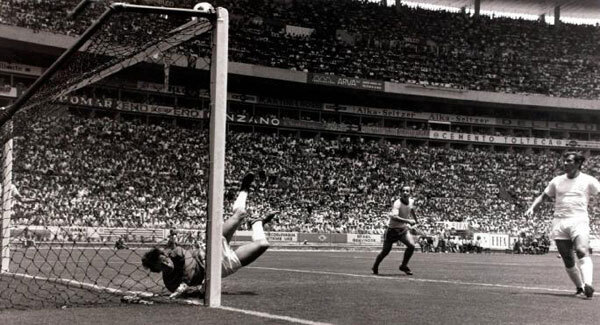
There was a story Gordon Banks loved to tell, always with a smile, about that save from Pelé in 1970, a split-second moment of magic that threatened to eclipse his achievement as England’s goalkeeping hero when Alf Ramsey’s men won England’s only World Cup, four years earlier.
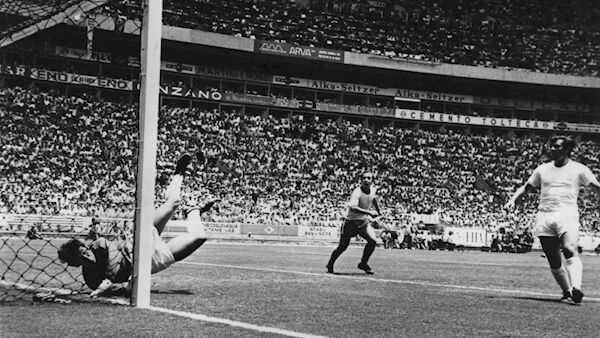
Banks’ infamous save, defying the laws of physics, gravity, and logic to fling himself from one side of the goal to the other in order to tip the great Brazilian’s header over the bar, has long become the stuff of legend.
And like most legends, it has gathered a life of its own, with some of the names of the supporting cast changing over the years. At first it was Bobby Moore, and then Alan Mullery and some versions even reference Ramsey himself, all of whom are supposed to have said to Banks, after he had made the save of the century to fling the ball to safety: “Why didn’t you catch the bloody thing?” It was typical of Banks that he told the tale with a twinkle in his eye, relishing the hard-nosed humour, the demand to do better even when he had excelled, and the fact that he had overcome the odds.
For someone born as the son of an illegal bookmaker, the odds looked to be stacked against Banks. He had to fight adversity to reach the top of his profession, which he did in some style when he was voted the best goalkeeper in the world five years in succession after becoming a world champion.
He had endured a tough and traumatic upbringing in gritty post-war Yorkshire, leaving school at 15 to lug bags of coal for a living. His disabled brother died of his injuries after being attacked when their father’s shop was robbed of its takings. Banks then moved on to building sites as a hod carrier. It was a back-breaking job, but he later gave it credit for building his upper body strength.
His break as a footballer came when he was spotted in the crowd watching his local league team, whose goalkeeper had failed to turn up. The coach recognised the boy who had played for Sheffield Schoolboys, gave him a chance and he was soon signed to Chesterfield’s youth ranks, aged 16. He returned to the club after two years of national service in West Germany and broke into the first team, before being sold to Leicester City, where he went on to find fame.
With Leicester, Banks reached four cup finals, including their sole success in winning the 1964 League Cup. Greater glory was to follow two years later with England’s win, which was to make him a household name.
It did not guarantee his place at Leicester, however, and he was sold to Stoke City, where he cemented his reputation as one of the best goalkeepers on the planet, vying with the Russian Lev Yashin and Pat Jennings of Northern Ireland for that title.
He was still England’s number one when Ramsey’s men went to Mexico looking to defend their title, and their group game against the brilliant Brazilians was billed as the two best sides in the world — the reigning champions against champions-elect.
The game in Guadalajara was played in blazing heat and on a rock-hard surface. Banks, always looking to improve his chances, realised early in the tournament that the ball was bouncing higher than usual and insisted in training that his team-mates should fire in shots and headers from all angles so he could practise better.
“I reckoned it paid off when I got to Pelé’s header, because I knew the ball might rise in the air a little bit more, giving me that split-second longer to reach it,” he said years later. He was right, and nobody watching could quite believe he kept it out. Even the great Pelé had turned to start celebrating with a roar of “Goooalll!” before having to cut it short incredulously.
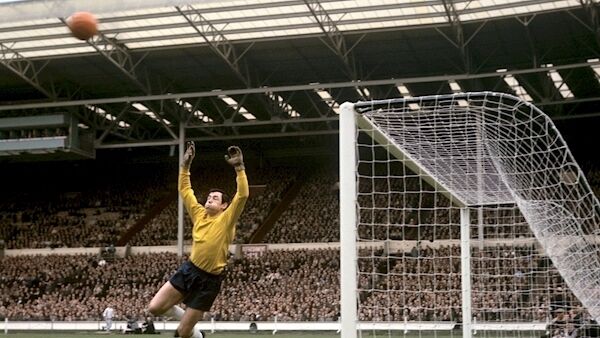
Although Jairzinho later scored to win that game, England were still on course to renew rivalries in the final, facing West Germany again in the quarter-final. But England suffered a devastating blow when Banks was taken ill the night before the game, and Peter Bonetti of Chelsea proved to be an inadequate replacement as England crashed out of the tournament.
“I felt, and Alf did too, that we were a better side in 1970 than we were when we won it four years earlier, so it was a great disappointment to go out,’ he said.
Within two years his career was effectively over after a car crash that cost him his sight in one eye. He would never play at the highest level again. A season in America with Fort Lauderdale Strikers was followed by a one-off game for St Patrick’s Athletic in 1977, a 1-0 win over Shamrock Rovers.
He tried his hand at coaching with Port Vale and management at non-league Telford, but was treated shabbily and left football, disenchanted and without little left in reserve, a situation not helped by a failing business.
The one-time “Banks of England” struggled financially and eventually had to sell off his World Cup winners’ medal for around €140,000 in 2001. He also battled ill-health, being diagnosed with cancer of the kidneys in 2015, but he was recognised for his achievements by both Leicester and Stoke, where he would still receive a hero’s welcome.
He never lost touch with friends and foes from his career. By last year, four of his teammates from 1966 had already passed away, and another four suffered different levels of dementia. Banks was one of the few still able to enjoy social occasions and was in great form last January when he paid tribute to Pelé at a dinner organised by the Football Writers’ Association dinner, who had voted Banks Footballer of the Year in 1972.
He’d met up with the great man several times over the years, and the story remained the same: “He (Pelé) always said to me: ‘Wherever I go in the world people talk about the goals I scored, but when I come to England, all that people talk about is that save you made from me!’ ”
He said it with a twinkle in his eye and a beaming smile, the way we remember him.
CONNECT WITH US TODAY



Be the first to know the latest news and updates