Talented Cisse uniting Italy against ‘the eviction of shame’
Football has long inhabited two different planets. There is the glitz and the glamour and the hype, the grotesque wages and ridiculous transfer fees — and then there is the real world, where people are struggling to eke out a living, or just to survive.\]
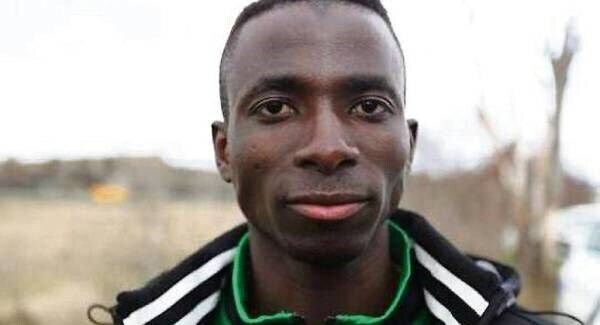
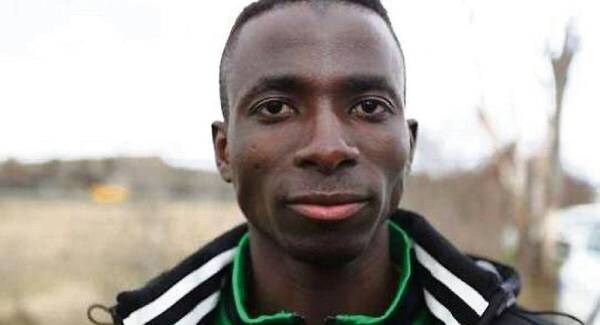
Ansou Cisse is one of the survivors. He was 17 when he left his home in Senegal and embarked on an incredible trek through the desert and across the sea to finish up in Italy, as one of the tens of thousands of migrants hoping to be granted refugee status.
Two years on, he was still waiting to know his fate when last week, he was suddenly informed that the immigration centre where he was staying at Castelnuovo di Porto near Rome was to be immediately shut down. He and another 300 asylum-seekers were to be moved “elsewhere”. The first 30 were taken by bus to various addresses in the south of the country, others have now been dispersed to the north. The rest are due to depart by the end of the month.
Another five of the 10 such centres in Italy, known as CARA, are also due for imminent closure, part of the crackdown on immigration being pushed through by Italy’s right-wing Minister of the Interior, Matteo Salvini, under a catch-all decree on security.
“It will save money,” Salvini told journalists, claiming that the centre was “oversized” and cost €6m a year to run.
Those being accommodated were not being integrated, he said.
The Castelnuovo CARA was riddled with petty crime and “those without the right to stay in Italy must leave.
Par for the course for Salvini, who has become used to getting his way, closing Italian ports to ships carrying migrants and backing moves to make life as uncomfortable as possible for those who have already arrived.
The difference this time is the response, led by the local council and the church.
And the resistance has centred on Ansou Cisse for a reason.
Castelnuovese are a modest football team — they play in the Prima Categoria, the fourth tier of amateur football in Italy — but they are part of local life. Far from not being integrated, Ansou is their most promising striker and top scorer, with 12 goals this season for the youth and senior sides. He also attends the local secondary school, catching up on his missed education and learning to speak Italian as well as the languages he grew up with.
After the closure of the CARA was announced, 500 people marched on the centre to protest, led by the mayor, Riccardo Travaglini.
The parish priest, Jose Manuel Torres, has also condemned the closure. “Father forgive them for they know not what they do,” read a Tweet from the local Franciscans in a message to Salvini and the Prime Minister, Giuseppe Conte.
Salvini’s crass response to the Franciscans — “I hope these priests who want to send me to hell open their wallets and lend a hand” — has not played well, particularly as the church across Italy has been funding accommodation and help for asylum-seekers more than any other institution.
Moreover, the interior minister is facing unwelcome publicity with a possible indictment in Palermo for kidnapping because of his refusal to allow a coastguard vessel to dock because it was carrying migrants. The case is unlikely to proceed — it needs a vote in parliament — but it has provoked a demand from Salvini’s coalition partners for him to step down.
Castelnuovo also has an ally in the Vatican.
It is the closest refugee centre to Rome, and in March 2016 was chosen for a ceremony when Pope Francis met and shook hands with all the residents, who numbered almost 900 at the time, and a mass during which he washed the feet of 11 refugees of different religions. It was a powerful interfaith event, involving the local imams as well as priests, and had an impact throughout the country.
No one particularly likes these centres: They were established as temporary refuges, and to some they seem more like ghettos.
It is the suddenness of the closure, as well as its brutality, that has shocked people. There was barely 48 hours’ notice.
“The Eviction of Shame” was the headline in Catholic magazine Famiglia Cristiana, and Salvini’s claim that people were transferred to the waiting coaches “with politeness” contrasts with the descriptions of onlookers, who describe people being bundled aboard “like parcels”, with soldiers standing by.
The first coaches also set off before anyone was told where they were going. Children as young as four or five were among those on board. In some cases families seem to have been separated. Fourteen youngsters had to depart before they had a chance to say goodbye to their classmates.
For the young man who has become the symbol of this story, it has all been bewildering. Having coped with the
Sahara and the perils of Libya — “the whole journey was risky, but that was the worst part” — and then the hazardous crossing to the island of Lampedusa, he had settled into a routine of school and sport. As well as football, the contact with the Vatican led him to join their athletics club, and he has recently been selected to represent them in the marathon.
Now, he says, it seems that it might have to start again from zero.
“I’ve made so many friends through football,” he says, and his team-mates have responded to the eviction by offering to put him up in their homes. “With us he’s found a new family,” says club director Mario Monteleone.
“It is a beautiful thing,” says Anzou.
“Italian people, people from the Vatican, Senegalese and others, all together.
I’m a Muslim, and it’s wonderful to be part of a team which doesn’t discriminate between people because of their colour, their culture or their religion. Life should be like that.


CONNECT WITH US TODAY



Be the first to know the latest news and updates