Ireland’s got talent, vows FAI’s Ruud Dokter
On the back of missing out on the World Cup in Russia and being heavily beaten by Wales on their return to the competitive arena, Martin O’Neill and his squad find themselves under pressure this week as they face into two big Nations League games in Dublin.

Ireland’s got talent, vows FAI’s Ruud Dokter

By Liam Mackey

On the back of missing out on the World Cup in Russia and being heavily beaten by Wales on their return to the competitive arena, Martin O’Neill and his squad find themselves under pressure this week as they face into two big Nations League games in Dublin.

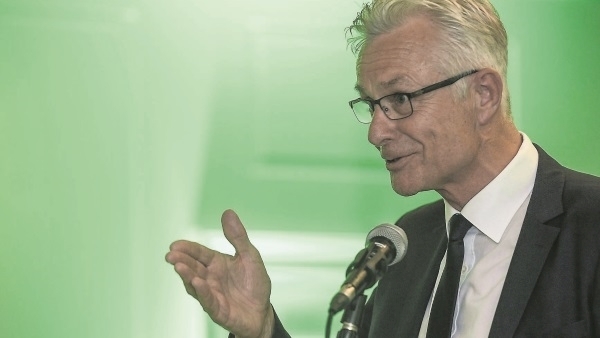
But the FAI’s high performance director Ruud Dokter — the man charged with overseeing player and coach development in this country — insists that, contrary to much pessimistic analysis about the state of the game here, the future for Irish football is bright.

“We are a small country with a small population but we have talent,” he said yesterday. “People say we don’t have talent but we do. They say we don’t have strikers but we do. It’s about identifying them and developing them. It’s always long term. If I say long term, I know you want to hear a time frame. It’s five to 10 to 15 years but it also has to be sustainable for the future. You shouldn’t be looking at just five years, that doesn’t work.

“There’s no quick fix. What you can see with our national leagues and underage teams, there’s now 13 homegrown in Tom Mohan’s (U19) group. In Colin O’Brien’s (U17) group, I believe there’s only one player from the UK. That’s consistent for the last number of years, and that’s a sign of opportunities and development of the players in our country.

You can’t rely on the best players going to England because it’s very difficult for players to break through in that system with so many foreign players. We need better standards in our own country to prepare our best players so that if they do go across the water, they have a better chance of succeeding.

Dokter has praised the “good connection” between Martin O’Neill and the underage coaches and teams but also acknowledged that, in terms of style of play, the senior manager has different priorities to those whose main responsibility is to bring players through the developmental set-up.

“Yes, there’s a difference but also that’s the responsibility of Martin and the management staff,” he said. “Their decisions are based on what’s best to get the result. I totally understand that. In the meantime, Martin is very much involved with the underage now. He’s attending matches and our managers’ meetings. We have a lot of discussion on that. In the past, we wanted a good connection and there is a good connection.

“At a young age, the style of play and system of play is used to develop players. At the very end, on the top, you need a style of play and system that suits the players. So that’s the difference between results-based and development.

“Our job at underage level is to develop players, that they’re comfortable playing different styles of play. Obviously, playing out from the back, through the thirds, it’s very important that players have that confidence.

But it’s not about one style. You have to be able to adapt and learn. You’re always depending on quality of players. So the long ball is not forbidden, by no means. Playing through the thirds is difficult, of course. But if that side of the game is not developed, it’s very difficult at the top. So, you have to have multiple styles, multiple systems. It’s important during your pathway not to have players used to a rigid system.

With U19, U17, and U15 national leagues already in place, the next piece of the jigsaw in the FAI’s plan for progressing the game in Ireland will be the inauguration in March 2019 of a national U13 league for which expressions of interest are currently being sought.

“The U13s is a very important league, a vital step in the progression of our young players,” said Dokter. “It’s a very important age group not only from a football perspective but also emotionally, socially and physically, so it requires a lot of good quality guidance in terms of appropriate coaching and coaches that understand the requirements of that age group.

“We brought in the heads of academies last Thursday to discuss the format of the league so we haven’t taken a final decision on that. We are in talks with them because it’s important we have their opinion as well. But I must say there is a great buy-in from the clubs.”

With top-level football in England becoming increasingly difficult for Irish footballers to access, Dokter said he would encourage players to look to Europe as one alternative. And, on the home front, he believes there could be merit in the League of Ireland providing a bridge between U19 level and senior football in the form of a revamped First Division.

Maybe you have more clubs in the First Division, with the second teams from some Premier Division teams, and make it 12 to 14 teams.

"Portugal has that model, with a few teams in their second division. It works well I understand. Of course there’s a cost factor which I understand but ultimately you want to develop players and it’s also an industry and you have to be smart in terms of how you retain your best players and give them opportunities.”

More in this section

Sport

Newsletter

Latest news from the world of sport, along with the best in opinion from our outstanding team of sports writers. and reporters

Cookie Policy Privacy Policy Brand Safety FAQ Help Contact Us Terms and Conditions

© Examiner Echo Group Limited