Players need to be offered a viable career path at home
It shouldn’t transpire that the FAI’s underage system only attracts scrutiny when the fortunes of the senior squad plummet but that’s one of the consequences of the team’s recent struggles.

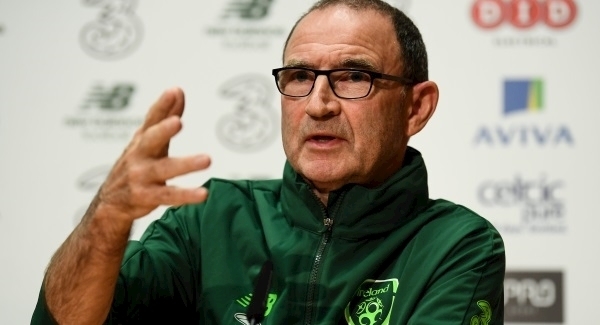
Martin O’Neill was swift to distance himself from a connection to the production line amid the latest capitulation in Wales and, in doing so, underlined a symptom of the problems.
By the end of Tuesday’s friendly in Poland, however, he was citing a victory by the U16s against Bulgaria in a friendly earlier that day as a reason to be cheerful. It was in keeping with a confusing eight-day camp.
The Ireland senior manager gets sufficiently remunerated, apparently €1.6m per annum, and enjoys enough lengthy breaks between matches to immerse himself in the workings operating beneath.
Michael O’Neill does so for Northern Ireland, likewise new Wales boss Ryan Giggs. Gareth Southgate hasn’t forgotten his roots; the England manager keeping abreast of the U21 team he used to be in charge of and beyond.
That’s not to suggest O’Neill himself can rectify the alarming paucity of talent; rather he should at least expend more legwork in discovering the reasons why.
Commendable as it was for him to attend all four of Ireland’s games at the U17 Euro finals in May, most visibly to the public by encroaching onto the pitch to remonstrate with officials, he didn’t have far to travel within the country he lives. The Derryman was nowhere to be seen when the hosts were Croatia 12 months earlier as the team, using players now older and relevant to his senior options, marched to the same quarter-final stage of the tournament.
Although the streamlining of underage fixtures into the same international window as the seniors presents a clash, there’s nothing to stop O’Neill and his sidekick Roy Keane from becoming regular attendees at the midweek regional development centres the FAI trumpet so vociferously.
His employers have long been distracted by tackling a self-inflicted stadium debt malaise and budgetary constraints that have long plagued the game’s development, since the plan to sell overpriced premium tickets hit the rocks a decade ago next week.
All of the international teams were hit, with players and staff having their daily allowances removed, and a reduction in the number of games.
“We’ve only had two friendly matches since qualifying from the first phase last October, whereas Portugal have played nine,” sighed then U19 manager Paul Doolin ahead of the Uefa qualifiers in 2012.
Financially, it’s not feasible at the moment to play more friendlies. It’s the same for all the squads at the moment and makes thing a bit difficult.
The albatross of hefty interest rates from the FAI’s mortgage persists on the domestic front too. Plans to transfer the responsibility of nurturing elite talent to League of Ireland clubs would have merit if they had the means to finance teams at U15, U17, and U19 levels.
Instead, they have to find at least €300,000 to fill the gap between expenses and the sums doled out through Uefa’s solidarity grant and a measly €250,000 from the association itself. League Director Fran Gavin highlighted the €1.4m cost to clubs – and that’s before they have to spend a cent on the new U13 equivalent to start in March.
The composition of the new leagues has also been haphazard. As mentioned recently by Noel King, manager of the U21 side and veteran member of their technical department, it was the schoolboy clubs that came to the rescue of Irish football, belying their amateur status to supply scores of gems to English Premier League clubs. They have now been discarded from the system because they have no interest in entering a team into the senior professional ranks. It doesn’t have to be an either/or scenario. Clubs, regardless of their status, ought to be tasked with the job of hothousing talent based upon their expertise and facilities.
Ireland’s issues, in particular for O’Neill and King, is the congestion facing players between the age of 18 and 22.
Ireland’s U19s would have reached the last two annual Euro finals had Uefa replicated the policy of doubling the number of qualifiers to 16, something which facilitated back-to-back appearances for the U17s.
A glance through the latest U19 squad that faced Wales this week shows players from Manchester United, Liverpool, and Tottenham Hotspur but their chances of featuring at first-team level there are remote.
It’s where they go from there that constitutes the challenge and the FAI’s failure to generate what Cork City boss John Caulfield describes as an “industry” here for players to thrive in, means they’d rather negotiate the lower English leagues.
Until that changes, no Irish person, including O’Neill, can bemoan the fact that our U21 team is dominated by representatives from League One and Two clubs, many of whom are benchwarmers there.