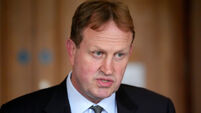
Palios sees 'firm foundations' at the FA
New Football Association chief executive Mark Palios is relishing the chance of taking charge at Soho Square even though he was only second choice for the job.
As expected, Palios was confirmed as Adam Crozier’s successor yesterday, just a week after preferred candidate Peter Littlewood withdrew his interest in the £400,000-a-year (€568,000) role when he learned of dissenting voices within the FA’s 12-man executive board.
However, despite that embarrassment, the 50-year-old chartered accountant had no hesitation in accepting the post and will officially take command on July 1.
While a 400-game professional playing career with Tranmere and Crewe should earn some respect from the footballing fraternity, it is his more recent role as a partner with global services firm PricewaterhouseCoopers (PwC) which will be of more use in his most pressing tasks.
The FA has been wracked by financial problems over the last few months, after committing itself to the huge £750m (€1.065bn) cost of rebuilding Wembley Stadium.
Approximately a fifth of staff have been made redundant and only this week, BSkyB chief executive Tony Ball suggested the organisation could expect a reduction in television revenue from the rights to screen the FA Cup and England matches unless the satellite broadcaster was given a fairer deal.
However, Palios seemed undaunted as he said: “I am very excited about the prospect of leading the FA through a very important period in its history.
“The football industry has changed considerably in recent years and my work at PwC has allowed me to see how the game has developed and provided an insight into some of the challenges I will face.
“From what I can see, the FA clearly has talented and committed staff and loyal and high-quality commercial partners.
“The FA enjoys a fabulous name in world football and owns some of the game’s most prestigious brands, including the FA Cup, the England team and Wembley.
“All of this provides us with a firm foundation on which to take our business forward.”
“Mark’s business experience will be a huge asset to us at a time when the FA, and the game as a whole, must face up to a number of challenges,” said FA chairman Geoff Thompson, one of the men who backed Littlewood for the post.
“Not only do we remain one of this country’s highest profile organisations but our decision to rebuild Wembley means our business and our finances are considerably more complex than at any time in our history.”
If getting to grips with the monetary issues was not enough, Palios will also have to tread his way carefully through a minefield of power struggles within English football as a hole, with key figures within the Premier League and Football Association frequently taking opposite views on key issues, Crozier’s departure and the debacle over Littlewood’s proposed appointment seen as prime examples.
There is also the task of maintaining improved relations inside UEFA, which Crozier did so much to enhance after the fall-out from the failed bid for the 2006 World Cup, which exposed England’s lack of influence inside European football’s corridors of power.
“Mark has played the game at professional and amateur level and this can only be an asset in his new role as he seeks to build an understanding with players, coaches, managers, fans and fellow football administrators at all levels of the game, both at home and overseas,” added Thompson.

CONNECT WITH US TODAY



Be the first to know the latest news and updates