Iceland's football shows they're a country without any inferiority complex
January 7, 2008. After winning the NAIA National Championships in Daytona Beach, Florida, I stepped off the plane in Keflavik Airport to the coldest weather I had ever experienced. I had never breathed air like this — bitterly cold, but fresh, tough and challenging.
I was greeted by Bjarki Mar Sverrison in a town called Mosfellsbaer, six miles outside Reykjavik, and was immediately told to get ready for Thorrablot, a national celebration that went on until about 7am the next morning.
Four days later, I was brought to my first training session with the Meistaraflokkur (first team). The astroturf was beautiful, surrounded by five feet of snow. Apart from the cold, this was heaven. After about 30 minutes of technique in minus-six weather, we started a nine-a-side game. I had previously spent eight years in England playing professionally, so this was going to be easy, right?
How wrong I was.
Five minutes in, Arnor Gauti Oskarsson, who later became one of my best friends, hit me with a shoulder sending me head first into the snow. I pulled my head out and was just about to give him a rollicking when he screamed right into my face “Helvítis útlendingur (bloody foreigner) — welcome to Iceland.”
Watching the England game on Monday night, I couldn’t help feel the same sense of freshness, toughness and challenge that first took my breath away when I felt stepped off that plane in Keflavik.
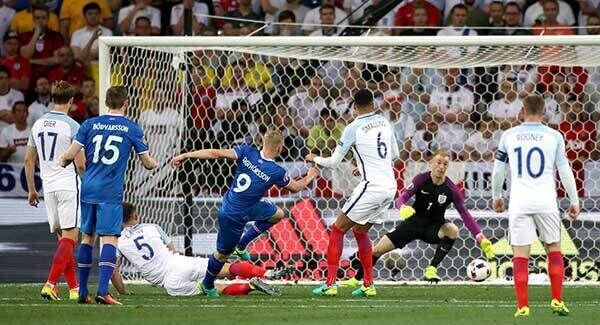
This is a country where, despite the size, there is no inferiority complex about so-called bigger nations. When the financial crash happened in 2009, these people got on with things and wondered why the rest of the world thought they were eating out of bins and starving. When I spoke to their former U19 national team coach Thorlakur Arnarson about what Iceland expects from Euro 2016, he simply replied: “We are going there to win it.”
There is no fear in these people — they leave their babies out in the fresh air outside their houses. They only cancel football games if the weather goes below minus-10. And they approach each game wondering how they can win it — not how they can avoid losing it.
I struggle to write ‘they’. I use ‘we’ a lot when speaking about Iceland — I was once offered the chance to apply to become a citizen.
Ireland’s win over Italy saw us revert to what made us a prominent team in world football. Fight. Heart. Guts. Skill. And a plan that plays to our strengths as Irishmen.
Iceland have these things in abundance. They pay their coaches at U8 level up to senior. There is a pride in the development of their local players. The clubs help the coaches to climb the KSI coaching ladder to ensure their players are given the best possible chance of becoming technically good enough to compete on the international stage.
Going back to Bjarki Mar, a Uefa A coach that focuses so much of his training sessions on technique that he was invited to Melwood by Liverpool to take sessions with the underage players there; as soon as Iceland beat Austria, he was lightning quick to send me an email reminding me goalkeeper Hannes Thor Halldorsson played a season in Afturelding FC, the club I played and coached for when I lived there. There is such pride in these players.
This pride isn’t confined to the Icelandics. I coached Arnór Traustason, who scored the winner against Austria, and centre-half Haukur Haukur Haukson at sessions I took in Korinn. Decent players but I wasn’t sure then if they were up to this level. To see them play so well on one of the biggest stages fills me with pride.
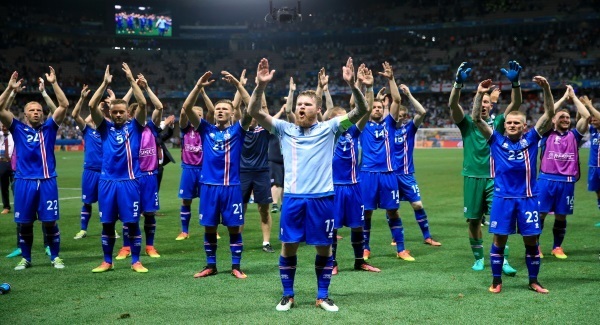
It shows these Icelandic vikings are not to be taken lightly. Their skill levels are now matched by a self-belief and a work-rate that has taken European football by storm.
There is a sense of national identity about the Icelandic people that is reflected in their fans, their football team, and their commentators.
Gummi Benediktsson is a top coach in his own right but has become international news for his passionate TV commentary.
To sum up the Icelandic people, I will give you an example of the way I was treated in the six and a half glorious years that I lived there. Iceland’s social scene is the stuff of legend with clubs only starting to get busy at 12 or 1 o’clock at night. For the first two years I lived there I couldn’t speak the language and if I approached a woman in a bar, it was considered cute that the foreign guy was speaking English.
After two years, I was asked why I wasn’t trying to speak Icelandic as I had been living in their country so long. It was then I started to pick up words, took classes and tried to speak this impossibly difficult language. After four years, it was considered my duty to first try to speak Icelandic, and it was the Icelanders’ choice to help me out and use some English words if they saw me struggling.
This is Iceland! And the Icelandic people expected me to adapt to their culture. I was their guest, and the bitter cold I felt on Jan 8, 2008 was replaced by a warmth and respect that I still feel today.
Just like England last Monday night, if the French dare to underestimate the fitness, drive and passion of these warriors, there may well be another volcanic eruption, Icelandic style, in the Euro 2016 quarter-final.
- John Andrews is a Uefa ‘A’ licenced coach and former pro with Coventry City, Mansfield Town, Cork City and Cobh Ramblers. He spent six years in Iceland playing with Afturelding FC and coaching their professional men’s and women’s teams. He is the founder of FRP Fitness for Regular People.


CONNECT WITH US TODAY



Be the first to know the latest news and updates