Transfer ban a message for Barca to change their ways
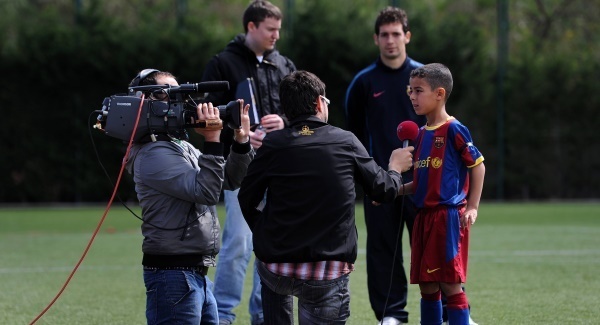
Fifa’s one-year transfer ban on Barcelona shows how concerned the world football authorities are to uphold their regulations about the transfer of young players.

Transfer ban a message for Barca to change their ways

It’s a strong signal, especially as Barcelona pride themselves on their youth development programmes and looking after youngsters. Moreover the club has already been hit by bans imposed on youngsters playing in their academy teams, among them three South Koreans. This is a particular embarrassment as Barcelona have been targeting juvenile recruits from the FCB Escola training centre they opened in Seoul in 2011. Fifa have given Barcelona 90 days to regularise the position of six young players who they have banned and it seems certain the club will need to review its recruitment processes.

However, as far as Barcelona’s first-team are concerned, the Fifa sanctions will almost certainly turn out to be less draconian than they appear.

For one thing they have some seasoned players in their B team or on loan, including Gerard Deulofeu at Everton. They are appealing the Fifa ruling and can take their case to the Court of Arbitration for Sport (CAS).

An appeal was one of the tactics employed by Chelsea when they were similarly sanctioned for signing Gael Kakuta from Lens and more recently by French club Nantes, who have also been given a one-year transfer ban. In the Kakuta case, the two clubs reached a settlement and there was no further action. Nantes have just had their appeal rejected, together with a further appeal to the Swiss Federal Court which has legal jurisdiction in these cases.

The CAS is not a court of law and its arbitration panels are inclined to uphold Fifa decisions, unless the authorities have made procedural errors. An “out-of-court” settlement is most unlikely as the Barcelona case involves 10 different players and a series of breaches of regulations, over a period of four years.

Article 19 of the Fifa regulations was introduced specifically to dissuade clubs and agents from trafficking youngsters who would then find themselves abandoned when they failed to make the grade.

No one is suggesting Barcelona mistreated these players or behaved unscrupulously. But Fifa’s position is that while underage transfers “might in specific cases be favourable to a young players sporting career... the interest in protecting the appropriate and healthy development of a minor as a whole must prevail over purely sporting interests”. Fifa also emphasises that “the protection of minors is one of the key principles included in the agreement between Fifa, Uefa and the European Commission in 2001”.

However time is on Barcelona’s side. Their first line of appeal is to Fifa itself and then to the CAS. Time limits apply but it would be the end of May at the earliest before any deadline. The full grounds of appeal would then submitted, the arbitrators agreed between the two sides and then the case scheduled.

These hearings take time to arrange and the backlog is often up to a year. After he went to Fifa over his dismissal in 2011, David O’Leary won his claim for compensation against Al Ahli of Dubai last May. But the club appealed to the CAS and the hearing is only scheduled for Friday week.

While a case is appealed any sanctions remain on hold, so Barcelona can be confident that any recruitment plans they have for this summer can go ahead, and most probably next winter as well. They may eventually have to suspend transfer activity for two windows, but this is not a huge obstacle for a big club. So the Fifa ruling is an embarrassment, particularly for a club so closely associated with UNICEF and child welfare, but in practical terms this is a message to Barcelona to change their ways and the Spanish Football Federation to change their rules rather than a real penalty for misconduct.

Barca case first big test for Fifa’s transfer watchdog

The Barcelona case is the first big test for the Transfer Matching System, set up as a Fifa subsidiary seven years ago.

Their procedures to protect minors came into operation in October 2009 and since October 2010 all international transfers have to be processed through the TMS online system. The unit maintains a database at its Zurich headquarters to monitor all moves between different countries — over 4,500 in this last transfer window alone.

As a commercial organisation they also offer a similar service to speed up domestic transfers — and provide customised data to allow clients to analyse the transfer market.

But as well as clearing house the TMS is also a policeman. Its integrity and compliance unit, headed by Canadian lawyer Kimberly Morris, is a proactive operation, gathering intelligence via its own investigations as well as external sources. Results are then passed on to the Fifa disciplinary committee for evaluation and decision. The Barcelona investigation dates back to the start of this process and it may be that the club has partly provoked it by publicising its successes, such as the South Korean prodigy Seung Woo Lee, whose business representative happens to be Pep Guardiola’s brother Pere of Barcelona’s Media Base Sports. Among his other clients are a number of prominent players, including Liverpool’s Luis Suarez.

More in this section

Sport

Newsletter

Sign up to our daily sports bulletin, delivered straight to your inbox at 5pm. Subscribers also receive an exclusive email from our sports desk editors every Friday evening looking forward to the weekend's sporting action.

Cookie Policy Privacy Policy Brand Safety FAQ Help Contact Us Terms and Conditions

© Examiner Echo Group Limited