Standing on the shoulders of a giant
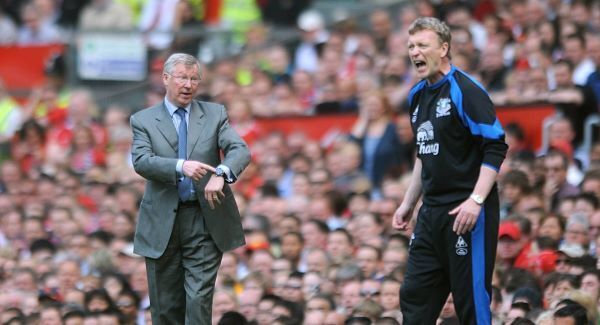
So if there’s any element of surprise left at all in the confirmation that Moyes is finally to fill the hot seat at Old Trafford, it’s probably got less to do with his actual appointment than the fact that, even 48 hours after his imminent departure was announced, the mere idea of the end of the Alex Ferguson era still takes some getting used to.
And therein lies both the logic of Moyes’ appointment and the extent of the challenge he now faces. Having experienced the benefits of stable management for more than a quarter of a century, United have opted for a sense of continuity over the temptation to replace Ferguson with another managerial titan.
As pure box office, Jose Mourinho would have fitted that bill perfectly, of course, as well as bringing with him a winners’ CV which frankly dwarfs that of the soon to be former Everton manager. But in Moyes, United believe they have got someone with potential still to realise, a man and a manager with the personality and professionalism to grow with a club that has always refused to stand still. And nothing illustrates the strength of that conviction more than the awarding of a massive six-year contract to the new man.
The sense at Old Trafford this week of a managed transition, a seamless succession, underlines the hierarchy’s preference for evolution over revolution. It makes sense therefore that the replacement for Ferguson is someone who already knows a lot about being at a football club for the long haul. After Ferguson himself, Moyes, with 11 years under his belt at Goodison Park, is the third longest-serving manager in the Premier League. And, let’s face it, United were never going to go looking for the bloke who is second in the longevity stakes.
Yet, as with any new managerial appointment, there is an element of gamble involved in bringing Moyes to Old Trafford, even if the punt is clearly of the calculated kind rather than one borne out of desperation. At Goodison, the Scot’s track record in turning an under-performing club into Premier League reliables which has frequently made the top six on a limited budget is undeniably impressive, but even he has admitted to a sense of embarrassment that he has not a single trophy to show for all those years in charge at Everton. Three manager of the year gongs are scant consolation.
But United have looked beyond the threadbare honours roll and seen qualities which chime with the way the club has traditionally been run, not least the fact that – like Ferguson in his early years at Old Trafford – Moyes has devoted a considerable amount of his energies at Everton to investing in youth and developing home-grown talent.
And the similarities with Ferguson don’t end there – or even with their shared penchant for the barbed, occasionally fiery outburst. Like his fellow Scot, Moyes is an una duce, una voce type of manager, a strong believer in the iron rule of the boss. He is also supremely focused, a quality evident when he was initially appointed as provisional manager of Preston North End in 1998 and, a week later, surprised the chairman by turning up at his office with a carefully worked-out business plan.
On the training pitch too, it was a case of his way or the highway. I once talked to Cork’s Brian Barry Murphy about his early days under Moyes at Preston and even though a good few years had passed in the interim, Brian still recalled the experience with what I can only describe as an admiring shudder.
“Moysey was tough, like,” he said. “At Preston, he used to work us into the ground, we’d be training night and day. At the time it felt like hell but he taught us everything. I often wondered though if he could do with lads in the Premier League what he used to do with us. We weren’t exactly clones but whatever he told us to do, we did. The intensity of our games at Preston was unreal and if you didn’t reach that standard you were left out.”
At the higher ground of Goodison Park, Moyes clearly had to adapt, but the consistency of Everton’s performances suggests the manager’s fundamental principles still applied. Indeed just a couple of weeks ago, Kevin Kilbane was recalling how “incredibly tough” pre-season was at Everton.
But now, for a change, it is the manager rather than his players who is on trial.
The difference is, essentially, a matter of scale. Everything is bigger at Old Trafford – the club, stadium, the history, the reputation of the players and, most challenging of all, the sense of expectation. Accustomed to being thereabouts rather than there at Everton, Moyes now joins a club where if they’re not there they are nowhere. And, while it’s always easier to take over a team of winners, his is the especially unenviable task of having to follow in the footsteps of a living legend.
That Alex Ferguson’s personal recommendation of Moyes was the key to the new man securing the job merely confirms the towering stature at the club of the man he must now replace. As such, the dynamic of the ongoing relationship between the two will be fascinating. As a keen student of history, Ferguson will be fully aware of the detrimental effect on successive managers at United of Matt Busby’s continued presence at Old Trafford. So it will be vital that, while Ferguson has the new man’s back, he resists the temptation to become a power behind the throne.
Ferguson is canny enough to know the difference, even if he is bound to find it hard to adjust to a passive role at the club that almost became his life. But if he can be more Bobby Charlton than Busby to Moyes – supportive but not interfering, in short, a help rather than a hindrance – then the new man will have the benefit of being able to dip into a reservoir of experience and wisdom which has few equals in the whole world of football.
That’s the good news for David Moyes. He gets to start his Manchester United career by standing on the shoulders of a giant.
The bad news, of course, is that it’s a hell of a height should you lose your balance.
CONNECT WITH US TODAY



Be the first to know the latest news and updates