Robot rugby may be a way off but art of coaching is making way for science
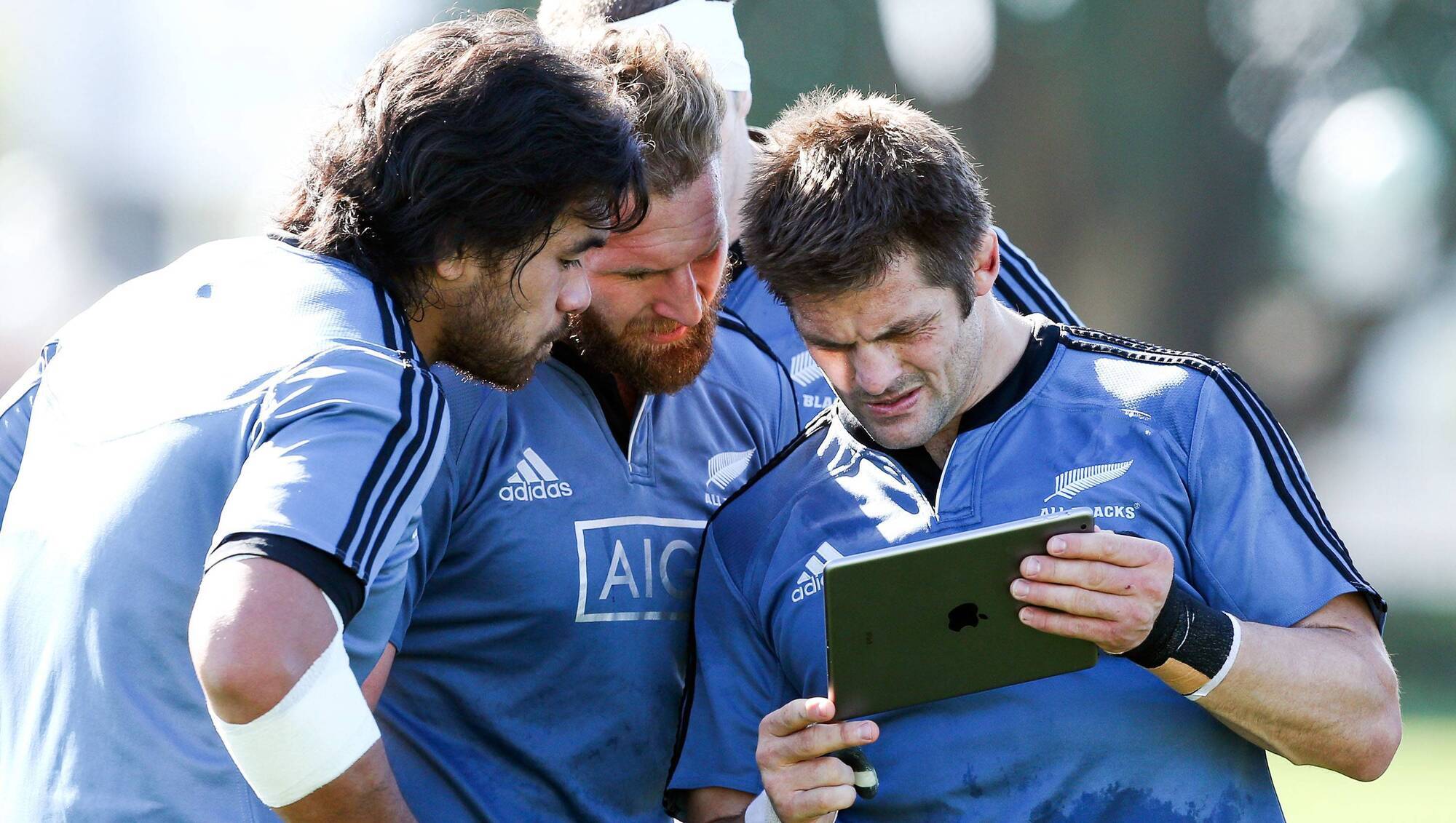
TECHNOLOGY: L to R, Steven Luatua, Kieran Read and Richie McCaw look at an iPad during a New Zealand All Blacks training session. Pic: Hagen Hopkins/Getty Images
Once upon a time coaching sport was deceptively simple. Many years of experience could be distilled into a gut instinct of how best to respond in certain situations. Selection was more of an art and less of a science and you didn’t have smarty-pants analysts telling you stuff that – damn it! – you could already see with your own eyes from 50 yards away.
Pray for the old-timers because rugby’s tech era is well and truly here. Nowadays, one game spawns millions of pieces of usable data. Wearable technology attached to one player can collect information from 300 data points at a rate of 40 times per second. Skeletal tracking, microchipped balls – less painful than it sounds – and myriad other previously invisible markers are now routinely available. Farewell, then, leaky Biros and old‑school clipboards.
It is certainly educational – and sobering – to get an update direct from Silicon Valley in California, where one of the high priests of the new normal is based. Sitting at his desk, with sport’s future at his fingertips, is an Irishman named Stephen Smith, founder and chief executive of Kitman Labs, a global performance intelligence and technology company specialising in injury welfare and analytics.
Among the company’s 2,000 clients are the Premier League, the NFL and the Rugby Football Union and it is easy to see why they are interested. Much individual data is meaningless in isolation, but what if it can be distilled down into “actionable intelligence” that can help with everything from how your star player is really feeling to extending the careers of your entire squad?
“The whole purpose of what we do is providing insights and information,” Smith says. “It’s about joining the dots and seeing what’s actually happening. That’s the secret sauce. It’s being able to look at that in one place and making better decisions.”
Which is the perfect moment, clearly, to hit the former Leinster injury rehab coach with the traditional counterargument. Is modern sport drowning in a sea of data, with some coaches blinded by science and losing the human “feel” that was their raison d’etre? As you might imagine, Smith believes otherwise. “When I hear coaches say that, it’s because they haven’t worked with anybody good enough to help them. It means we’re not speaking the same language as them.
“If we talk about statistical significance, coaches just don’t care. But if we translate that data and insights into their language, that’s how we bring data to life. Because I actually believe in the coach’s eye and expertise. They are analysts, they are scientists, they just don’t know it. They’re doing it with their eye, they just can’t quantify it.”
To illustrate his point Smith refers back to his early years at Leinster, when he worked with Michael Cheika and Joe Schmidt, in charge of Leicester Tigers and the Wallabies respectively. He rates both as “incredible leaders”, but with contrasting strengths.
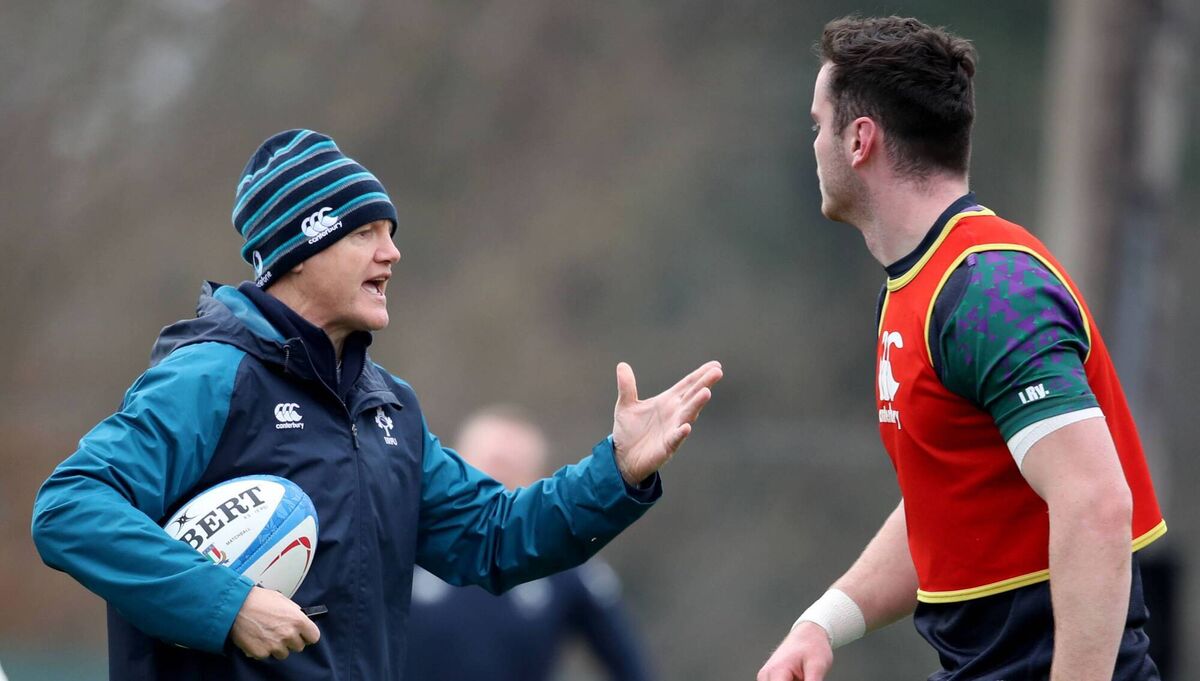
“Cheika had a very well-rounded understanding of athletes. He could see and read them and had very high emotional intelligence. Joe was less [focused] on the person, but unbelievably detailed in terms of tactics. I’ve often said that if you could merge the strengths of both of them together they would be unstoppable.”
It was Cheika, as it happens, who was the catalyst for Smith’s business career. Having made his own fortune in the fashion trade where it paid to be alive to possible future trends and customer preferences, the Australian wanted to know why Leinster seemed unable to keep their players fit and healthy. Where was the data? Was there a pattern? Smith started digging through old handwritten records, put them on a computer and the rest is history. From the precise physical demands of specific positions in an ever‑changing game to maximising player recovery, the numbers are increasingly king. The stats suggest, for example, that the Six Nations championship this year was quicker and more physically taxing than ever.
Having also previously worked at Leinster with Dan Tobin, now England men’s strength and conditioning coach, Smith believes data is increasingly shaping the team’s selection and tactics. “Dan is incredibly detailed about what he does. What does each position and each person look like? How does what they’re doing compare to their own norm and to the norm of their own position group? Without a doubt he’ll be doing that.”
OK, but what about artificial intelligence? Is “robot rugby” just over the horizon, with coaches doomed to become mere ciphers? Smith thinks not, at least for now. “Right now, AI’s role for us is less about interpretation and more about automation. Making video analysis happen faster, for example. I don’t think coaches have anything to worry about at this point in time.”
What about us journos?
“You guys might be at risk a little bit more.”
Harsh but fair. More seriously, Smith thinks far-reaching medical decisions should still be made by human beings, but is convinced technology has an even bigger player welfare role to play, either by identifying ways to make the game safer or by developing better protective gear. “We just need to keep innovation moving on the player welfare side as fast as we’re also building it for entertainment.”
Whatever you think about this Big Brother impact on sporting romance, the technology is here to stay. Smith reckons rising athleticism across the board – “We are so lucky as consumers to have the quality we now see in every league” – is one of the many new age positives. So is modern sport now an art or a science? In Silicon Valley it is not even a contest.


CONNECT WITH US TODAY



Be the first to know the latest news and updates