Six Nations 2024 awards: the highs and lows of a dramatic six weeks
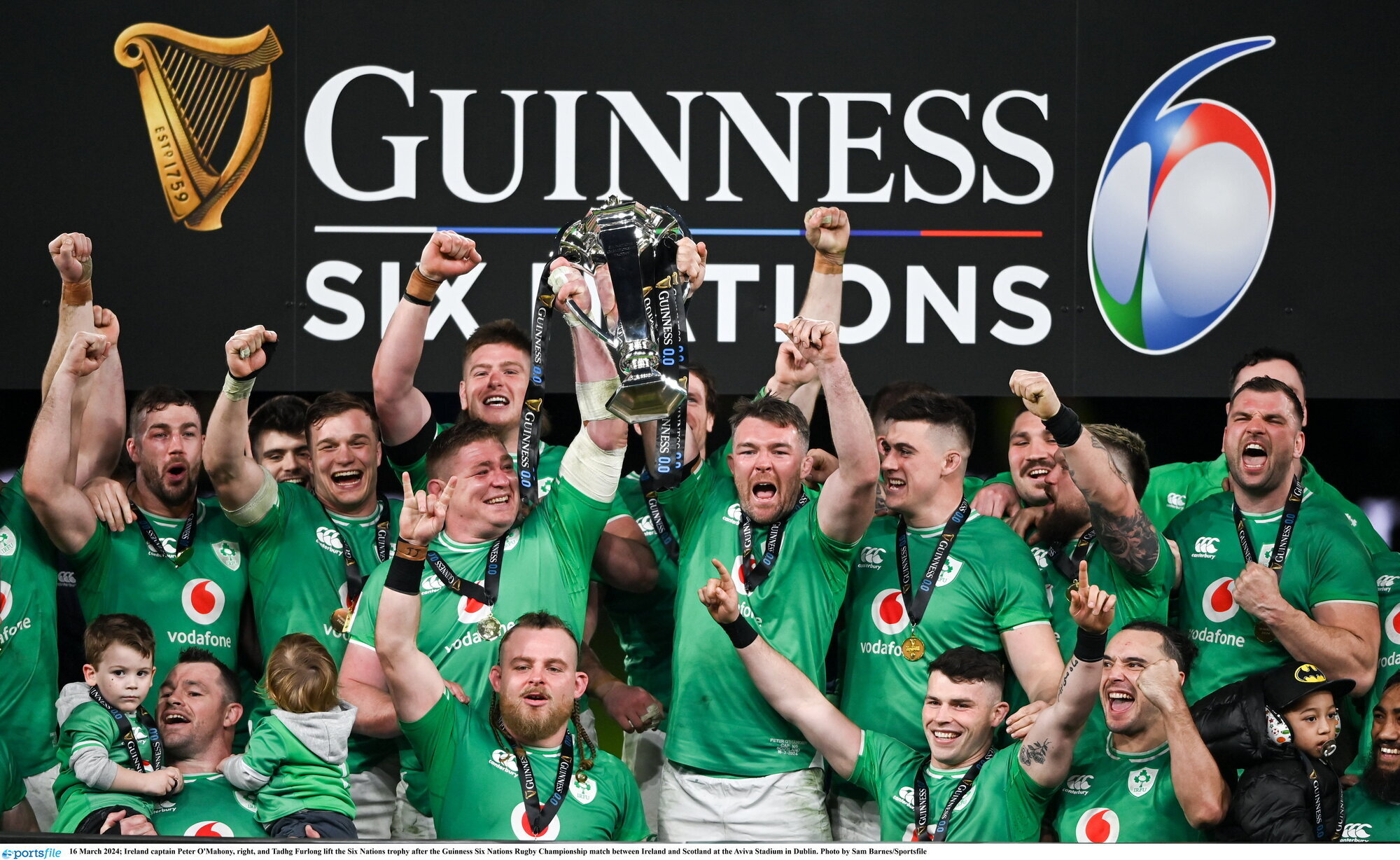
WRITERS CHOICE: From Marcus Smith’s drop goal to Wales’s doomed heroics, here are our picks for best moment, match and more - including a nod to the 2025 renewal. Photo by Sam Barnes/Sportsfile
Michele Lamaro (Italy). No longer will an Italy captain have to trot out the well-worn excuse of ‘Yes, we do deserve our place in the Six Nations and, yes, we do have to improve but we do have players coming through,’ and on and on it usually goes at the pre-tournament gathering. Lamaro’s predecessor, Sergio Parisse, was a master of such matters. But they all kept the faith. Italy have proven themselves, Lamaro led the way and that promising generation has arrived.
Bundee Aki. In the blood-and-thunder world of rugby movies, nobody makes blockbusters like him. The wrecking ball with the balletic touch made two of them in the same season, his sequel to the World Cup ridiculing the notion that at coming up 34 he was past it.
There were some truly outstanding individual performances with Ben Earl’s tour de force against Ireland in round four perhaps the best 80-minute contribution of them all. But for sheer, high-level consistency and excellence across five matches, four of them as Ireland’s starting number nine, Jamison Gibson-Park gets my vote. The scrum-half’s speed and variety of passing was unparalleled and he also contributed three try assists to a championship-winning cause.
: Dan Sheehan. You can’t overstate the value of having a hooker that plays as a fourth back row, particularly one with such an impressive nose for the line. In addition to providing Ireland an excellent platform at the lineout, Sheehan has carved out a reputation for himself as a dangerous attacking threat, both in tight and out on the wing. A return of five tries in five games is evidence of that.
: Tempted to say Antoine Dupont, whose stock rose even higher in his absence. Or Tommy Reffell, a rare shaft of light for Wales. But Ireland won the title again and James Lowe is among the green machine’s most vital cogs. He contributed four tries, two of them in defeat to England, and his roving instincts and long kicking game add even more value.
Tommaso Menoncello. Bundee Aki is probably the correct answer, while François Cros has a strong claim too, but Menoncello enjoyed a fantastic tournament with Italy, never more so than when filling in on the wing against France.
: Take your pick. Outstanding performers everywhere. Never has a Six Nations seen so many. But if you are a hooker who finds yourself scoring more points than another team’s goal-kicker you must be doing something right. Dan Sheehan has it all.
England v Ireland. There were other contenders, as well you might hope given the tournament is spread across seven weeks, but this was the game that gave the competition life and a point of difference, the match that prevented the event from becoming a drawn-out anti-climax after Ireland had seemingly done the difficult bit and beaten France in Marseille on the opening weekend.
Instead of a procession to the title, and landmark back-to-back Grand Slams, suddenly jeopardy was in the air. It may only have been by a point and a last-ditch drop-goal from Marcus Smith, but England were back in business and so too was wider interest in the tournament.
England-Ireland, not merely because it happened to be a terrific Test match but because it restored faith in the championship’s enduring propensity for the shocking result. Nobody saw it coming, not from a team out-tried by Italy, pushed to the edge by the handicapped Welsh and taken to the cleaners by Scotland.
: For neutrals it would have to be the Twickenham clash between England and Ireland but from an Irish perspective, their victory over France in Marseille on the opening night takes some beating. We now know the French are a very different, lesser specimen without their captain and scrum-half Antoine Dupont and they would struggle desperately without him yet there were so many concerns for Ireland going into Stade Velodrome that Friday night and they answered every one of them in a rousing, tone-setting record victory.
Any game decided by a drop goal in the last play of the game is bound to be a contender. That Marcus Smith’s crucial intervention put an end to Ireland’s hopes of doubling up on a grand slam means the game in Twickenham is the winner. Ireland were not at their best but we were treated to the kind of gripping, see-saw battle we want from this fixture every year. Pains me to say it but it was good to see England finally play like a side with the abundance of talent they have at their disposal.
France v England in Lyon had almost everything. A flawed classic, perhaps, but the atmosphere was outstanding and both France and England frequently attacked with purpose and class. The similarly electric England v Ireland game a week earlier was a close second.
The noise and colour and spectacle of France v England at the Groupama Stadium (rubbish name, great backdrop) in Lyon, a reminder of what a special occasion was the Rugby World Cup and what might have been if France (or, yes, Ireland) had gone all the way.
It was a humdinger of a game, too, which, of course always helps. A special mention in dispatches for Stevie Mulrooney belting out ‘Ireland’s Call.’ Andy Farrell knows that he has to bottle that sort of passion and commitment when the team travels to South Africa. Nolann Le Garrec’s 30 metre blind reverse pass features fondly in the mind’s eye, too.
: Stevie Mulrooney belting out Ireland’s Call set the highest of bars. Nolann Le Garrec matched it in the next round with his outrageous 30-metre reverse pass against Wales but Michele Lamaro takes the gold for his reaction to Italy’s win in Cardiff, so emotional that you could see the pride bursting out of every pore when he told the crowd: ‘’I want to thank every Italian fan here tonight.’’
The French supporters’ rendition of La Marseillaise in Marseille ahead of France-Ireland was spine tingling.
: Landing back on terra firma after a storm-tossed flight to Dublin (we ended up being diverted to Belfast) for the Six Nations launch. And, look, I’m no Grace Dent, but if you ever find yourself in Lyon the food really is different gravy.
: Nolann Le Garrec’s breakaway try against England after François Cros poached a lineout off George Martin was as good as any I’ve seen live in a while. The English defence barely managed a touch on any of the French attackers between them.
: Paolo Garbisi’s smile springs to mind. When the ball slipped off the tee in Rome before his opening penalty against Scotland, he accepted the repeat of his Lille calamity with good humour. But Smith’s drop goal was a championship-shaping intervention.
Twofold – the ball toppling off the tee as Paolo Garbisi lined up the penalty that would have brought Italy the result of the tournament if the kick had been successful. And that was in a roof-closed stadium with not a breath of wind to disturb things. Secondly, and more troubling, was the complete and utter collapse of Wales. Rugby in the country is in crisis and that is in no-one’s favour.
France going to pieces. They missed Romain NTamack, the world’s most creative fly half, more than they missed the world’s best scrum half but even so. Once Ireland had left them in bits, they got away with a fortuitous win over Scotland and a still more fortuitous draw against Italy. Factor in that dodgy last-minute penalty against England and they could just as easily have given Wales a run for the wooden spoon.
The meteoric uptick in England’s performance levels from a miserable, error-ridden Calcutta Cup defeat in Scotland to a powerhouse, high-intensity display of top-level accuracy and skill execution to knock Ireland off course at Twickenham a fortnight later. And still they needed a last-kick drop goal from Marcus Smith to secure a one-point, 23-22 home win.
While we have come to expect one big effort from the Italians, their consistency across the tournament this year is something we have not seen before. If you remove the drubbing in Dublin from the equation, they were a mere five points shy of winning all their other matches. After plenty of false dawns in recent years, it looks like this year’s tournament was a genuine coming of age for the Azzurri.
: It would have been Italy beating France in Lille, had the ball not toppled from the tee as Garbisi was set to kick the winning points. Everyone knew Italy were improving but their rejuvenated confidence since the World Cup has been wonderful to behold.
: I expected there to be a World Cup hangover, but I didn’t think it would be for France and I did not see them being beaten at home by Ireland so emphatically. It is to Italy’s great credit that the manner of their victory over Wales wasn’t particularly surprising at all.
A rip-roaring Six Nations that sends the British and Irish Lions on their way to Australia with a squad that is in tip-top form. They will need to be for the Wallabies have always managed to up their game – and, boy, do they need to do so – when the Lions are in town. The last three series there – 1989, 2001 and 2013 – have produced some fabulously competitive rugby.
: World Rugby do the decent thing and erase a time-honoured law from the book, the one that requires a scrum-half to put the ball between the front rows. Referees, presumably with the tacit admission of the game’s governing body, have turned a blind eye for so long that feeding the set-piece has become an increasingly crooked business. World Rugby appear to have given up on the law so why not do something about it?
The Aviva Stadium’s bars shuttered during Ireland’s home games against England and France. Streams of supporters traipsing up and down the stairs of the Aviva’s grandstands in search of pints, blocking the views of fellow ticket holders and spoiling their enjoyment of a title-clinching performance.
A genuine six-way battle across the tournament. After the opening two rounds, I thought this would be a a particularly forgettable Six Nations. That changed drastically in the following weeks and we were treated to one fantastic fixture after another.
It’s sad to see Wales in the state they are in but in 12 months, they will be some of the way to getting back on track, if not all. Combine that with the fact the Italians have finally arrived and it looks like next year’s competition could be one of the best yet
: Fewer examples of television match officials and touchline assistants influencing the outcome of huge games. The crucial disallowed try at the end of the Scotland v France game should clearly have been awarded and a host of other similar offences were ignored before Ben Earl’s fateful no-arms tackle in Lyon. Water carriers sledging referees also needs addressing.
: A Welsh revival under Warren Gatland, which, given the way everyone else is playing, would mean that for the first time since Italy joined the championship all six teams would fancy their chances of beating each of the other five.
: A change to the scoring system. There is no doubting Ireland’s superiority but they had one hand on the trophy after the first round, which was far from ideal. Bonus points are well-intentioned but not really necessary in a tournament such as this.
Bonus points scrapped. They add very little to individual matches, other than occasionally motivating a side to push for one at the very end. No team ever changes the way they play because of them. And the effect on so short a home-and-away tournament can be ruinous.


CONNECT WITH US TODAY



Be the first to know the latest news and updates