Italy's new boss looking to mix Latin passion with Anglo-Saxon pragmatism
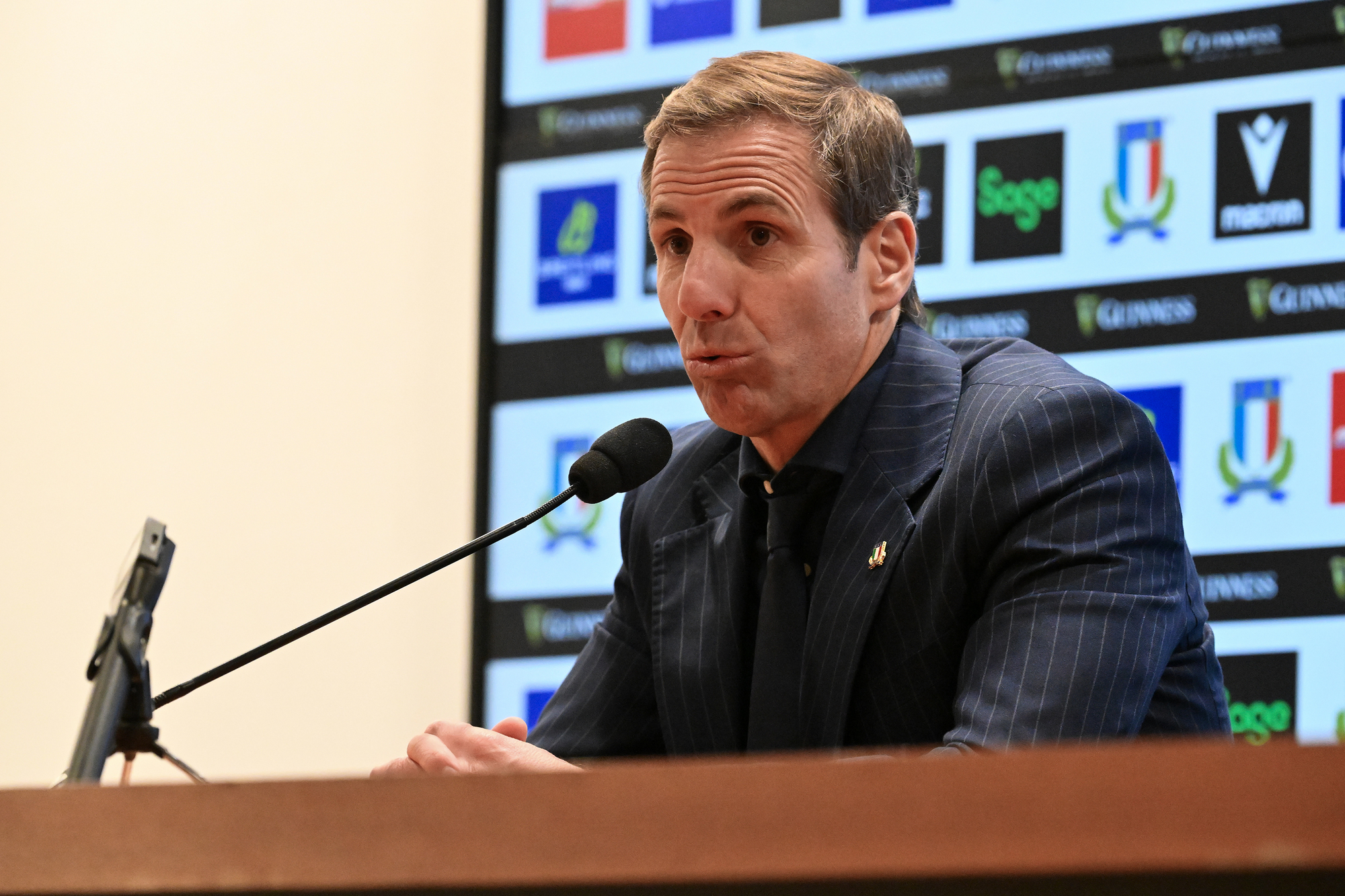
SMOOTH OPERATOR: Italy head coach Gonzalo Quesada during the post-match press conference. Pic: Giuseppe Fama, Inpho
If a chain is only as strong as its weakest link then it was never going to take a bolt cutters to work through the glossy Netflix treatment and expose the obvious shortcomings with which most of the teams approached this Six Nations.
Wales are in the midst of a complete rebuild, and against the backdrop of all the usual financial woes and identity issues afflicting the game there, England are still looking for something more than blood, sweat and tears, while Scotland continue to wax and wane under Gregor Townsend.
The only surprise after the opening round is that France proved to be so bad against an admittedly excellent Irish side, but that flat home performance in Marseille only adds to the picture of a competition that is running low on class, and it brings us nicely to Ireland’s opponents this Sunday.
Italy have long been this neighbourhood’s chief cause of concern.
Kieran Crowley did manage to get the odd decent tune out of the Azzurri with standouts wins against Wales – a first Six Nations win in 36 attempts – and Australia in 2022, but last spring was a return to form with five defeats and more tries and points conceded than anyone else.
They did at least prove competitive. Worse was to follow at the World Cup when, with Crowley already informed of the union’s decision to dispense with his services later in the year, the side suffered a pair of mortifying beatings at the hands of New Zealand and France.
Where, you thought, could they go from there?
Enter Gonzalo Quesada.
Optimism comes with the territory when a new coach takes the reins and the Argentinian, a dapper dresser and multilinguist with a beaming smile, certainly made a good impression at the tournament launch in Dublin last month.
“En francais, ou anglais?” he responded to one question.
Add in his native Spanish and a grasp of Italian that went from zero to an almost fluent 90-minute press conference in the tongue of his new employer’s nation two months after his very first lesson late last year and it’s hard not to be impressed.
His CV isn’t bad either.
Quesada played 38 times for the Pumas, one of them being THAT day against Ireland in Lens in 1999. He spent four seasons as an assistant coach with France, took the Jaguares to a Super Rugby final and won a Top 14 and a Challenge Cup with Stade Francais.
“I grew up in Argentina in the 80s and watching the Six Nations early in the morning in February during our summer holidays with the shutters down and the anthems at full-on volume.
Then I had a nice career as a player and as a coach, but when I came to the French team and the Six Nations it was really strong emotionally.
“Now it is even bigger because I was told that I am the first Argentinian to coach Six Nations and it is a tournament that has a couple of years already, Five Nations and Six Nations included. So I am really proud about that. Unfortunately I cannot let the emotions come in now.
Quesada demonstrated a diplomat’s touch when asked prior to the tournament about the team’s identity going forward.
The attacking verve that Crowley tried to bring out was complimented, continuity was mentioned more than once, but changes were signposted. Change was imminent.
Italy played too much rugby in the wrong places last year and they paid for it. Strong defence and setpiece are supposed to be non-negotiables, discipline paramount in this new era, and that attack is being repurposed to areas of the field far more suitable.
Their opening defeat at home to England brought a combination of hope and realism. They led 10-0 early on, by 17-14 at the break, and eventually fell by just three points in pushing the 2003 world champions closer than ever before.
A decent start and if Dublin on Sunday is hardly a venue likely to deliver further gains then Quesada made the point after the first weekend that his time with the team to now has been limited. His words weeks before attest to the longer-term vision.
“I have an Anglo-Saxon way of thinking but I am a real Latin, emotions are really important for us, especially when we talk about rugby. I played a lot against Italy, among Italian players and then I coached them as well in the past.
“That passion is strong, it is in their roots. That can be the basis for the rugby we want to play and to defend the way we want to defend, so we have to make the contact with that Latin side of the team even stronger. The rest is continuation.”
Hopefully some things will change, clearly.
CONNECT WITH US TODAY



Be the first to know the latest news and updates