Keith Earls: Ireland are not the same team that played under Joe Schmidt
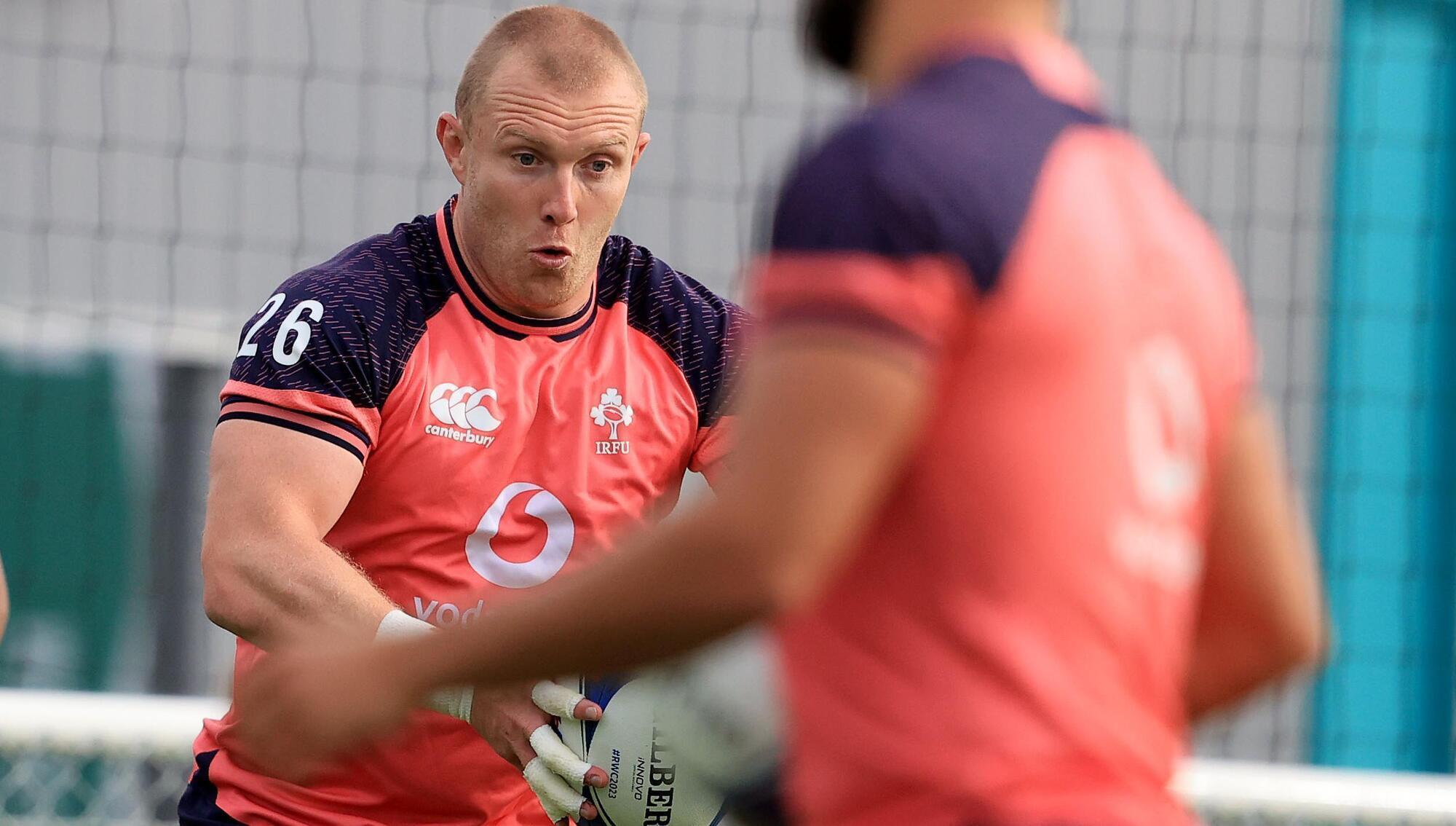
DIFFERENT SIDE: Keith Earls says Ireland are a different side now to the one that was coached by Joe Schmidt. Pic: INPHO/Dan Sheridan
The longer Keith Earls spoke on Monday the more it dawned that here, on a screen via a Teams meeting, was a man whose career sums up Ireland’s journey from poor relation to a point where they will take to the field for a World Cup quarter-final against the All Blacks as equals.
In a week sure to be crammed with hot takes and inexpertly disguised messages, this was one of Ireland’s most senior players walking us through the last 15 years. It clearly wasn’t the intention so much as the product of an honest appraisal and an ability to articulate his thoughts without complication or twist.

Earls was barely 21 when he came off the bench for the last nine minutes of a 22-3 defeat to the Kiwis in Croke Park. Ireland were clinging on to eighth place in the rankings and couldn’t afford to slip any more before the World Cup draw was made.
The visitors had already won the Tri-Nations and nilled the world champion Boks in Cape Town. Not just different hemispheres so much as distant planets.
New Zealand owned them that day at GAA HQ. The dam finally broke with a penalty try on the stroke of half-time. The mystique surrounding those black jerseys, the silver fern, and the fabled haka was as strong as ever as the tourists swept all before them on their end-of-year tour of Britain and Ireland.
“I think it was maybe my second cap,” said Earls. “It was a surreal experience, I had grown up watching them.”
Ireland have faced them 15 times since his debut in 2008 and, while his absence from seven of those shows how the vagaries of injury and form inform all careers, he has featured in more than enough of the fixtures to serve as a symbol of the changing relationship between the countries.
The All Blacks won the first four by a score of 162-40. The worm has turned with five Irish wins in the last eight but Earls’ recent record stands at two won and two lost. That includes heavy defeats in Tokyo and Auckland and, while some see a more fragile New Zealand now, Earls prefers to look at the changing relationship from a different viewpoint.
"Oh yeah, I still think they're a world-class team,” he explained in the wake of the impressive defeat of Scotland. “I think the view is different on ourselves. As Irish people we can lack a lot of confidence and can be, I suppose, a small bit too humble at times.
"You know, we've done an awful lot of work on ourselves and the coaches have done an awful lot of work on getting us to believe that we can play a certain brand of rugby that will make us compete with anyone in the world.
"So I think that was the most important thing for us, getting us to start believing in ourselves, that the rugby that we can play, if we can get it right on any day - which we have shown over the last number of years - that we can compete with and beat most teams.”
The tie binding both sides at the weekend will be Joe Schmidt. The current All Blacks attack coach took over as Ireland boss after the Declan Kidney era had faded away after some great days and the new man brought an intellect, a level of detail and a workrate that delivered some historic successes and earned Ireland the status of best in the world at one point.
Earls credits Schmidt with teaching him how to prepare for games in such a thorough way as to eliminate all doubt and nervousness from his mind. The former teacher stressed the importance of the full 23 being so aligned and, according to the Munster winger, he maximised the talent available to him in that dressing-room.
Schmidt spent three years with Leinster and twice that with Ireland. All bar one were massively successful and that level of insider knowledge has already been described as a potentially crucial part of the puzzle this weekend by New Zealand head coach Ian Foster. Earls doesn’t buy that.
“I don’t think Joe would know anything about this squad. We are a completely different squad. He probably knows things about individuals but, again, we have all changed our habits under this coaching staff and we genuinely don’t use any of the habits that Joe taught us. Look, he might have a thing on a couple of individuals but we are certainly not the same team that played under Joe.”
The truth is probably less clearcut here. Ireland still use many of the struts and much of the scaffolding put in place by their old boss but the change in focus to a more multifaceted game is undeniable and a side approaching any game with 17 wins doesn’t achieve that by standing still and sticking to old habits.
This team has won a succession of big games under very different pressures and conditions and maybe the beam holding the most weight in their collective belief is the manner in which Farrell’s squad followed a heavy opening loss in Auckland last summer with back-to-back wins in Dunedin and Wellington.
“Yeah, it was huge,” Earls admitted. “It was something that was... I think it was the Australians that did it in 1986 maybe, won a Test series [in New Zealand] before us, but that was massive. We drew massive confidence from that, but this tournament is a different animal.”
So are Ireland. The days of awe and inferiority complexes are gone, stripped from the national team's psyche by a relentless sequence of steps. A win on Saturday, in a World Cup quarter-final, would make for another giant leap.