
So even though he has a book out, and he’s supposedly one of the largest personalities in all of Irish rugby, there’s Big Willie Anderson this week still being dwarfed by one of his own when it comes to launches and red carpets.
As impressive and as much as craic as it has been revisiting the clubhouses of Dungannon and Rainey Old Boys, promoting the book and meeting old friends, it ain’t New York. It ain’t the Met Gala.
You couldn’t have gone anywhere this week and have avoided the Met Gala. Kim Kardashian wrapped from head to toe in an outfit designed by Kanye. AOC in her white gown with red graffiti text proclaiming Tax The Rich. J-Lo with her cowboy hat and a gown designed by Ralph Lauren. It is the fashion world’s Oscars, its Olympics, where celebrity after celebrity is dressed as outlandishly as possible by the most feted and in-demand designers in the world.
And yet amidst all the big names — Serena, Rihanna, Billie Eilish — one of the most extravagant and significant outfits of the night came courtesy of Ulster.
Dan Levy — as opposed to Dan Leavy, the Leinster flanker — is the Emmy-winning star and co-creator of Schitt’s Creek. Last Monday he rocked up to the Metropolitan Museum of Art wearing what has been described as the “first Couture gay Superhero costume” featuring dramatic puffed sleeves and on the front two men kissing shaped as maps. For Levy, it was an opportunity to pay homage to the artist and Aids activist David Wojnarowicz and the “resilience and love and joy” of the LGBTQ+ community and to collaborate with one of his favourite designers on the planet.
Teaming up with Jonathon W Anderson was “an incredibly wonderful and fulfilling adventure”. “I just love his perspective on fashion,” Levy elaborated. “He’s so thoughtful, unexpected and artful in his approach to what he wants to say with the clothes that he designs.”
Around his hometown of Magherafelt and his old man’s native county of Tyrone, Jonathon W Anderson may be known as Willie Anderson’s cub. To the wider world and the Hollywood elite, he is one of the most exciting and best designers in fashion. He has his own label, JW Anderson, shops in Japan and Soho, collaborates with brands like Versace and Louis Vutton.
“You talk about who is really famous?” laughs his old man. “I’m only a speck on the speckometer compared to him.”
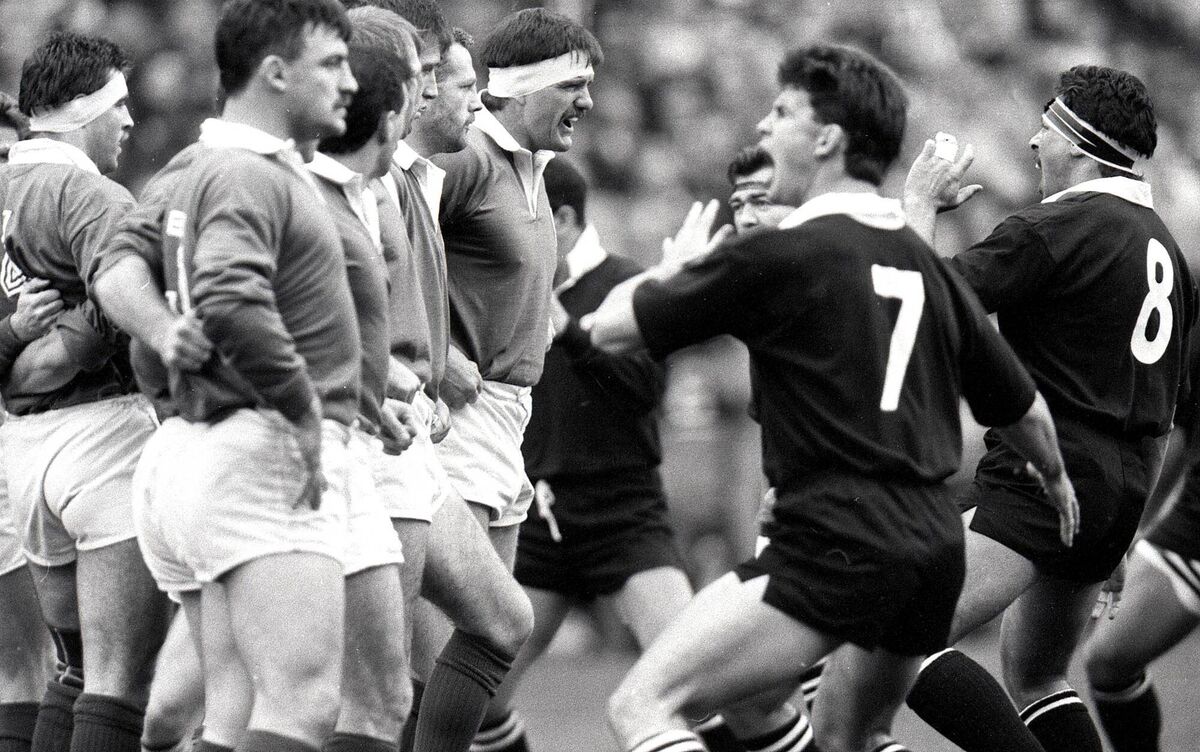
It would have been easy for Willie Anderson and his brilliant Boswell, Brendan Fanning, to begin his story with the day he faced down the Haka, or what it was like being in that driving maul that led to Michael Kiernan’s drop-goal to win the Triple Crown, or when he spent four long months captive in fascist Argentina after an innocent prank went horribly wrong.
Instead it starts in London, a father with his loving wife and the rest of their family heading to a fashion show.
Because that’s what he is now, that’s what he is more than anything. A doting grandfather. A loving husband — for if the book has one constant thread throughout, it is the bond between him and Heather, as much as he tested her love and patience for the past 40 years and more. And a proud father, not just of JW but of Thomas whose business acumen JW now avails of as his operations manager, and of Chloe whose wedding dress JW now will be turning his attention to once he’s unveiled his spring collection at next week’s London Fashion Show.
That love and pride is all the stronger for how they’ve overcome things, how they’ve helped him overcome things.
It was a letter from Thomas, who played for Ulster just like him, that prompted him to finally quit drinking. It was Chloe, back living at home during Covid, who helped him get through the latest bout of depression he experiences most Decembers in the run up to a certain anniversary. They were there for him, just as he’d like to think he was there for them.
As kids Chloe and JW struggled with dyslexia, just as their old man did. People ask him did he and Heather find it challenging accepting that JW was gay. Anderson says it didn’t knock a feather out of them — their message to any parent is to keep telling your child that you love them no matter their inclination. But the dyslexia, now that worried them, that it could stop their children doing what they wanted to do. Yet here they are now: Chloe a qualified pharmacist, JW a designer to the stars.
So that’s where he starts his story. Not on a rugby field, but by a catwalk with the whole family. Crossing The Line is still one of the most enjoyable rugby books there have been, but it is intentionally more than that.
“To me rugby was a passport,” Anderson explains. “And that passport took a lad from a farm in Sixmilecross to places he’d never otherwise have been. I’d never have had the opportunity or money to travel only for rugby. So I owe rugby everything. But because of where I’ve been and what I’ve seen, my story is much more than rugby.”
He's seen the world alright. Places you’d love to visit and some he prays you’ll never know. Dan and Eugene Levy may think they know all about what it’s like to live in and be up Schitt’s Creek but it isn’t being stuck in a backward provincial North American town. It’s being locked up in a tiny cubicle with three other men in a fascist South American country and hearing its generals want you executed.
In August 1980, a 25-year-old Anderson was part of a touring party called the Penguins playing and beating the Pumas in Buenos Aires. After the game he was out on the town with some teammates when he spotted an Argentinian flag flying outside an official-looking building. The previous year he’d been on tour in Canada with Stranmillis and grabbed a flag with a big maple leaf on it for his college dormitory wall. An Argentinian one would make the perfect companion for it so he tossed one of his friends up on his shoulders to grab the flag which they triumphantly brought back to their team hotel. If anyone had warned them to be on their best behaviour as they were now in a country under a military dictatorship, Anderson didn’t hear or recall it.
Within minutes police were on the scene. Anderson and three of his amigos were whisked away to a detention centre where they were ordered to strip naked. The following morning a representative from the British consulate was telling them that some of the generals in the Junta wanted them executed, while a few of the more lenient ones were recommending 10 years hard labour in the south of the country.
Over time the others were released but Anderson was the last to be let go. At one point a number of options were presented to him by his advisors: either take his chances on the trial process and hope to get a suspended two-year suspended sentence, or take a leaf out of Midnight Express which he was reading at the time and make a break for it. They could get him a boat to the Falklands but if he was caught he was dead, to them and everyone else. Only a couple of things — people — kept him sane: the friendship and support of a Carlos Guarno on the ground (“He kept me alive”) and writing letters to his parents and a girl called Heather that he had started seeing at home. She kept them all. They still have them all: four journals of diaries, love letters, confessions.
“I found it very difficult to revisit them. Because it brought back me to where I was at the time. It was just awful. Not only was I after making a monumental mistake but I’d got three other guys involved, two of whom were stuck in jail with me for nearly three months.
“I’ll always remember us being taken from a cell where there was excrement in the corner and it was dark with writing and crucifixes on the wall and being brought upstairs to where there were tens of journalists and photographers baying for blood and a judge was awaiting. It was absolutely frightening. It was a path a lot of the people who had disappeared had walked. I learned later that some of them would have even run across the courtyard and fallen and died because they couldn’t bear to hear the verdict and consequence.
“But the letters were a lifesaver. I wrote to Heather every day. We never thought they’d see the light of day again but they did for this book which helped Brendan enormously. And Jonathon made a T-shirt out of some of them.”
How did the experience affect him, change him, shape him?
“It ensured that I fully realised that family is very important. That life itself is very precious. When I was there and asked to go out to places and various schools, I saw deprivation that I had never seen in Ireland. I saw the mothers of the disappeared walk around the square of the Pink Palace [the Casa Rosada] every Thursday, and it was just frightening to think what those people had gone through. I could have been one of those persons who just disappeared.
“The silver lining was that someone [Heather] stuck with me. And my family stuck with me. Quite a few people distanced themselves from me and the episode might have affected my rugby career in that I didn’t get capped until I was 29. But the most important thing for me was that I had the determination to keep going.”
One of the many ironies and complexities of Anderson is that while his gregarious manner has literally triggered an international incident, he is an outstanding example and proponent of peaceful relations between supposed conflicting parties. No one better personifies how Northern Ireland could and should work. Catholic, Protestant, dissenter, you’re all welcome in Willie Anderson’s church.
In recounting his childhood, Anderson is an exceptionally fair-minded, empathetic and nuanced observer of how mid-Ulster life was at the time. Beyond noting that running a pig, chicken, and cattle farm involved “a lot of varying shades of shite”, he talks about how his father was a member of the B-Specials, the notorious reserve police force.
“Many of the Protestant farmers were a part of it,” he writes. “I’d say there were a fair few of them who enjoyed being awkward and causing trouble for Catholics, and another few just along for the spin that got them out of the house. I always had Dad in the second group.”
It was only later that Anderson fully recognised the madness of policing —– and being policed by — your fellow members of the community. But one thing that he was always aware — and envious — of was that while Protestants like him were allowed do very little on Sundays, Catholics could play GAA.
“I admire the GAA unbelievably. It probably took getting out of the parish and seeing the absolute horrors of some of the rest of the world for me to come back and realise: Wait a minute, we’re very alike here. Why are we fighting? I know we disagree about a few things here or there but we have so much in common.
“One of my first teaching jobs was in The Rainey in Magherafelt. Our rugby senior team would typically have had six or seven lads who were playing minor football for Derry or Tyrone and the rest would have been your typical rugby Prods. This would have been in the 1980s. And I remember thinking even then: This is the way it should be.
“My own Thomas played with the Loup up until he was minor and he got into the [Ulster] academy. And he’d always wondered why I pushed him to do it until one night he went out on the town and the next morning he said to me, ‘I think I know now why you wanted me to do the Gaelic.’
“I said, ‘And what do you think it is now, Thomas?’
“And he said, ‘Last night I could have gone home with the rugby boys or I could just as easily have gone home with the Gaelic boys and it would have made no difference.’
“I said, ‘That’s exactly why, Thomas. There is no difference. That’s what sport is about. That’s what life is about.’”
As a teenager Anderson would share a school bus into Omagh with Mickey Harte: they just got off at different stops, that’s all. They’d play some rugby together for Omagh, and throughout the decades share coaching ideas; Anderson can distinctly recall picking Harte’s brains during his Leinster stint as to how cope with being favourites.
Anderson has regularly helped out several GAA teams, including Kieran McGeeney’s Kildare the season they came within a square ball goal of reaching an All-Ireland final. Although, between working with Clive Woodward in London Irish and Matt Williams with Leinster and Scotland, there wasn’t a lot of room left to go into that gig much in the book, he’ll talk a bit about it now that you bring it up.
“I would have facilitated something with them like we would have done in Dungannon and London Irish and Leinster: where we basically took a dyno-rod out and fleshed the whole thing out and stripped right down to the truth. So the way the process works is that you’ve to stand up and say three positives about yourself and three things you need to improve on before the audience will write down their thoughts and give it straight to your face what they think your strengths and areas for improvement are. And I said to Kieran, ‘Look, if this is the work, you’ve to go first here.’ But he was confident enough to be that vulnerable and then every single player went through the same process.
“At times it could be uncomfortable but in fairness people are not going to completely knife you unless you’re an absolute … Usually you’ll end up with 70, 75% positives and the rest where you need to get better. And an exercise like that does make you better.”
There have been times in Anderson’s life, outside of sport, where he needed to be told the hard truth. Sometimes it took a while to register but thankfully it eventually did. Four years ago after Anderson experienced a health scare, his son Thomas conveyed to him that it was time for him to give up drink.
Just as Anderson’s own mother had taken to drink to cope with the stress of her son being held captive in Argentina, Anderson himself began drinking heavily in the mid-1990s to numb the pain from knocking down a young boy who subsequently died. Even now every December Willie Anderson will visit the grave of Glen McLernon. Even now every December it will seriously darken his mood. But thankfully he no longer drinks.
“There were a couple of uncles on my mother’s side and another couple on my father’s side were alcoholics and I knew I was getting to that, if I wasn’t there already. And the kids realised that. Thomas wrote me a letter when there were three of us in the car — himself, myself and Heather’s father — three generations. And he wrote, ‘In years to come I hope to travel in a car with you as a grandfather, me as a father and with a child the age I am now.’ But he didn’t know if I’d be around for it.
“That’s what hit it home for me. And so I stopped [drinking] and I realised that I’m better craic without it.”
And so he’s now more at peace with himself. The last page of his book is wonderful, like his own adaptation of Sinatra’s My Way. It’s a letter to his younger self but it could also be to his grandchildren so they can learn from his way and his regrets, a few too big not to mention.
“When Brendan asked me why I agreed to do a book I told him it was for my grandchildren. It wasn’t going to be a money-making exercise: money isn’t my drive in life and never has been. But I wanted my grandchildren to realise that life isn’t perfect. I wasn’t perfect.
“Their granddad was a bit of a madman in ways and a bit of maverick but he also understood things like respect and determination. He kept at it. Whether you’re imprisoned, or dropped, or sacked, you get back up and get on with it.”
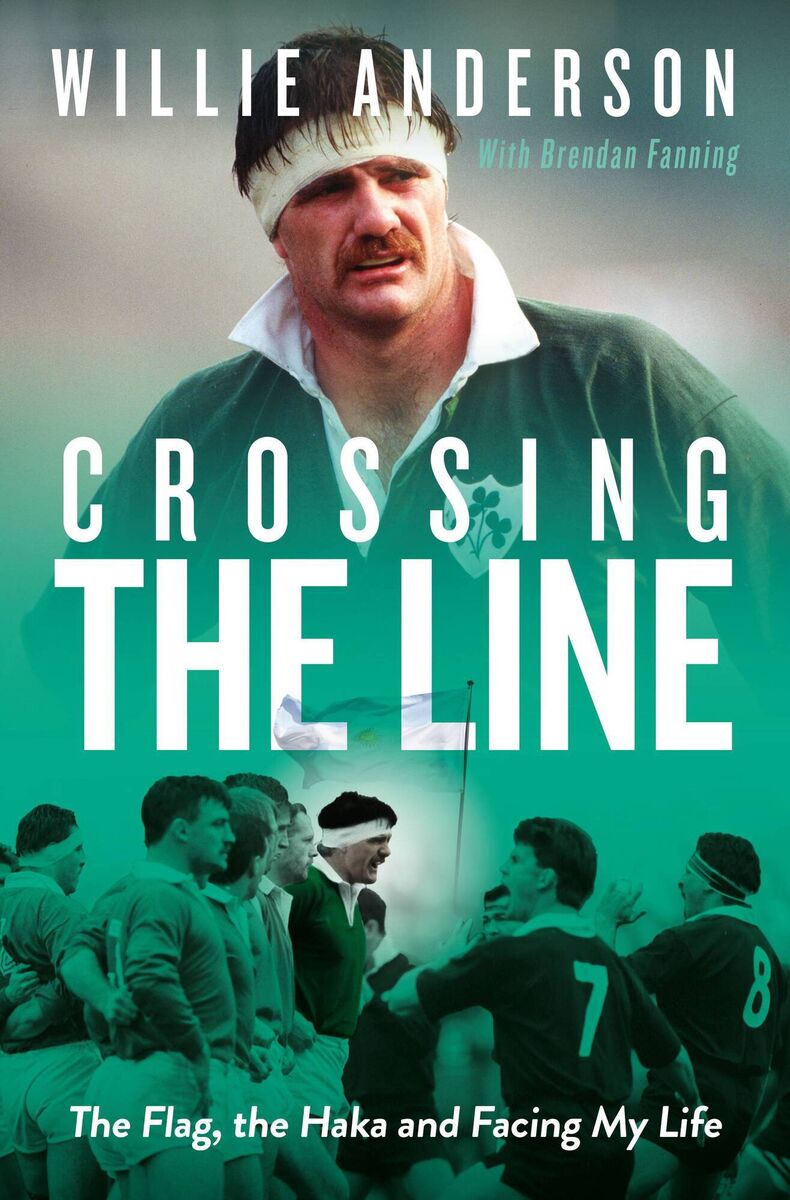
- Crossing The Line by Willie Anderson with Brendan Fanning (Reach Sport) is out now.


Cancel anytime
CONNECT WITH US TODAY



Be the first to know the latest news and updates