Six Nations review: How successful was Ireland's tournament and what must change?
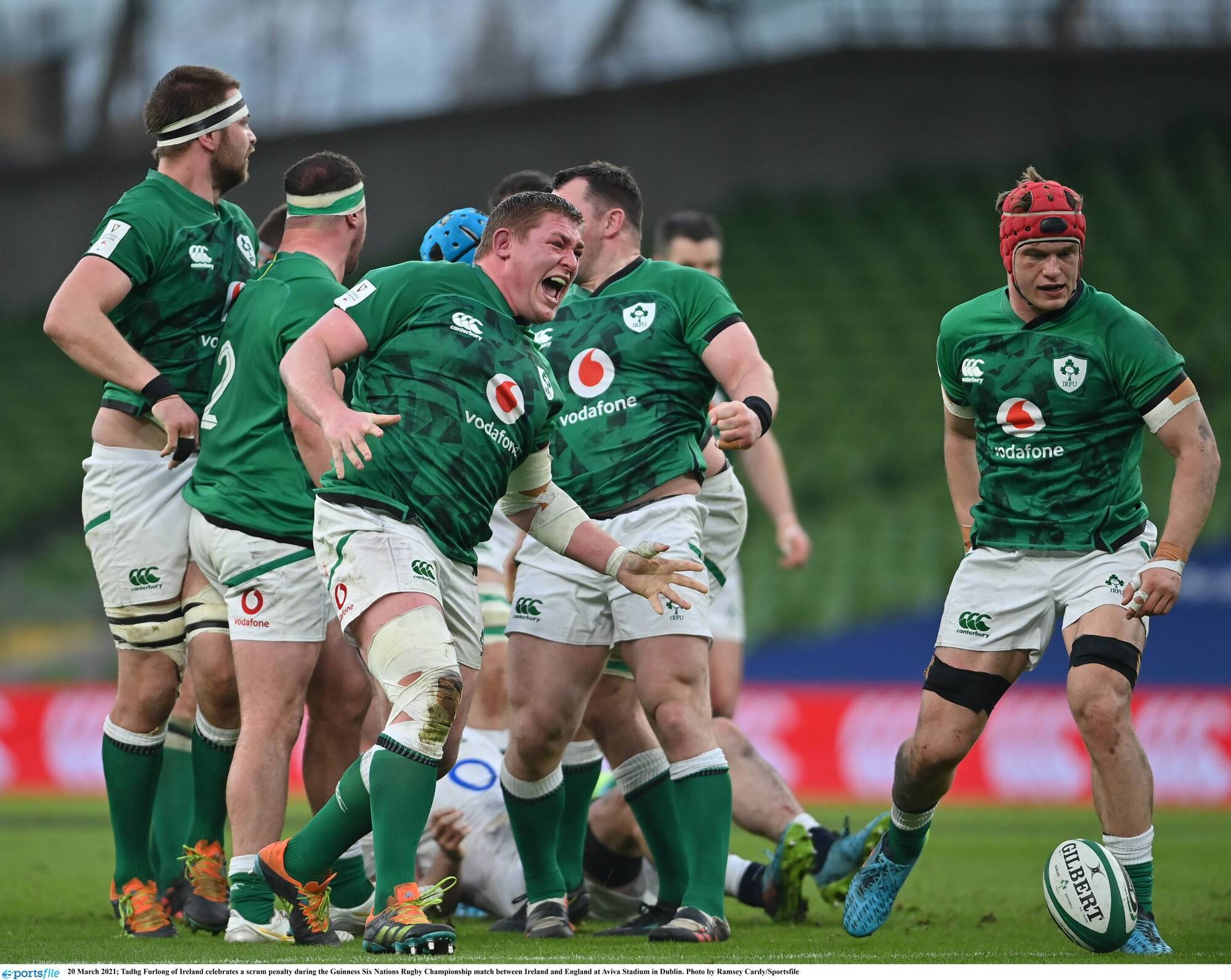
Not for the first time in Six Nations history, Ireland have once again put in a perception-altering performance to warm the hearts of supporters and the lift pressure on an under-fire head coach.
A 14th-minute red card for Peter O’Mahony undid any hopes of the Irish rolling out their new-look approach of heads-up, risk and reward rugby. There had been glimpses of an exciting and evolving attack to that point, but they were shut down the moment O’Mahony made contact with the head of Tomas Francis in a dangerous ruck clear-out.
Ireland still played well enough with a man down to make the outcome a cliffhanger, only for Billy Burns to misjudge a penalty kick to the corner at the death when his team needed a close-range lineout platform to snatch victory.
That Wales, unfancied and in disarray after a terrible 2020 under next coach Wayne Pivac rather Ireland went into the final weekend chasing a Grand Slam tells you all you need to know about the fickle nature of sport, but Farrell’s men only had themselves to blame in round two when title favourites France came to Dublin and comfortably dealt with what little a one-dimensional Ireland had to throw at them.
The misery of a round-two no-show at home filled Ireland’s airwaves with frustration and a little fury at the paucity of Irish creativity following the national team’s worst start to a Six Nations. Back-to-back defeats had not marked the opening of a championship since the 1998 Five Nations and the lightning rod of critical dissatisfaction fell on Farrell and his attack coach Mike Catt.
That Italy were up next was a relief given the inexperience of Franco Smith’s squad, their seriously worrying defensive weaknesses and a losing Six Nations record dating back to 2015. Ireland duly took full advantage, running in six tries and scoring with impressive variety, the running scores featuring offloads and invention, smart lines and ruthless finishing. As a turning point it was encouraging, now Ireland had to show they could do it against stiffer opposition.
Scotland at Murrayfield was that very challenge having laid down their marker with an opening-round win over England, their first win at Twickenham since 1983. To their credit Ireland met it full on, started brightly to take an 8-0 lead through a Sexton penalty and Robbie Henshaw try and were 14-10 up at half-time.
The third quarter was more impressive than the first as Ireland opened a 21-10 lead with Tadhg Beirne’s converted try but their inability to kick on and seal the deal from there was concerning as the Scots fought back to 24-24, exploiting defensive errors from the visitors and it needed a super penalty kick from captain Sexton to get the job done.
That England’s success over France the day before Murrayfield had been so pulsating a contest only highlighted Ireland’s shortcomings, even in victory and the 2020 champions came to Dublin with confidence restored and talk of a return to the form that demolished the All Blacks in the 2019 World Cup semi-final.
B-
Plenty given that stirring performance and victory at the weekend, the best of the Farrell era, and with the finest tries to match from Keith Earls, a training-ground move perfectly executed off a lineout, and Jack Conan, a well-crafted team score that started with a Tadhg Furlong linebreak and offload.
In backing up the show they put on against Italy with wins over Scotland and England, Ireland have shown they can play with the courage of their convictions.
- 32.
- 27.
- R Baird, C Casey.
- B Burns, J Lowe.
- H Keenan 400, CJ Stander 383, R Henshaw 380, T Beirne 377.
- T Beirne 2, K Earls 2, W Connors 2, Six Players 1 each.
- CJ Stander 72 (6N leader), R Henshaw 63, T Beirne 50, H Keenan 47.
- J Lowe 433 (2nd in 6N), H Keenan 364, G Ringrose 358, CJ Stander 346.
- T Beirne 10 (6N leader), I Henderson 6, CJ Stander 5, J Ryan 3.


CONNECT WITH US TODAY



Be the first to know the latest news and updates