Philip Browne hails CVC deal as ‘very positive news for Irish rugby’
Irish Rugby’s windfall from the divvy is not to be sniffed at, a cool £48m (€56m), though England and France will receive up to €110m each
Philip Browne hails CVC deal as ‘very positive news for Irish rugby’

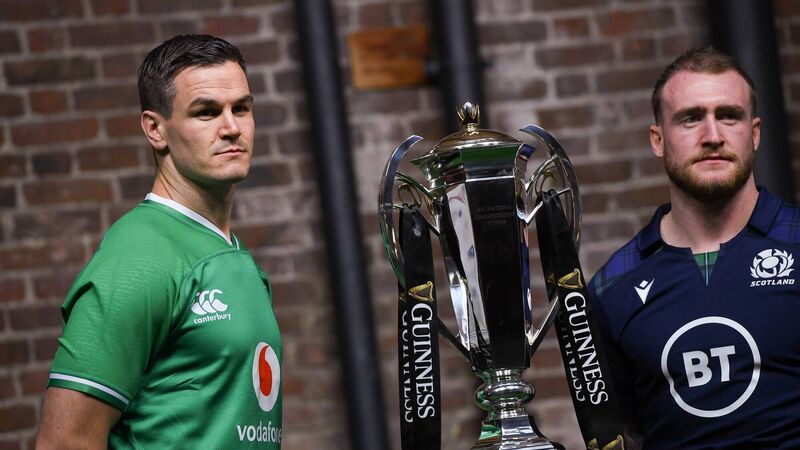
Ireland captain Jonathan Sexton, left, and Scotland captain Stuart Hogg during the launch of the 2020 Guinness Six Nations Rugby Championship. The injection of €425m by new partner CVC Capital Partners will secure the short and medium future of the Six Nations Championship. Picture: Sportsfile

Like knights in shining armour, the CVC Capital Partners have ridden in to provide some much-needed relief in the corridors of European rugby power and goodness it is a timely charge to the rescue.

Today came confirmation that a deal had been reached on a long-term strategic partnership between Six Nations Rugby and the private equity firm, bringing £365 million (€425m) to the constituent member unions in exchange for a 14.3% stake, subject to regulatory approval.

It turns the ownerships of rugby’s oldest international championship into a seven-way partnership of equals but much like the Covid-19 vaccine supply to the European Union, that topline figure has to stretch a long way and the biggest markets will command the largest slices of the action.

Irish Rugby’s windfall from the divvy is not to be sniffed at, a cool £48m (€56m), though England and France will receive up to €110m each and for each of the six unions there is the knowledge that in the current climate it is not so much a lotto win as bailout.

Calmer times lie ahead when the remainder of the five annual payments from CVC will be invested in the development of the game from the grassroots up but now, IRFU chief executive Philip Browne has admitted the first payment due of £6m (€7m) expected later this year in effect keeps Irish rugby and the four provinces running for a month.

The IRFU made record losses of €36m in its annual accounts for 2019-20 as the global pandemic began to impact, games were postponed for a time and when they resumed stadia closed to spectators with the result that revenues “fell off a cliff” in the words of the CEO.

Yesterday he said the governing body was working on “an informed assumption that there was little hope of seeing supporters return to grounds in significant numbers until 2022.

“Certainly, nothing is going to happen in the first six months of this year,” Browne told RTÉ Sport. “We anticipate a €29m loss as a result.

Our working assumption is that we won’t see crowds of any significant numbers in our ground until 2022. Maybe we are being prudent, but I think it is realistic. That is an informed assumption.

Having last year received the first instalment of a €30m payment from CVC for its part of a 28% stake in Celtic Rugby DAC, owners and organisers of the PRO14, the IRFU is once again fortunate to be in a position to have something of value to sell off in its time of need but Browne insisted that would not mean surrendering control of Northern Hemisphere rugby’s crown jewel to outside investment.

Nor would it mean seeing the Six Nations and its autumn international series disappear behind a subscription television paywall.

The current broadcast rights deal is with terrestrial broadcasters, Virgin Media in Ireland, ITV and the BBC in the UK, but it runs out after this year’s Six Nations later this month and there have been fears that rugby entrists Amazon Prime could take the historic championship off the free to airwaves and onto its streaming subscription service as it did with last year’s Autumn Nations Cup before selling subsidiary rights to RTÉ for Ireland’s games.

“I don’t see any change really,” Browne said in the same RTÉ Sport interview. “You have to have reach and exposure, but equally, you have to have revenues generated by your tournaments to allow you to invest in the grassroots of the sport.

“The important thing from the public’s point of view is that it is down to the unions, they will decide ultimately what kind of broadcast coverage they will opt for. They will do so with a very good understanding of what the balance needs to be for the sport to remain healthy.

“If you can’t see the sport, it’s very hard to promote it. The notion that the Six Nations will immediately disappear behind a paywall is misconceived. Like I said, the unions will ultimately control the situation.

“They (CVC) become a seventh partner within the Six Nations, a minority stakeholder. They have no control over anything, in the same way no single union has control over anything. The future of the tournament, and commercial opportunities we seek to exploit, lies with the unions.”

Browne welcomed the CVC deal as “very positive news for Irish rugby”.

“Importantly, under the agreement, Unions retain complete control of all sporting matters while all commercial and broadcast decisions, which will benefit from CVC’s commercial and marketing expertise, also requires majority Union approval.

The Six Nations is the biggest, and most historic, annual showpiece of the professional rugby calendar and the financial driving force across all the unions involved.

“It is imperative the tournament remains at the forefront in terms of positioning, marketing and financing in the face of competition from other sports franchises.”

The CEO added: “It is also expected that annual long-term revenues from the Six Nations will increase” and that “the real benefit of this agreement will come into effect in future years”.

“This partnership will serve to increase the ambition, scope and attractiveness of the tournament in the coming seasons for players, fans, commercial partners and the ongoing development of our sport.

More in this section

Sport

Newsletter

Latest news from the world of sport, along with the best in opinion from our outstanding team of sports writers. and reporters

Cookie Policy Privacy Policy Brand Safety FAQ Help Contact Us Terms and Conditions

© Examiner Echo Group Limited