Ireland must be ‘cleaner than clean’ amid citing threat, warns Schmidt
Joe Schmidt has urged his players to be “cleaner than clean” and not hand their World Cup fates over to match officials during Ireland’s summer Tests.
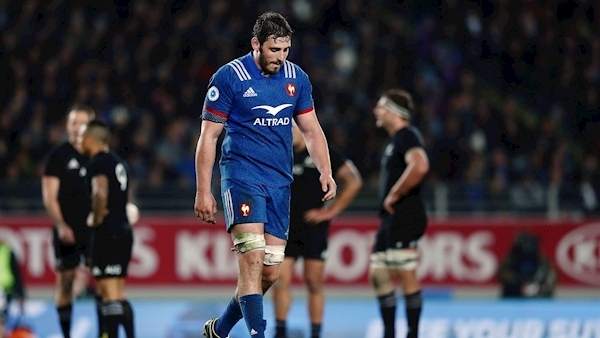
Citing recent Rugby Championship controversies and the six-week ban for France lock Paul Gabrillagues for foul play against Scotland last weekend which, save for a successful appeal, has ended his World Cup dreams, Schmidt believes tacklers do not get the same protection as tackled players.
“I think there was one red card in the last World Cup, and there were 17 citings,” Schmidt said yesterday. “That’s a massive kind of disconnect between what the citing commissioners were doing and what the referees thought in real-time.
“So, for us trying to predict what’s going to happen and what decisions are going to be made — for Scott Barrett to get red and the number of other incidents in that game, you go ‘well, that’s a red, but there’s a whole lot of other things missed’. It seems very extreme that it’s zero or red.
“Take the Gabrillagues incident at the weekend — I’ve only seen the replays, but it looks like he gets his hands down. It doesn’t look like he’s looking to shoulder-charge and it doesn‘t look like he’s intentionally (leading) with his head. But we know that if you get it wrong, you’re in somebody else’s hands and we want to control as much of it as we can.”
Schmidt continued: “In the Junior World Cup that’s just gone, there were 26 game-changing cards for high tackles, and I know that World Rugby will say that we have to go after high tackles and I totally agree with that stance.
“But in those 26 game-changing cards, there weren’t Head Injury Assessments required. There was not one concussion.
And so I think they are trying to stamp their mark on it before we get to the World Cup. So we’re all on alert to say that we’re going to have to be cleaner than clean.
“If you get away with it, fair play to you but if you don’t, it could be a very severe sanction. Leading with the shoulder and tucking the arm, that is something that we’ve got to make sure we’re not doing and I can understand why.
“World Rugby are trying to make the game safer. Is going after the high tackle the safest way to do it? I don’t know because if you’re the tackler you’re three times more likely to get injured in the tackle than the ball-carrier and you’re the guy who’s being targeted.
“So I think there’s a balance there somewhere where we have to make sure that we’re looking after all the players, not just the ball-carrier but also the tackler.
“And it’s a hard balance to get and it’s a hard game to referee and there are so many variables and so many high-speed moments in-game. Those milliseconds before contact, if you get quite get your head down a little bit early and you don’t quite see the change in movement, you know, James Slipper just gets his head down a little bit early and suddenly he’s connecting with Etzebeth’s knee.
"The same with Jordan Uelese into the hip bone and you saw the same with Faf de Klerk and Rieko Ioane. Again, those three tacklers head down maybe a fraction early.
“They are the three concussions that have occurred in the six games of the Rugby Championship, you’re always looking at that and you’re trying to safeguard your players, not just from being picked up for foul play but also from getting injured in the first place.”