Man of steel Farrell will be relishing Ireland step-up
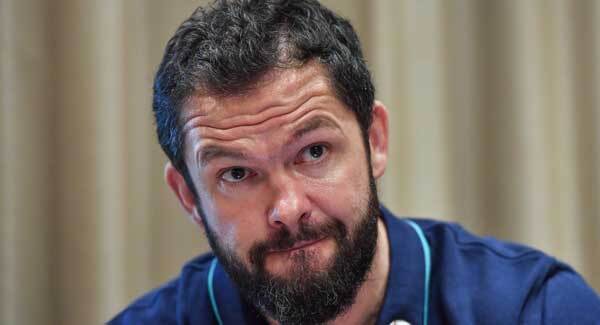
The list of feats achieved by Ireland under the watch of Joe Schmidt might have been enough to send any hopeful successors to his position running swiftly in the opposite direction. Yet Andy Farrell has never been the type to shirk the challenge.
You do not win Rugby League’s Man of Steel award, as Farrell did twice during a glittering playing career with Wigan, if you are anything but committed and that Ireland’s next head coach won his first as a 21-year-old in 1996 when he was also appointed Great Britain’s youngest captain and then again at 29 suggests something of a dogged competitor.
Picking up the reins from Ireland’s greatest ever head coach is a sizeable challenge, nonetheless, and sport is littered with the broken careers of those who have tried and failed to follow in the footsteps of a legendary predecessor, not least at Manchester United in the wake of both Matt Busby’s and Alex Ferguson’s retirements.
Farrell, 43, may be walking into his first head coach job when he steps into Schmidt’s shoes following next year’s Rugby World Cup but there are a number of advantages in his favour that suggests he can oversee a seamless transition from one coaching regime to the next.
Much like the 54 players Schmidt has handed Test debuts to in his 64 games since he was placed in charge of a clean slate after the departure of Declan Kidney in 2013, Farrell will have had the benefit of an extensive bedding in process.
It would be highly unusual for Schmidt to throw a player into an Ireland jersey without at least one involvement in a training camp prior to his first cap and Farrell has been embedded as the defence coach since the summer of 2016.
And what a tenure it has been for the Englishman relieved of his duties alongside head coach Stuart Lancaster at the end of a miserable World Cup on home soil the previous autumn. One of Schmidt’s great legacies of his time in charge could be to have been to persuade IRFU performance director David Nucifora to hire Farrell to replace Les Kiss on the Ireland coaching ticket.
His ability to enthuse and motivate players about the joys of defending their line as if their lives depended on it has been a hallmark of his time here and Ireland have profited considerably as a result, Schmidt’s win ratio having risen from 69% between 2013-16 to 80% since Farrell’s arrival.
The notable firsts against southern hemisphere opposition have been racking up from his first game on the management team, when an undermanned and short-handed Ireland defeated the Springboks for the first time on South African soil in Cape Town in June 2016.
Since that day, Schmidt’s achievements have been every bit Farrell’s too, not least his finest moment a fortnight ago when Ireland kept the All Blacks to nine points and tryless for their first home win over New Zealand in 113 years.
Farrell yesterday acknowledged the mutually beneficial special relationship that has enabled him to be named as Schmidt’s successor.
“It is a privilege to be considered for such a prestigious role,” Farrell said in the IRFU press release that announced both Schmidt’s departure and his accession to the throne next November.
I have learned a lot from Joe over the past few seasons and I will continue to learn from him over the next year as the coaching group and players focus on competing in two huge tournaments in 2019.
Clarity is all Schmidt asked of the IRFU when he discussed the position in which he would leave the Ireland team and the governing body are hopeful they have delivered on his request.
Having overseen Munster’s smooth transition from Rassie Erasmus to Johann van Graan excellently last season when they replaced one South African with another from outside of the Irish Rugby system, appointing someone from within their own ranks should be seamless, particularly when so much emphasis is placed on the squad environment being player driven.
Senior Munster players led by Peter O’Mahony steered the playing group through what could have been extremely tricky waters when Springbok assistant coach van Graan joined midway through last season and the leadership group at Carton House will be tasked with the same mission, made all the more easier given their existing respect for Farrell.
The IRFU must be feeling as pleased as punch to have handled the changeover with such alacrity a year ahead of schedule and that can bode well for the fortunes of the team.
Of course, losing Schmidt will not be easy, but in Farrell they are replacing like for like in terms of commitment, dedication and the current boss’s attention to detail.
The incoming head coach has some decisions of his own to make and will need to somehow replace Schmidt’s acumen as a backs and attack coach while also finding a replacement for the very well regarded scrum coach Greg Feek, who will also depart at the end of the World Cup campaign to continue a coaching job in Japan.
But if he has learned anything at all from the man he will succeed, surrounding oneself with the right people for the job should not be a problem for Ireland’s next head coach.

CONNECT WITH US TODAY



Be the first to know the latest news and updates