New PRO14 season dawns but star names remain out of sight
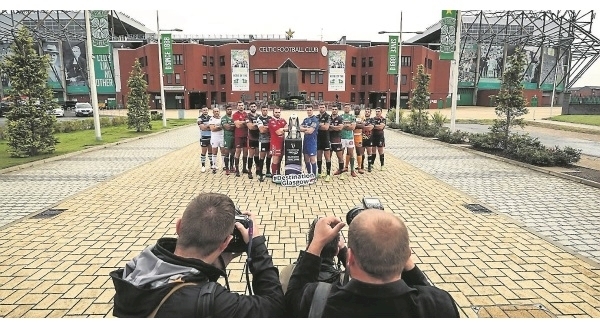
Judging by the gushing reaction from their newly-converted pundits, the PRO14’s new pay-per-view broadcasters will not be short of cheerleaders.


New PRO14 season dawns but star names remain out of sight

By Peter Jackson

Judging by the gushing reaction from their newly-converted pundits, the PRO14’s new pay-per-view broadcasters will not be short of cheerleaders.

The collective sound of those recruited straight from the dressing-room into the commentary box suggests they are singing from the same hymn sheet, lauding the tournament for its soaring quality to the acclamation of ‘great’ teams as headed by Leinster.

To put others in the same category is to stretch the imagination more than a bit and while the hyperbole is par for the course, it’s a fact the competition houses the winners of both European trophies, Cardiff Blues having seized the Challenge Cup in Bilbao the night before Leinster reclaimed the big one in the same Basque city.

While there is much to be admired about the PRO14 following its expansion on an intercontinental scale, it still leaves a fair bit to be desired.

Whether the array of internationals hired by Premier Sports veer off-script and dare talk about what’s lacking, time will tell.

Fans spanning the full gamut of the event want a run for their money as a reasonable return for their unconditional support.

That calls into question what the PRO14, most relevantly the Irish portion of it, lacks most of all, certainly more so than the club-controlled versions in England and France.

The star names, and they don’t burn more brightly than the Grand Slammers who have made their country second only to the All Blacks, do not appear anywhere near often enough for the PRO14’s liking.

The organisers did their level best to avoid the prolonged clash with the Six Nations by rescheduling it later in the season only to discover, like the English clubs owners before them, that moving heaven and earth is easier than shifting the sacred cow from its February-March habitat.

The reasons, of course, for too many big players missing too many PRO14 weekends are all too apparent. The IRFU employs the players and their priority is to ensure they arrive for each and every international in the best possible condition for national service.

If that means sitting out large tracks of the PRO14 season, too bad.

Tonight’s opening match is a case in point. When the fixtures came out, Cardiff Blues’ fans voiced their anticipation at the best team in Europe helping them raise the curtain at the Arms Park. All too soon the reality hit them, that Leinster’s stellar cast would be rested virtually en masse.

And so it has come to pass. Of the starting XV for the Champions’ Cup final, only two make the line-up for the more mundane business of winning in Cardiff, scrum-half Luke McGrath and second row Scott Fardy. At least a dozen Grand Slammers are conspicuous by their absence.

What the organisers badly need is a little more of Johnny Sexton. Indisputably the tournament’s biggest single asset, he is also its most baffling contradiction — a shining light in some danger of becoming the PRO14’s invisible man.

The Dubliner’s starts over the last two seasons can be counted on the fingers and thumbs of both hands, nine and all but one in his hometown.

Leinster’s undisputed status as the pre-eminent team beneath Test level in Europe raises the danger that at their current bounding rate of progress, they could end up turning the PRO14 into an annual procession.

To paraphrase the late Bill Shankly, there are now two major forces centred around D4, Leinster and Leinster Reserves. The second string squad is powerful enough in its own right to ensure a play-off spot, leaving the stars to conserve their energy for the Champions’ Cup.

Ulster have been champions of nothing other than under-achievement for far too long. Not for nothing, therefore, did Brian O’Driscoll refer to them last season as ‘a bit of a basket-case.’ Only a bit?

For all their hefty investment, Ulster have done nothing of note since reaching the European final at Twickenham in 2012. And, as a reminder that they were heading off their collective rocker back then, they responded by replacing the head coach who had got them there, Brian McLaughlin.

Anyway, here’s what this tournament could do with:

Munster reintroducing themselves as winners

Four semi-finals in two seasons may be four more than most teams manage over twice as long a period but there’s no escaping the truth: Munster haven’t won a domestic title for seven years.

They’ve been too lean for too long, so long that of the team that beat Leinster in what was then the PRO12 final at Thomond Park in May 2011, only two are still there — Conor Murray and Keith Earls.

Edinburgh being taken seriously as title contenders

After a season of drumming some of the old Leicester Tigers’ spirit into their mentality, head coach Richard Cockerill will demand they improve on last season’s quarter-final. John Barclay’s repatriation from the Scarlets will strengthen the warrior factor even if he is still recovering from injury.

Bernard Jackman’s Welsh Dragons getting a break of a different kind

A classic example of sport’s perverse tendency to kick a team when it’s down. Rescued from oblivion by the Welsh Rugby Union, the impoverished Welsh region spent most of last season staggering from one defeat to another.

According to club records, their players underwent a total of 32 operations throughout a campaign which brought two wins in the first month but precious little thereafter. At one stage their casualty list amounted to 27, more than half the entire squad.

Fewer empty seats at the Nelson Mandela Bay Stadium

On average, the Southern Kings played in front of 44,089 of them out of a capacity 48,459, from which it can be reasonably deduced that the PRO14 is yet to capture the public imagination in this corner of South Africa.

Nelson Mandela Bay Stadium

The Kings weren’t alone in finding themselves with so few subjects. Average attendances for the 40 clubs competing in the three major European leagues raised a stark fact. Nine of the 10 with the smallest crowds came from the PRO14 — Zebre (2,926), Benetton (3,464), Southern Kings (4,370), Connacht (5,832), Cheetahs (6,238), Ospreys (6,991), Edinburgh (7,321), Glasgow Warriors (7,351), and Dragons (7,526).

Sale Sharks (6,244) were the exception.

More in this section

Sport

Newsletter

Latest news from the world of sport, along with the best in opinion from our outstanding team of sports writers. and reporters

Cookie Policy Privacy Policy Brand Safety FAQ Help Contact Us Terms and Conditions

© Examiner Echo Group Limited