France still ahead of Ireland in Tri-Nations reckoning
France remain on course to join the Tri-Nations Series in 2009 despite their World Cup flop, according to Rugby Football League executive chairman Richard Lewis.
After a two-year break, the tri-series is due to return to the UK in a new format next autumn – with England replacing Great Britain and the French also lining up alongside Australia and New Zealand.
But France collected the wooden spoon from the 10-team World Cup and were tipped to lose out to Ireland, who have climbed to sixth in the rankings after topping their pool and reaching the semi-final qualifier.
Australia Rugby League chief executive Geoff Carr raised Irish hopes this week by suggesting their efforts in Australia should be recognised. But Lewis, who is vice-chairman of the International Federation and heads up the European body, has thrown his weight firmly behind France.
“The Four Nations, in my view, should be unchanged,” he said.
“It should be exactly what has been planned.
“France have a more developed infrastructure. It’s a bigger sport in France at the moment, and they deserve an opportunity to play in the Four Nations.
“They have been playing consistently every year against Australia and New Zealand. One of the key issues is that they are capable of staging matches, and that’s important for the international game.
“Certainly France have been one of the disappointments in the World Cup – and they are the first to admit that – but it doesn’t mean to say they don’t deserve a chance in 2009 to play in the Four Nations.”
Lewis, among the 8,224 crowd at Gold Coast’s Skilled Stadium on Monday to watch the Irish lose 30-14 to Fiji in the semi-final qualifier, has not ruled out the possibility of Ireland forcing their way into the elite competition in the long term.
But he believes they first need to prove themselves consistently in a second-tier international tournament.
“The Irish performed very creditably, but first we need to develop the game in Ireland,” he said.
“They have got good development work going on there. The number of clubs and teams is increasing, and we need more of that.
“I hope the Irish government and their equivalent of the sports council will get behind them.
“Scotland, Wales and Ireland in a European Nations Cup would be a full-on competition. There could be other countries too – Russia, for example.
“It would be an attraction, and those nations – and Ireland in particular - would be able to increasingly stake a claim to be included in the Four Nations. But I think 2009 would be too early.”
The performances of Ireland and Scotland, who beat semi-finalists Fiji in their pool match to register their first World Cup success, have helped offset the disappointment over England’s disappointing displays so far.
Rugby League Ireland is an autonomous body. But Lewis is supportive of moves to include a team from the Republic – and potentially Scotland too – in the National League to raise the profile of the sport.
“It’s very exciting for rugby league in the northern hemisphere,” said Lewis.
“It’s great that Scotland performed so well, and I would hope their results have created even more interest.”
Despite being labelled a one-horse race, the 2008 World Cup has produced exciting matches outside the “super pool” – and the tournament is on course to generate a profit, according to Lewis.
“I think it’s been a good tournament so far,” he said.
“The Australian media have been overly cynical.
“There have been some terrific contests, and all the people I’ve spoken to have enjoyed it.
“It would have been nice if the crowds had been bigger, but the fact is that it’s still going to be financially successful. It’s going to hit budgets and targets.”
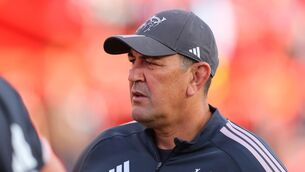
Meanwhile, new St Helens coach Mick Potter has emerged as a potential successor to fellow Australian John Monie – whose reign as France coach ended after their 42-10 defeat by Samoa in Penrith on Sunday.
Potter has spent the last three seasons in charge of Perpignan-based Catalans Dragons and is thought to have expressed an interest in the French national job, although he would need the approval of his new employers.