Pitching up for debate on surfaces
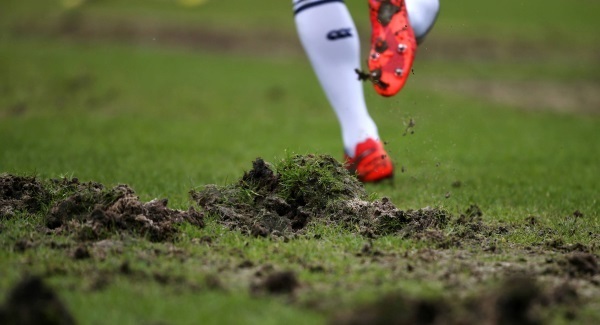
When it came to deciding on the surface their new home would have, it was quickly agreed, after taking various elements into consideration, that the new generation 4G pitch was the way to go, beginning an ‘era without mud’ for rugby.
Given the running costs of this new surface would be £18,000 (€20,700) per year compared to £85,000 (€98,000) for the upkeep of a grass pitch, it was clear 4G made financial sense too.
In their first 32 games at home, the Premiership side won 29 times, proving the surface had other benefits — some call them unfair advantages — but of course, the soon-to-be English and European champions would argue they’d have won most, if not all, those games on any surface.
“We’re very confident that for rugby this is a step forward,” Ed Griffiths, the Saracens’ chief executive, said at the time, arguing it would encourage faster, safer, and more entertaining games.
“We’ve played on winter pitches where there has been not one blade of grass — I can’t think that’s good for rugby. The technology is right now. Hockey has been transformed by artificial surfaces, and I think there is a potential for rugby to be.”
The reigning European Champions began something of a trend, with Premiership rivals Newcastle installing a similar surface one year later, while Worcester made the switch last summer.
Cardiff and Glasgow — who played their first game on their snappily named GreenFields MX TriMension synthetic turf system in Scotstoun against Leinster last September, and host Munster this weekend — have joined them, in the PRO12.
Once more, finances are high up the list when it comes to explaining the decision making process behind the switch to artificial turf.
Worcester chief executive Jim O’Toole explains: “Our stadium pitch is the single most under-utilised asset in the club, currently being used for fewer than 100 hours per season.
“This not only allows us to play more rugby at all levels on our biggest physical asset but also allows us to establish new commercial revenue streams such as concerts, festivals, and other non-rugby events.”
So the financial case is sound, but what about the case for the sport, or the health considerations?
In the Netherlands, there are hundreds of pitches with ‘rubber crumb’ — the small ‘pellets’ of shredded tyres that you see after a ball bounces on astro turf — being ripped up, with concerns they may contain carcinogenic material.
The Ajax academy has removed all artificial training pitches, but there are still over 2,000 nationwide, 10 years after there were fewer than 300.
Critics have described these pitches as “toxic tyre dumping grounds for children to play on” and “the biggest experiment ever carried out on the effects of carcinogens on a human population”.
Fifa president Gianni Infantino has called for an investigation into the properties of the rubber crumb, and said recently that he’d rather Fifa’s $4bn (€3.75bn) football development fund for the next 10 years is spent on grass pitches.
In football studies, goalkeepers were most at risk, which raises issues over the surfaces rugby is played on.
SIS pitches, manufacturers of the upgraded surface recently installed by Saracens, say their pitches have been “heavily tested and declared safe”, but there appears to be little consensus, even if it must be pointed out that many variations of ‘artificial’ turf exist.
In our research, most players have spoken positively of the surface, with both backs and forwards praising it for different reasons.
“We train a lot on it and the guys love it because of the tempo it creates, the speed of play,” said Mike Blair, the Glasgow coach. “We do a lot of GPS assessment on it and the feedback is that that intensity of the work we do on the 3G compared to the grass is much higher.”
Scrums hold stronger on the solid surface, but it’s the speed of the open game that is the most significant change.
“They’re going to test us this weekend, especially on the astro-turf, it’s going to be a quick game, with quick ball, the bounce of the ball is going to be quick,” said Munster’s CJ Stander ahead of their trip to Glasgow tomorrow.
With the ball in play up to 20% longer on artificial surfaces, it’s a setup that suits fitter teams, which might explain Munster’s cheery approach.
But not all are in favour.
Leinster’s New Zealander Isa Nacewa, a player who enjoys a fast, flowing, expansive game, thinks more research still needs to be done.
“I don’t know which way the game is going to go, it’s hard to say now, but it definitely probably a bit more wearing on the joints, and that’s something that needs to be looked at,” he said.
Richard Cockerill, the former Leicester Tigers boss, said he would prefer a return to grass surfaces, but ones that make use of existing technology to allow them to be used all year round.
“There is enough technology to have decent grass pitches that don’t rip up and don’t get muddy. I don’t think there is any need for artificial pitches at the very highest level,” he said.
“We are human and nature dictates that we run around on grass, not on a plastic field. I do think that sides that play on it have a slight advantage.”
It’s unclear if Leicester’s 42-13 defeat on Glasgow’s pitch last October influenced his decision.