Flamin’ Aussie mongrel Eddie Jones to put thorn in England’s rose
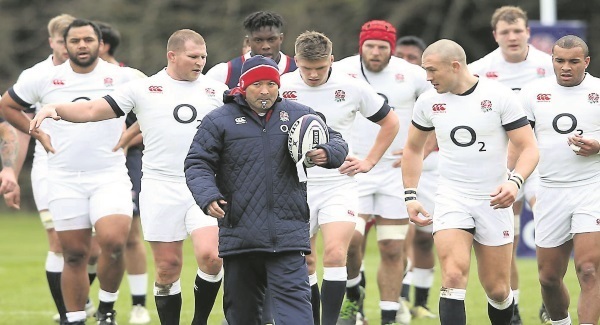
Stuart Lancaster preferred ‘culture’, ‘diligence’, and ‘learnings’.
While Chris Robshaw was a walking example of diligence, Dylan Hartley epitomises most people’s definition of a rugby mongrel.
And in the contrasts between those four men lies the crux of England’s rugby past, present, and future.
Four years ago, England were preparing for the future and a home World Cup by investing in youth and inexperience that the RFU hoped would come good just in time.
Now, they are preparing for the future and the 2019 World Cup by investing to a large extent in experience and hard-nosed cussedness that the RFU hope will serve them well.
As characters and figureheads, Jones and Lancaster could not be more different.
In appointing Lancaster, the RFU made plain that above all else they valued their image and how they were perceived after the disaster of the 2011 World Cup.
In now plumping for Jones the message is that winning is the be-all and end-all. Win ugly, win dirty, win by any means necessary — just make sure you win.
To do so, they have appointed a cussed, hard-nosed Australian whose reputation as a motivator needs no embellishing. He ruled the Japanese national team by fear, and has made it plain he does not intend to make friends during his time in England if it compromises his chances of winning.
In private, his views on certain English players are pointed and cutting. Friends have heard him call one leading name a ‘television player’ because his highlights make a superb montage reel, even though his overall game adds up to rather less than what the small screen would have you believe.
His reasons for dropping certain players — Tom Wood was told to improve his work-rate, while Tom Youngs was asked to work on his tackling and carrying — were downright baffling. Those two players have their faults, but Jones picked on their specific strengths as the areas they needed to work on. A strange start.
Many think he has deliberately chosen these tactics to provoke a reaction. Perhaps. But one thing is certain — Lancaster would never have done the same.
The differences between the two men are perhaps best demonstrated when it comes to their attitudes towards arrogance.
“That kind of thing is not in our culture, not in our nature and not what we believe in,” said Lancaster back in 2013, after England were accused of showboating against the All Blacks (as ridiculous as that may sound now).
“Neither is it a reflection of what we’re about as an England team. It may have been with teams in the past, but not this one. I don’t want to be seen as an arrogant person, or as someone coaching an arrogant side.”
In contrast, Jones’ take when asked about arrogance last week was that “arrogance is only bad when you lose”. “If you are winning and you are arrogant then it is self-belief. We’re going to believe we are going to be the best team in the world. If that’s being arrogant then it is being arrogant. To me it is belief about what we can be.”
You can almost picture Lancaster squirming as he read those remarks from Jones, so alien are they to his own philosophy. But Lancaster has unwittingly carved out a niche for himself as a man to fix the culture of a team; Jones — with a couple of glaring exceptions — as a serial winner who does not make friends but commands respect.
He also speaks his mind, with occasionally eye-watering honesty.
“We’ve pulled two blokes out of their clubs and it has been like a nuclear bomb has gone off,” said Jones last month, talking of the controversial appointments of Steve Borthwick and Paul Gustard as assistant coaches, with Bristol threatening legal action over the appointment of Borthwick.
“We can’t afford any more hydrogen bombs or we’d be in North Korea territory. We have to work with this staff now.” What Jones was saying, in his own unique fashion, was that he wouldn’t be appointing any more assistant coaches.
But that is his nature, and is why he is such a fascinating individual. You do not have to look far to see where it came from, either.
Born in Sydney’s Eastern Suburbs, his rugby education came at the famous Randwick club. There he played alongside Michael Cheika, the current Australia head coach, and Ewen McKenzie, Cheika’s predecessor in the role.
It was at times a brutal environment, with Jones and Cheika — who are of Japanese and Lebanese heritage — confirming they had to endure racial sledging throughout their playing days.
Jones’ nickname of Badger — given for his playing style and the way his barbs could burrow under the skin of opponents — summed up his attributes.
Jones has spoken admiringly of Cheika — a man who he will come up against when England tour Australia this summer — as “a decent player but an outstanding sledger”, and the respect is mutual.
“That Randwick dressing room was a real microcosm of Australian society. A great bunch of blokes who all got on really well,” Jones wrote during his Daily Mail column during the World Cup.
“But you’ve got to remember this was Australia 30-odd years ago. It was still a very white Australia and rugby was very much a white-collar sport, so if you were like Cheik and myself, you really had to prove your worth.
“Back then there was a bit of racial sledging. Both Cheik and I had to put up with a bit of that when we played and you had to be able to fire back at opponents on the field.
“It’s probably a reason why we always got on well. Probably because we weren’t quite part of the establishment. We shared a lot of interests. We both loved rugby league.”
In the end, Jones was simply too small to make it as an international but the extra work he did to compensate for his size ensured he was well prepared to make the leap into coaching.
He was assistant at Suntory Sungoliath in Japan before leading the Brumbies to the Super Rugby title and being given the Australian job.
It was there his fastidiousness, work ethic, and attention to detail shone through. Jones is the hardest of task masters, and some simply cannot live with him. Andrew Blades, his former assistant with the Wallabies, has been quoted as saying his mother-in-law would have been easier to work with.
Young players — from former Australia prop Ben Darwin and England full-back Alex Goode — have gone on record saying they never had a tougher coach than Jones, but realise that he pushed them to heights they could not have reached without his help.
His time with Australia was a mixed bag, while subsequent jobs at the Reds and Saracens — interspersed with a glorious, World Cup winning stint as assistant to Jake White with the Springboks — were complete disasters.
But England will be most intrigued by his time at Japan, with one famous press conference receiving a lot of media attention recently.
It is from 2012, when Japan have lost to the French Barbarians. Jones is furious, dismantling his team in short, staccato bursts while it is translated into Japanese.
“The players don’t want to win enough,” he begins. “They don’t want to change enough. So I will have to change the players. I’m sick of it. That was terrible. A really bad indictment on Japanese rugby. I apologise for the performance. I’m responsible for it. The coaching is not up to the standard it should be, but I can guarantee you I am going to change things.”
Sitting next to him is Toshiaki Hirose, the captain. Asked for his view, he gives a nervous grin, and is immediately destroyed by Jones.
“It’s not funny. It’s not funny. That’s the problem with Japanese rugby. Seriously. They’re not serious about winning. If they want to win, they have got to go out and physically smash people. We didn’t do it. I think I should probably leave.”
Jones ruled the Japanese team by fear, and it worked as they went on to pull off the biggest shock in World Cup history by beating the Springboks.
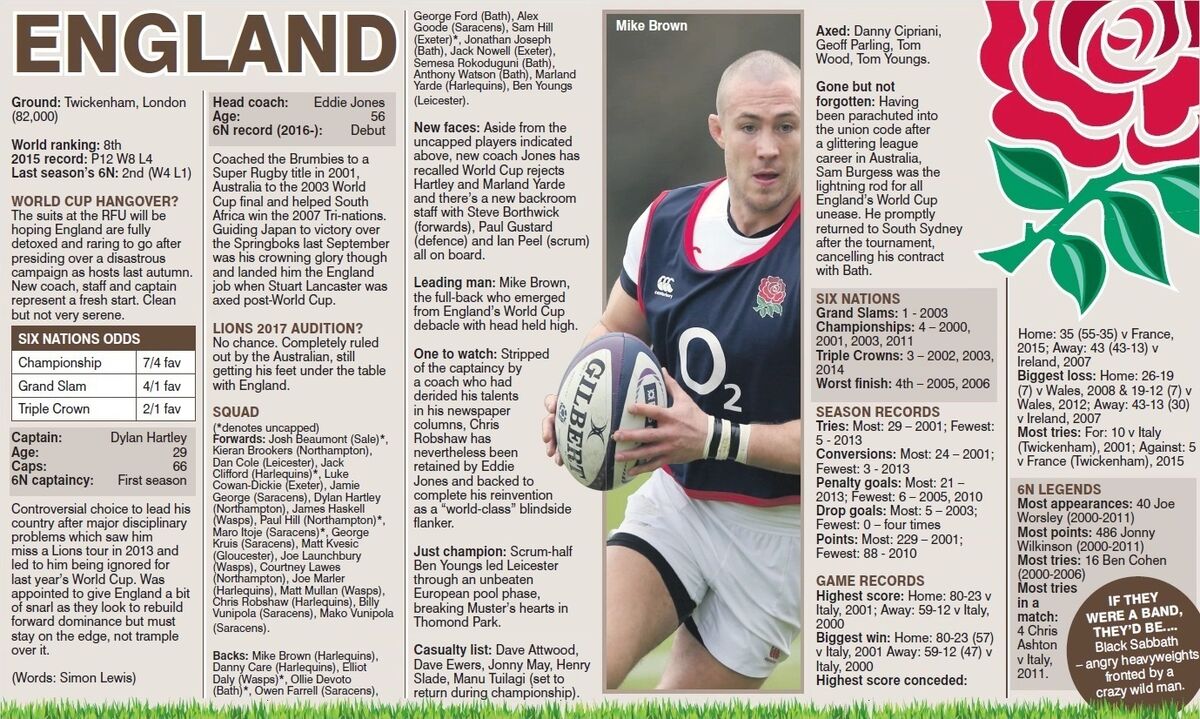
Now he is at England, and in appointing Hartley, he has set his stall out. The hooker has 54 weeks of bans behind him, and will be targeted by the opposition. Does Jones know it’s a gamble? Too right he does.
“The biggest risk was not to take a risk,” he says of his choice of captain. “You always look at that [Hartley’s disciplinary issues]. You just have to hope and pray it’s not going to happen.”
And that is a neat summary of where England are at present. Under Lancaster they were meticulous, thoughtful, predictable and — when it mattered most — just not good enough.
Under Jones, no-one has the faintest idea how it will go. In jettisoning Lancaster for the 56-year-old, they have not just thrown the baby out with the bathwater, they’ve got rid of the bath and plumbing, too.
Ian Ritchie, RFU chief executive, has taken a huge gamble. It could end like Jones’ stints with the Reds and Saracens, with enemies made and little of note achieved. Or it could be a soaraway success, akin to his time with the Brumbies or Japan.
It certainly won’t be boring though. One way or another, Jones is going to put the mongrel back into English rugby.

CONNECT WITH US TODAY



Be the first to know the latest news and updates