The team keeping Leinster fit for the fray
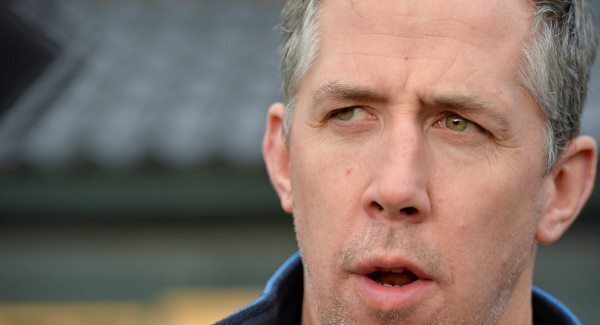
Four weeks ago, Ronan O’Gara began to talk up Jason Cowman’s integral part in the senior Ireland set-up when Tom McGurk cut across him mid-sentence and diverted the conversation back towards something more mainstream.
Cowman isn’t box office. He is the squad’s strength and conditioning coach, one of those almost anonymous men and women seen around teams and camps whose job it is to allow sportspeople take to the track or field in optimal condition.
O’Gara didn’t mention him in his recent book but he did discuss the centrality of strength and conditioning which he peppered throughout the pages. Cowman is one of those whose name is more famous within the team walls than without.
Requests to talk to him during the Six Nations ultimately came to nought but the IRFU did provide a snapshot of the man and the system he helps employ to aid the welfare and readiness of his players in one of the union’s ‘Behind the Green Door’ video blogs.
The piece gave a tantalising peek at what is termed a morning monitoring programme at Carton House where players punched data into I-Pads and performed basic tests such as a sit-and-reach test and hip internal rotation assessment.
“We’re basically looking for about 20 pieces of information from the players and that’s across four different platforms,” Cowman explained. “The first one would be musculo-skeletal markers, the second one would be well-being and then we combine that with our training load or game load.
“What we do then is we combine all that information with the player’s history of injury and that information is then put into a software programme … and it’s assessed in real time, statistically. The information is fed back to us immediately and we get an indication whether a particular player or players might be at risk of a performance injury.”
Cowman was a leading light in Leinster’s eager adoption of new ideas and ground-breaking technology. Under Cowman, the province became the first team north of the equator to use GPS technology. He also ushered in the use of an injury-risk profiler which he helped pioneer and oversaw the development of Leinster’s 550sq metre gym at the club’s new home in UCD.
Cowman left Leinster almost two years ago but, with 17 Leinster players utilised by Joe Schmidt during the two-month Six Nations window, his fingerprints will be noticeable when his old side face Toulon this weekend in France and in the remaining two months of the season.
It’s only January 2008 since Guy Easterby last laced up his boots for the province but the advances in sports science and the general understanding about what it takes to be and prepare a professional rugby player is light years beyond what it was.
“It’s weights, its conditioning, speed work. It’s everything,” said Easterby. Lads now prepare so much better, starting with the preparation that happens before every session.
“It’s about bigger, stronger, faster. You have to facilitate all that. All the GPS, the massage, everything else. It’s all about going out to train. It has changed beyond belief. There is more science involved but rugby is still a very young professional sport.”
The web of personnel that played its part in prepping Leinster’s players for this weekend’s trip to face Toulon in France is wide and complex with the IRFU’s head of fitness, Dave Clark, and Cowman just two of the main strands in it.
Leinster alone employ roughly 20 backroom staff to keep their players in peak condition, mentally and physically. Strength and conditioning experts, doctors, rehab and injury specialists, masseurs, physios, a nutritionist. No stone is left unturned.
Devising programmes for every player isn’t the logistical nightmare it once was. As Easterby pointed out, one spreadsheet does now what 50 used to, but the sheer volume and scope of the information remains mind-boggling.
Devin Toner has played 1,684 minutes for club and country this season. Cian Healy has managed just less than half that with 836. Rob and Dave Kearney and Jamie Heaslip played all 400 minutes for Ireland recently. Ian Madigan managed eleven.
These are not like-for-like cases.
“Being flexible is important,” said Easterby. “At the start of the season you can have no idea how it will pan out. It’s an ongoing process with a lot of consultation. You have stats on loads and training and that information is being processed almost in real time.
“It’s very individualised. The Six Nations is a very intense time for the players. The most games we could have left now this season is nine. That is a long period to manage through and plans can easily be disrupted by injury and you don’t get it right every time.”
The three-time champions take on the title holders Sunday with the benefit of an eight-day turnaround since the Aviva Stadium meeting with Munster. Players were afforded an extra day’s recuperation and some again were on light duties earlier in the week.
Yet they face a side that can and does rotate world-class players on a weekly basis only three weeks after a Six Nations in which they contributed so much and the question on many lips is whether they are now battle-hardened or battle-worn.
“I would say that question is irrelevant,” said Easterby. “Players are in a good frame of mind after the Six Nations because of the way everything is set up now.
“They have come back into an environment where there is much still to play for and the starters got down time for R&R after that game against France and before the game against Munster.”

CONNECT WITH US TODAY



Be the first to know the latest news and updates