Falvey's call of duty
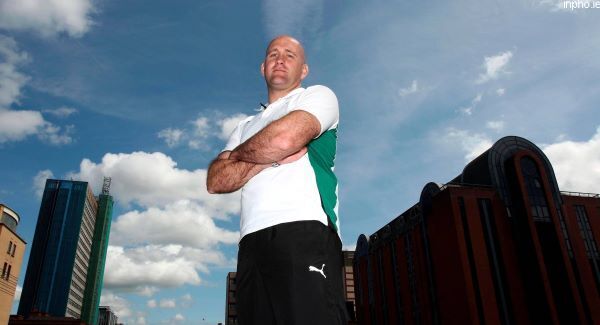
In among the telephone bills and the broadband offers, there was a little treasure on the mat beneath the letterbox.
Eanna Falvey describes the moment he collected the rugby equivalent of Willie Wonka’s golden ticket.
“Yeah, getting that was pretty cool alright. The Lions headed notepaper was a pretty exciting thing to pick up off the hall floor.”
The Cloyne native has an impressive CV: he’s Director of Sports Medicine at the Sports Surgery Clinic in Santry and co-authored the leading sports medicine anatomy text, Clinical Sports Anatomy; he’s team doctor to the Irish rugby team and the Irish Amateur Boxing Association High Performance Unit.
However, he can’t keep the excitement out of his voice when discussing his confirmation as assistant tour doctor for the British and Irish Lions trip to Australia next month.
No wonder. He’s been sitting on the news for six months.
“The various heads of departments for the tour were asked who they wanted, and I met James [Robson, head doctor] in November for a chat about it,” he recalls.
“There were others involved in the process as well, and then James contacted me the week before the Six Nations started to tell me I’d be offered the gig if I were available.”
So all through the Six Nations...
“I had to keep it quiet. It’s a very polished organisation, and there’s a lot of etiquette involved in it, a lot of doing things the correct way, which is nice to see.
“And obviously you’d be conscious when you come into something new like this that you’d make the right impressions as well.
“After I’d spoken to James, John Feehan, CEO of Lions Rugby, rang me for a chat about the tour, and then I got a contract out in the post and you work from there.”
The reference to the tour’s head doctor is telling as James Robson is a Lions institution in himself. Australia in June is his sixth tour looking after the men wearing the red jerseys.
“It’ll be a serious experience,” says Falvey. “First off, from the set-up there with James, and all the tours that he’s done, I’ll learn a lot from him. Then when you look at the quality of player in the squad from the four nations... the whole experience is going to be brilliant.”
Robson’s previous trips mean the medical team won’t start from scratch.
“Because it’s his sixth tour, there’s a pretty well-prepared template for what needs to be done in advance.
“Our work begins on May 11, when we meet up. We’ll be screening any of the guys not involved in end of season finals with their club sides, and then there’s a full week of training in Wales.
“After that we’ll meet up with the guys who weren’t involved in those end-of-season games and screen them. When the squads are announced, all the players’ teams are contacted to find out if there are any ongoing fitness issues. Plus, for the two weeks coming up they’re screened very closely, so that should cover any of those issues.”
Then the work really begins: “Once we travel out to Australia there are two matches a week, which is a massive demand, really, on the players.
“Take the travelling. With a midweek game, and given the distances that are involved once you get to Australia, never mind getting out there, you’ve got to be very well organised in advance.
“The way we’re travelling, we aren’t going to be anywhere for more than four days. What that means is you arrive the day before a game, you play the game and then you travel the day after a game. There’s a lot of packing and unpacking in that kind of schedule.
“One thing that should help us is the experience of the World Cup a couple of years ago, when we moved around a lot as well.
“What we learned from that is you have your absolute necessities when it comes to the stuff in your bag — everything else is left there in the hotel after you. You need to travel light while also having everything that you need, which is sometimes more of a challenge than you might think.”
Then you come to the nitty-gritty for the medical staff.
Since the squad has been named there’s been a lot of talk about the inevitable attrition in a Lions tour, with the general expectation that five to eight replacements will be needed by the travelling party.
Obviously it’s never easy to tell a player his lifetime dream has come to an end and that he’s got to pack his bags, but Falvey points out that that’s never a matter of “just one conversation”.
“The way it looks now, it looks as if we’ll [doctors] probably be doing every second game. If you’ve done a game then you’re responsible for the management of the injury on the pitch then, but a guy going home... these things are never just one conversation.
“There’s always a team element, and not just James either. There’s Phil Pask of the RFU, Prav Methema from Wales and Bob Stewart from Gloucester [all physiotherapists]. They all have two or three Lions’ tours experience under their belt, too, so they’re used to the environment and how to handle the players.
“And when it comes to delivering bad news to a player — any player — then the best way to do that is incrementally. When a guy gets a bad injury on the field, you say to him, ‘it looks bad’, but you don’t tell him just how bad you think it might be there and then.
“Then, after a scan you’ve got more information, and the following morning it might be the first time you broach the topic with him. But all these things are done within a team situation.”
Is it more of a challenge, though, given the limited timeframe? With players desperate to stay and management keen to keep them, is there a pressure in making calls given the travel, the distance from home, the media focus, fixtures approaching within a couple of days?
“It’s a bit like the Six Nations but it is heightened because you’re so far away,” says Falvey.
“The real issues don’t really arise with the bad injuries, because if you think of it those are the simple ones. They’re obviously not going to be right, the player’s out of contention and you move on in terms of selection.
“The really tough ones are the less serious injuries — the tweak of a calf, things like that. Something like a calf tweak could be a 10-day injury or a three-week injury. If it’s a three-week injury then it’s all over for the player, but if it’s a 10-day knock then the player could be back for the last Test, say.
“That’s where the calls are hard, and that’s where you lean on the team as a whole.
“Okay, what does ‘leaning on the team’ mean? Take a player who’s injured and who, from the point of view of the strength and conditioning guys, has been slightly under par to start off with, not quite at the top of his game fitness-wise. Then you have a real problem if he’s injured because he was behind the others to begin with.
“On the other hand, if a player is ticking all the boxes when it comes to the gym and then he gets injured on tour, based on the information you have from the gym he may have the reserves to recover quickly and to play again on the tour. The hard ones to judge are definitely the minor injuries.”
Experience helps, of course, and not just Robson’s. Falvey can point to a lesson learned in the cauldron of Ireland’s tour of New Zealand last year, for instance.
“Keith Earls tore a muscle in his chest in the first game and the initial impression wasn’t good. It looked a horrendous injury.
“But 24 hours after that game he was recovering quickly, to the point where he didn’t have to be replaced and was actually able to play in the last Test.
“When you saw the injury on the night you were thinking, ‘oh my God, this guy’s going to be out for six to eight weeks’. The rest of the tour looked a non-runner for him, but he recovered.
“That’s the benefit of experience, to the extent that if you see that kind of injury happen again you’re not as stressed about it. And when you look around the team of people on the Lions tour they have plenty of experience too, so that’s all available to you when you’re making your decisions.”
It’s hardly an accident that Falvey refers to the team ethos so often. The traditional challenge for the Lions is to get a group of players who’ve been at each others’ throats for the last four years in the Six Nations to get into a cohesive unit — and to do so in a couple of weeks. The medic says that process is already underway for the backroom staff.
“The week after the Six Nations the management team met, and it’s a sizeable management team.
“The way it was done, we had our meetings and then everyone went out for dinner, with partners invited, so it was very much aimed at fostering a team environment. That’s the key to success in these things.”
Like many in his age group, Falvey’s formative Lions experience was the 1997 tour. Matt Dawson’s dummy, Scott Gibbs crashing into Os du Randt, Jeremy Guscott’s drop goal.
“That was the big one for me, certainly. And you also had the fact that there were videos of the tour that came out afterwards, the Living With Lions documentary which brought you into the dressing-room before the Tests. That was unbelievable.
“I think that for people of my generation that was pretty special, and it probably drove the Lions idea on at a crucial time in rugby, just when it was becoming professional.
“Did I think I’d ever be in one of those dressing-rooms? Not at all. When an opportunity comes up you go for it, but it’s not something you can really do anything towards getting, if that makes sense.
“As my mother would say, ‘what’s for you won’t go past you’, but it wouldn’t really have been on the radar.”
There are other challenges for the big Corkman. Two weeks ago Lola was born, joining his other daughters, Ava and Elsa. Thousands of rugby fans may wonder how a man gets to go on a Lions tour when there’s an infant in the house. The answer’s simple.
“I’m very lucky, Nina [his wife] is a great woman, she’s very supportive – Elsa was six or eight weeks when I headed off to the World Cup, so this is the second time I’ve been absent without leave with a new baby in the house.”
And of course the big question comes last.
These Lions seem to get an awful lot of gear, surely some of those hoodies and tracksuit tops wouldn’t, you know, be necessary...
“Ah, they’d be too big for you, kid. They wouldn’t fit properly.”