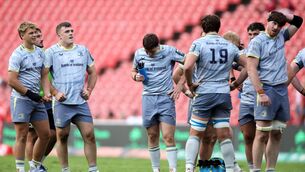
Pressure? What pressure?

THERE’S pressure, and there’s what Graham Henry is enduring at the moment.

Consider this: the stresses and strains of being a national rugby coach are taken as read, but factor in being New Zealand coach, and throw in the focus of a nation, not to mention that 24-year World Cup drought, and the weight across the shoulders starts to mount.

Just for good measure, add in the RWC semi-final Henry and his team lost to France four years ago in Cardiff, and the former schoolteacher must be struggling to sleep these nights, right?

Wrong.

“It’s inspirational,” he says. “I don’t think the All Blacks would be the world’s winningest team in any sport, which is correct by a considerable margin, if we didn’t have that expectation. So although it adds pressure, it’s great pressure.

“I don’t think we as New Zealanders actually appreciate what this team has done. I’m not talking about in my time, I’m talking about over 110 years. It’s phenomenal. I don’t think the expectation is a negative. It’s a real positive. We wouldn’t achieve what we do without the public having that expectation.”

Still, the heartbreak of losing to France in Cardiff lives on.

“It always stays with you, and rightly so. It was massive. The first thing you feel is how to handle this as best you can for the people involved. I think we handled it bloody well. We didn’t make any excuses, we took it on the chin and got on with life. That was very important for the young guys involved.

“Obviously it hurt, and still hurts. But I’m proud of the way we handled it as a group.”

Does it drive Henry even now?

“Winning a Rugby World Cup is not part of our legacy and that hurts. So it’s part of your motivation. But every time the All Blacks put on that black jersey it’s bloody important. It’s not about revenge; it’s about doing the business. But those things that happened in the past fuel you.”

Henry has an 86.2% success rate with the All Blacks (81 of 94 tests), and he’s swept the Lions, won three Grand Slams and the Tri Nations five times in seven tilts.

But moments like Cardiff or the Boks’ sweep of the All Blacks in 2009 or, even further back, the agonising 1-2 series loss to the Wallabies with the Lions lodge in the craw.

“You remember those times because they hurt and they’re very big learning experiences. That’s probably natural,” he says.

“There’s no doubt I wouldn’t be here if we’d won the Rugby World Cup in 2007. The reason I re-stood was because I didn’t want to run away. In my position you put a lot of pressure on people to perform, particularly the young people who play. You expect them to show a lot of backbone and do the business.

“When we got beaten in the World Cup quarter-final I could have run away, but I fronted because I thought that was the right thing to do.

Henry and his capable assistants have steered their team through 22 wins in their last 23 tests, and says the key is assembling the right intelligence – “if you’ve got no information to get across, you’re wasting your bloody time” – and then applying it sensibly.

An example? He breaks the game-plan down into two parts. Around 75% is constant — scrums, lineouts, restarts. Then there’s 25% which he calls “the improvement area”, which is where he comes in.

“That’s my job,” he explains. “I bring the 25% and the players then throw that out what they don’t need and they finish up with 12.5%. That’s fine. That’s the process.

“The first step is getting the new ideas, the second getting the alignment and the third is making that a viable part of your game. To be viable it has to be simple because when you’re running round at 100 miles an hour and making decisions the simpler the better.”

The simpler the better. His former captain, Tana Umaga, once asked Henry why he gave team talks close to games, and Henry said he hoped they were helpful.

Umaga said they weren’t. “I was depressed for a week after that,” says the coach with a grin.

“In the amateur days when there was a bank teller and a farmer and a builder and you brought them together for two training runs and a game the coach’s influence was as a button pusher.

“Today you’re living together for a week, and they get motivated by the environment and the collective challenge to do something special. The old bash on the changing-room walls to do the business is well gone.” It’s nearly gone for him, too: the relentless media attention, the days beginning at 4am, the burden of carrying an entire nation’s hopes.

But the pressure? Never an issue.

More in this section

Sport

Newsletter

Sign up to our daily sports bulletin, delivered straight to your inbox at 5pm. Subscribers also receive an exclusive email from our sports desk editors every Friday evening looking forward to the weekend's sporting action.

Cookie Policy Privacy Policy Brand Safety FAQ Help Contact Us Terms and Conditions

© Examiner Echo Group Limited