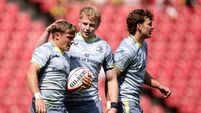
Top 14 giants have muscle to steal Irish stars
After all, a juggernaut implies an unstoppable force but there’s every chance that, after this weekend, it will be Leinster and Northampton in the Heineken Cup final.
But there can be no doubt the crucible of rugby power is moving towards France’s club sides and we’re likely to see more of them dominate in future. The age-old French Championship, which for so long was about the internecine warfare between southern French towns, is gradually regionalising, with big city sides at each region’s core.
Nowhere is this clearer than the south-east, where the rugby mad town of Bourgoin will say goodbye to the Top 14 next week, to be replaced by neighbours Lyon from Pro D2.
France’s second city spent much of the last century ignoring rugby but Lyon Olympique Universitaire have ambitious plans, including a move to the 42,000-seater Stade Gerland.
So why are there so many big-money backers attracted to French rugby?
Rugby is France’s fastest growing spectator sport. Unlike elsewhere, the gulf between football and rugby has narrowed constantly in recent years. Viewers and spectators are switching from the second-rate French football league to the Top 14. Every August, the DNACG, the financial watchdog tasked with monitoring French clubs, release the estimated budgets, reflecting the anticipated turnover of the clubs. Toulouse, with a turnover of €29m this season, was by far the biggest club in world rugby, thanks to a slick commercial operation with three club shops, cafés and an award-winning restaurant. Collectively, the 14 French clubs will have turned over an eye-popping €225m this season, an incredible amount for a sport that was ‘amateur’ less than 20 years ago.
Despite their size, Toulouse have never offered the biggest pay packets and little has changed. In desperate need of a fly-half, the European champions balked at the cost of bringing in All Black Dan Carter, instead signing Lionel Beauxis from Stade Francais.
Carter will earn in the region of €1.6m next season to line out for Racing Metro instead, joining Bakkies Botha, Luke McAllister and Luke Burgess.
Racing are backed by property magnate Jacky Lorenzetti, who signed Sebastian Chabal for €1m a year, not because of his ability on the pitch, but because he is France’s best known sportsman. He also has plans to build a new stadium in Paris’s suburbs because he believes there is a market for rugby in a city with only one football club.
Contrast it with England, where Leicester Tigers have been crying wolf over the Aviva Premiership’s €5m a year salary cap. The Top 14’s salary cap is estimated to be €8.2m, although it beggars belief how Lorenzetti will balance his books given Chabal and Carter will take up €2.6m of that between them next season.
Average wages in France now approach €130,000 and wage inflation at about 15% per annum prompting the question: for how much longer will the IRFU be able to keep Irish stars at their provinces?
No-one really knows. Keeping the O’Driscolls and O’Connells of this world has been a central tenet of the IRFU’s plans but as the gap in salaries widens so too will the pressure felt by major rugby nations to keep their stars at home.
And though French rugby’s roots continue to this day in the villages and towns of the south, much like the local parish GAA club in Ireland, the fear is its popularity could see it losing what made it special, and with it the budding rivalries of the Heineken Cup.

CONNECT WITH US TODAY



Be the first to know the latest news and updates