England bring best out of Ireland
It took the sight of a red rose on a white shirt to bring out a convincing performance from his team and with the prospect of Martin Johnson’s team returning to Dublin on August 27, the Ireland head coach will require a similar boost before heading south to New Zealand for a Group C opener against the USA on September 11.
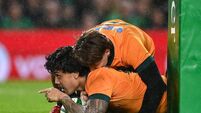
The summer will be a lot more palatable for the comprehensive 24-8 defeat of the Grand Slam-chasing English at the Aviva Stadium on Saturday as Ireland finally produced the form they had been promising since the autumn and only hinting at in flashes during the previous four Six Nations matches.
The three wins and two defeats left Kidney’s side in third place in the final standings behind champions England and indifferent outgoing titleholders France.
The final victory, aside from providing a much-needed boost in morale, also saw Ireland climb above Johnson’s side in the world rankings to fourth place, though whether that represents a true reflection of either side’s worth remains to be seen.
England were well worth their four victories but were equally deserving losers in Dublin.
Ireland, on the other hand, scraped a win over Italy in Rome to open with, blew the chance of victory over France, made life difficult for themselves in Scotland and would have won in Wales but for a linesman’s dodgy call and even dodgier decision-making from Paddy Wallace.
Either way, the rankings show the three SANZAR teams above both Ireland and England and there lies the rub.
Ireland have beaten both South Africa and Australia in recent years and gone toe-to-toe in periods against New Zealand but over the summer and autumn drew a blank against all three.
The Wallabies will again stand between Ireland and a favourable quarter-final draw when the two sides clash in their second group game on September 17 in Auckland but what sort of Ireland team can the Australians expect to face?
Victory over England suggests Ireland have moved on considerably in the last 12 months, their development finally coming to fruition after a year of painful mistakes.
Since the autumn, the set piece has come on in leaps and bounds. Paul O’Connell’s return from a lengthy absence and his gradual ascent to former heights has brought authority to the lineout and after a stutter against the Scots, he and Donncha O’Callaghan have rediscovered their solidity as a unit.
Against England there was the variety that had been noticeable by its absence in earlier games and Jamie Heaslip was again a successful option at the back of the lineout.
Ireland came into this campaign with a rickety scrum and ageing warriors Marcus Horan and John Hayes as well as hooker Jerry Flannery on the sidelines.
Injury also cost Tony Buckley his chance at tighthead but Ireland have in then process found a settled and increasingly impressive front row. Best has been a solid replacement at hooker and either side of him Cian Healy and Mike Ross have proven worthy successors in the propping positions, growing in stature after an uneasy start against Italy.
In the loose the forwards have finally worked out the best way to adapt to the new law interpretations governing the tackle area and the penalty count is finally coming down. The way Kidney’s players accurately turned the tackle into a maul against the English by holding up the ball carrier in numbers was a major factor in the visitors’ undoing, slowing down their ball without conceding costly penalties.
Add those factors to a falling error count and consistently fine defensiveeffort, the meanest in the championship this year with just four tries conceded throughout, and it is easy to see why faith has been restored.
Kidney, of course, insisted he never lost his faith in the squad which for the most part got his international coaching career off to the best possible start with a Grand Slam in 2009.
Asked, in the wake of the win over England, if his squad was better equipped for a World Cup campaign now than then, Kidney said: “We won two years ago with not a whole lot of players. Now, we have a broader base than that. We need match practice to get us right for the World Cup, and that is where the four matches in August are important.
“It can’t be fair: everybody would love to play all four matches but it won’t be like that. But we have a broader base so if somebody doesn’t turn up for work, we are better equipped to carry that. But you never want to lose any player; we have small resources and there will be a lot of water under the bridge between now and the end of the season.’’