McCaw: The most complete rugby player in the world
Italy basked in the reflected glory of two championship victories over Wales and Scotland in this year’s championship and underlined their credentials further only two weeks ago with a committed and disciplined performance against Ireland in Belfast in a game they should have won.
Yet after only 20 minutes on Saturday, New Zealand had scored 28 unanswered points and the game as a contest was over. Given what happened in the Stade de France only 24 hours earlier, the All Blacks were entitled to have some negative thoughts given the similarities that exist between Italy and Argentina.
The difference however between those two sides was marked by their attitude in the moments before kick-off when the Italian players turned their backs on the Haka and formed a huddle. Immediately they had passed the psychological advantage to Richie McCaw’s men by failing to accept the challenge that the Haka is deemed to offer. They were on the retreat before a ball was even kicked.
Conversely in Paris, Argentina tore into a fancied French team with scant regard for reputations and a commitment that bordered on manic. The pressure on France as host nation weighed Bernard Laporte’s men down with a level of expectation they were unable to cope with.
The sight of Puma captain Agustin Pichot engaging his Stade Francais colleagues David Skrela and Christophe Dominici an hour before kick-off induced a false sense of security with some of the key French players. Mind games at their best.
Argentina, despite an extremely limited game plan, lived on the edge. The intercept that led to Ignacio Corletto’s decisive try represented a 14 point turnaround as France would surely have scored had the pass from Remy Martin gone to hand.
In the highly sophisticated make-up of a modern rugby team, it was gratifying to see that the raw ingredients of pride and passion still have a major role to play. Passion on its own will not guarantee victory but it is disproportionately influential when the opposition are lacking in the same ingredient.
In Marseille on Saturday the quality of rugby produced by New Zealand in the opening half was a graphic illustration of the mix that modern teams aspire to but rarely achieve.
The interaction between backs and forwards was mesmeric and some of the skill displayed by forwards Ali Williams, Chris Jack, Jerry Collins Rodney So’oialo and McCaw was comparable with anything on offer by the best three quarters in the game at present.
The difference between Paris and Marseille was that Italy lacked the commitment and organisation in defence that Argentina displayed in abundance. If this New Zealand side is offered a licence to play by the opposition then they will cause havoc.
While the current era recognises the game-breaking qualities of pin-up stars Dan Carter, Brian O’Driscoll and Matt Giteau among others, for me Richie McCaw is the most complete rugby player in the world. His display at open side on Saturday was a treat to witness. His awareness has always been razor-sharp and he is always in the right place at the right time. His ability to support the ball carrier and maintain continuity is unrivalled.
The problem for New Zealand now is that their only other serious pool opposition, Scotland, could well play a weakened side at Murrayfield in order to be ready for their crunch pool game against the Azzurri only six days later. That game will dictate who advances to the knockout stages in second place. With Portugal and Romania waiting in the wings (God help them), New Zealand could now advance to the quarter-final without any meaningful contest. That may not be beneficial in the long run.
The response to the French defeat on Friday night was encapsulated by the thoughts of former French captains Philippe Dintrans and Serge Blanco whom I shared a drink with in Marseille on Saturday night. Both were still in a state of shock after Friday. Mindful of the difficult challenge their country men face against Ireland, the thought of somehow finishing second in the pool and the resultant psychological challenge of travelling to Cardiff to face New Zealand has done their heads in.
The pressure on France is enormous as they cling to the tenuous hope that the fortunate bonus point secured in defeat may still allow them to top the pool on points difference.
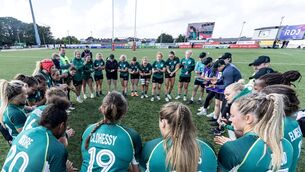
At the final whistle in Marseille, the New Zealand players formed a huddle in the middle of the field to be addressed by their captain. No doubt he could reflect with satisfaction on a job well done. Eighty minutes earlier the Italian team formed a similar huddle in the exact same spot in an act of defiance that undermined their cause. It was a poor decision from which they never recovered.
EARLY DAYS and all that but if first impressions count for anything, then New Zealand have set an awesome standard. I was fortunate to be in the Velodrome in Marseille on Saturday where the men in black delivered as clinical a performance as one could expect against respected Six Nations opposition.
Italy basked in the reflected glory of two championship victories over Wales and Scotland in this year’s championship and underlined their credentials further only two weeks ago with a committed and disciplined performance against Ireland in Belfast in a game they should have won.
Yet after only 20 minutes on Saturday, New Zealand had scored 28 unanswered points and the game as a contest was over. Given what happened in the Stade de France only 24 hours earlier, the All Blacks were entitled to have some negative thoughts given the similarities that exist between Italy and Argentina.
The difference however between those two sides was marked by their attitude in the moments before kick-off when the Italian players turned their backs on the Haka and formed a huddle. Immediately they had passed the psychological advantage to Richie McCaw’s men by failing to accept the challenge that the Haka is deemed to offer. They were on the retreat before a ball was even kicked.
Conversely in Paris, Argentina tore into a fancied French team with scant regard for reputations and a commitment that bordered on manic. The pressure on France as host nation weighed Bernard Laporte’s men down with a level of expectation they were unable to cope with.
The sight of Puma captain Agustin Pichot engaging his Stade Francais colleagues David Skrela and Christophe Dominici an hour before kick-off induced a false sense of security with some of the key French players. Mind games at their best.
Argentina, despite an extremely limited game plan, lived on the edge. The intercept that led to Ignacio Corletto’s decisive try represented a 14 point turnaround as France would surely have scored had the pass from Remy Martin gone to hand.
In the highly sophisticated make-up of a modern rugby team, it was gratifying to see that the raw ingredients of pride and passion still have a major role to play. Passion on its own will not guarantee victory but it is disproportionately influential when the opposition are lacking in the same ingredient.
In Marseille on Saturday the quality of rugby produced by New Zealand in the opening half was a graphic illustration of the mix that modern teams aspire to but rarely achieve.
The interaction between backs and forwards was mesmeric and some of the skill displayed by forwards Ali Williams, Chris Jack, Jerry Collins Rodney So’oialo and McCaw was comparable with anything on offer by the best three quarters in the game at present.
The difference between Paris and Marseille was that Italy lacked the commitment and organisation in defence that Argentina displayed in abundance. If this New Zealand side is offered a licence to play by the opposition then they will cause havoc.
While the current era recognises the game-breaking qualities of pin-up stars Dan Carter, Brian O’Driscoll and Matt Giteau among others, for me Richie McCaw is the most complete rugby player in the world. His display at open side on Saturday was a treat to witness. His awareness has always been razor-sharp and he is always in the right place at the right time. His ability to support the ball carrier and maintain continuity is unrivalled.
The problem for New Zealand now is that their only other serious pool opposition, Scotland, could well play a weakened side at Murrayfield in order to be ready for their crunch pool game against the Azzurri only six days later. That game will dictate who advances to the knockout stages in second place. With Portugal and Romania waiting in the wings (God help them), New Zealand could now advance to the quarter-final without any meaningful contest. That may not be beneficial in the long run.
The response to the French defeat on Friday night was encapsulated by the thoughts of former French captains Philippe Dintrans and Serge Blanco whom I shared a drink with in Marseille on Saturday night. Both were still in a state of shock after Friday. Mindful of the difficult challenge their country men face against Ireland, the thought of somehow finishing second in the pool and the resultant psychological challenge of travelling to Cardiff to face New Zealand has done their heads in.
The pressure on France is enormous as they cling to the tenuous hope that the fortunate bonus point secured in defeat may still allow them to top the pool on points difference.
At the final whistle in Marseille, the New Zealand players formed a huddle in the middle of the field to be addressed by their captain. No doubt he could reflect with satisfaction on a job well done. Eighty minutes earlier the Italian team formed a similar huddle in the exact same spot in an act of defiance that undermined their cause. It was a poor decision from which they never recovered.