Leinster and the rest: Irish rugby chief David Humphreys on the game's key issues
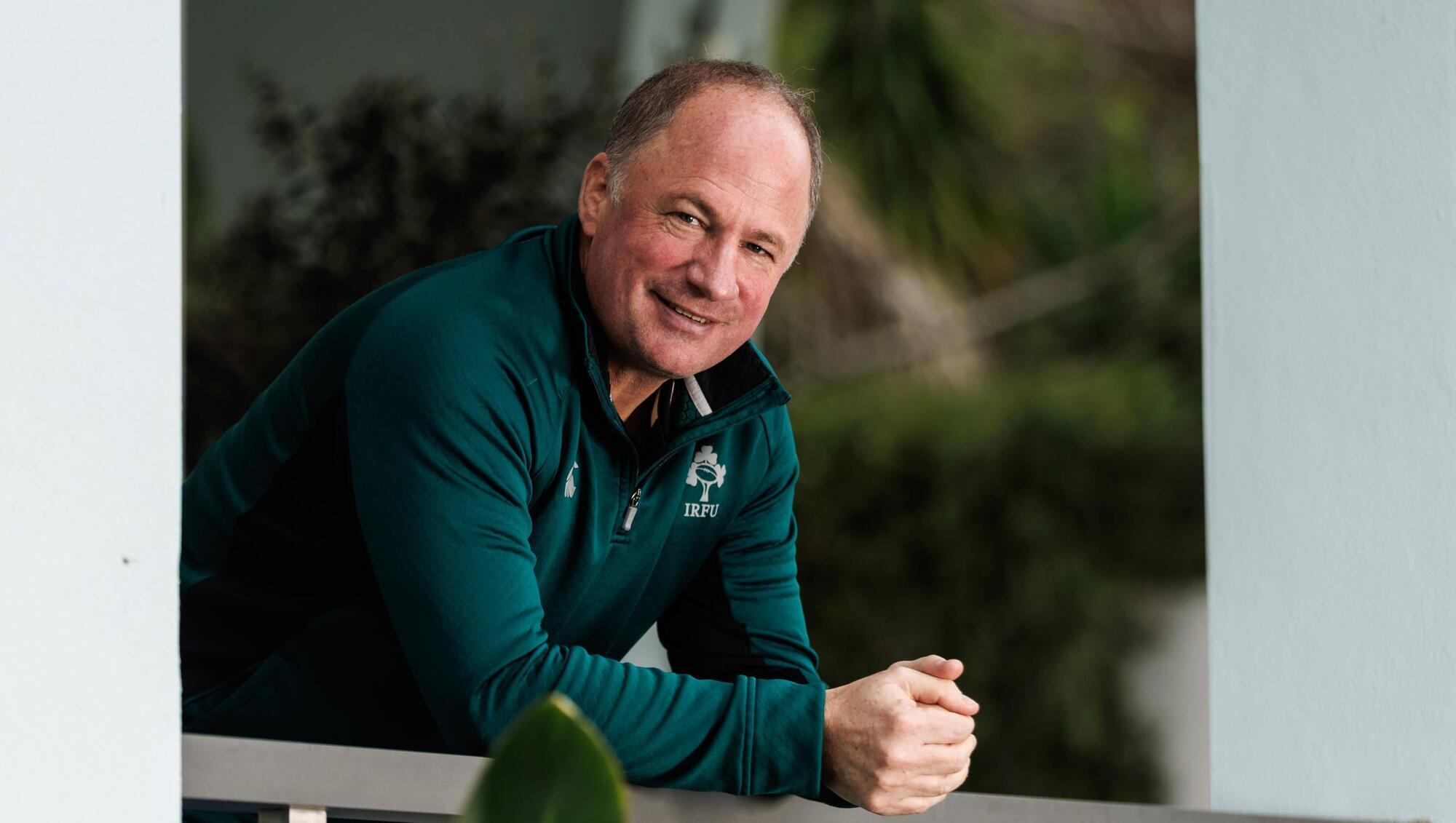
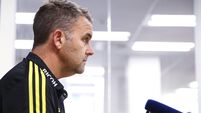
DIRECTING: “There's an argument, high-performance, where does it start and where does it stop? There'd be a view that high-performance is really only at the top of Irish rugby," muses David Humphreys. Pic: Ben Brady, Inpho
IRFU performance director David Humphreys is in Sydney with Andy Farrell’s senior men’s side, and he sat down for a rare, in-depth Q&A, with the travelling media before returning home in the coming days.
Humphreys’ takes on the Roger Randle controversy and resultant fallout at Munster, as well the possibility of Ronan O’Gara returning to coach in Ireland, are detailed elsewhere on this site.

There was plenty more besides of interest.
The former Ulster and Ireland out-half held court on the Leinster ‘tax’ as the province adapts to the need to cover 40% of the cost of it’s nationally contracted players’ salaries, and he spoke on the exit from the province and from Irish rugby of key winger James Lowe.
The Jacques Nienaber debate was addressed and Stuart Lancaster’s impact, and future, at Connacht set in stone, but Humphrey’s views on player movement between the provinces has shifted, and he gave his views on the progress of Ireland’s senior men’s and women’s teams.
Here is an edited Q&A version of the discussion…
**********
"Are we closing the gap in Leinster? Leinster are still the dominant force, and that is likely to be the case for a long time. When you look at what they've got, whether that's in terms of the players coming through their pathway, the depth that they have, the number of schools that they have, they are still in a very strong position.
I don't believe they're any weaker than over the course of the last couple of years.
Read More
Have the other provinces improved? Well, I think you've seen this year, one of the big pieces that we set out, and one of the big positives in the last 12 months, has been that in terms of the coaching, the structure first of all under a general manager, then together with some very good coaching appointments, you've seen a huge upturn in performance from Ulster at the start of the year with Mark Sexton going in there.
They tailed off a little bit towards the end of the year, which they were disappointed with.
From an IRFU point of view, what does success look like? You'll talk about winning things, yes, that's part of it, but it's also for us, it's having four teams playing in the play-offs, it's four teams in Europe, those are the big, from an IRFU point of view, that are important.
But to go back to Connacht, Stuart [Lancaster] has gone in, as we hoped, and made a huge impact. It took him some time, probably a little bit longer than he had liked, but going in somewhere and trying to make fundamental changes is difficult.
But again, you've seen the way Connacht finished the season, and are playing superb rugby, reflected by the fact of the two teams that I've mentioned, the number of players who are now represented here.
So, to answer your question, are we closing the gap? Performance, I'm not sure that's the right word. Closing the gap might have been an easy way to say we just need to make them more competitive. We need to make them better players, so that they're better for Andy Farrell and for Ireland. Has that happened? I definitely think that is the case."
: Y
: Before I do that, I think it would be inappropriate to be sitting here not - I sit in front of the media so rarely - to compliment Leo in terms of what he has done in Leinster. When you look back at his career in Leinster, I think in his interviews [he said] he's spent 30 of the last 32 years in the province. The impact he's had as a player and as a director of rugby is unbelievable.
Yes, some people will make it all about trophies, but it's not about that. You look at the work that he's done, the environment that he's created in Leinster, the club that he's created in Leinster, the number of players that have come through the pathway to play for Ireland. And not just play for Ireland, play for Leinster, play for all the other provinces.
So I think that he has had an unbelievable career and he will definitely be missed. And the legacy that he leaves, he will leave big shoes to fill.
So then to move on to the process, I've had a number of conversations with Guy Easterby (Leinster’s chief operating officer) and with Shane Nolan (Leinster CEO) as to what that process looks like. Leinster are leading that process, but because again, it is an Irish IRFU contract, but the IRFU will be involved towards the later stages of that appointment."
:" “I think like all appointments, as soon as possible is the word. We know it's going to be somewhat difficult with the World Cup and trying to find someone that may or may not be in international rugby.
“As you'd expect with a club like Leinster, a province like Leinster, there will be no end of high-quality coaches and directors of rugby who are available and who would like the job, and then it comes down to being very clear as to what Leinster and the IRFU would like in that position.”

: “I think because it's been so established for a long time now, even with Guy Easterby as the chief operating officer rather than a GM, but the detail behind the role probably doesn't matter as much as making sure that we get the right person to ensure that the quality of player in Leinster gets the best experience and the best opportunity to become better players.” You'd assume Felipe Contepomi and Stuart Lancaster might have their hats in the ring. Or would you like to see Stuart stay in Galway?
“Yeah, look, we brought Stuart into Connacht for a very good reason. He's one of the best coaches around, and you've seen yourself the impact that he's made in Connacht.
“And I think that there's huge potential down there, he's excited by what he's done, he's enjoyed bringing a lot of these young players through, and now it's about where he can take Connacht over the next few years.”
: “No.”
:
: “Contracts, the same as they are in every sport, are often unique very much to the person and to the situation that they're in. So the James Lowe one in the Irish system was… I'm not sure if there's any others of a similar nature.” What can you tell us about the process on the record? Unfortunately James is going, but how did it get to that?
“I’ve said any time I've been asked about it that we are very disappointed to see James leave the Irish system. He has been an unbelievable player for both Leinster and Ireland since he arrived.
“He has been on a provincial contract. He has never been on a national contract, and the negotiations to extend around his current contract were with Leinster.
“From an IRFU point of view, there has been a lot of reporting which has been inaccurate around the fact that we did support the contract with a PONI [Player of National Interest] payment, but details beyond that, it's inappropriate in the same way we have 40-odd players leaving the Irish system this year. We don't talk about them, we don't talk about the detail behind them.
“So while we're disappointed to see James leave, it's about making sure the next person coming in gets the opportunity to become as good a player as he was, and that's where we've got to.”
: “I think again, rather than to talk about it now… James was made an offer, it was a provincial contract, it was always a provincial contract. There are a number of other similar provincial contracts which are supported by PONI payments throughout the Irish system.
“This was a very similar contract to that, but outside of that, the details are confidential.” Are you confident that there are other wingers who can replace him?
“He has had a point of difference for the last number of years, but the only way I can answer that is by looking back to the Six Nations when we lost him after 18 minutes of the England game, and the impact that Tommy O'Brien and Robert Baloucoune had over the last three weeks gives us the confidence.
“When Mack Hansen is there and you look around, there are other players in our system who have played and performed very well at international level over the course of the last few years.
“So yes, losing a player like James has been a disappointment for us all, but I have no doubt that the players are coming through. The challenge for them coming through is about how do they get themselves, because there will be five or six players competing for that place now, and making sure that Ireland continue to compete at the top.”
DH: “It's one that I probably pivoted on over the course of the last 12 to 18 months. When I first came into the role, I was very much of the view that there shouldn't be movement: it should be in your province, and it's up to the provinces to develop players through their academies to address any short-term issues that they have.
“The reality now is that it takes time and some of the changes that we're making with our director of rugby programme will hopefully help address that within those provinces, but equally, there is no doubt that we have some players in provinces who, if given game time, will develop much quicker.
“We've seen it this year, some of the players that have come on this tour. If you'd watched, say, Billy Bohan last year in the U20s, you would never have seen him being selected for this. Why has he done that? I think he's played 15 games for Connacht. Sam Illo the same.
“So, what we're seeing is we know now that if we give players the opportunity, and they're competing at the top level, and they're performing very well, they come into this environment, Andy Farrell and the coaching team that we have here make them better players.”
: "Fourteen.”
:
: “When I was in Ulster, there would have been significantly more, but at that stage, the contract values were significantly lower. So, I think that's been part of it.
“The model is flexible. We have some criteria, which is informal in the background, which determine whether or not a player might come into consideration for a national contract. And that will continue to be the case.
“We're coming to a stage, coming into a World Cup, where that cycle will perhaps see some players drop off a national contract. But that's very much an ongoing conversation with the provinces as to what that's going to look like going forward.”

: “I think when you look back over the last number of years, when you talk about Ireland's success, yes, the players have obviously played a big part of it, but it's the coaching team that has been the catalyst for this improvement, certainly over the last ten years, and I think Andy has taken the team to a new level.
“So, when he made it clear that he expressed an interest in staying on, it was a very, very easy decision from the IRFU. It was a very, very easy contract negotiation. So, I think it's the best decision that could have been made in the short term, leading into the World Cup, to give confidence in the system, give young players coming through a clear understanding of how we're going to play and what they need to do to get into his team.
“So, for me, it's been a really positive few months, and also some people have asked questions around the strength of the system, but Andy's looked at that. He's confident the players are coming through, as am I, that they will be of the quality that we need to ensure that Ireland continue to compete in the top four of the world and then at the top of the Six Nations, hopefully at a World Cup next year.”
: “Like any organisation, the head coach, the man in charge, is only as good as the people that he's working with, and when you look at the people that we've got in our coaching team at the minute they have delivered unbelievable success for Andy and for the players.
“So, for us, with them contracted through until the end of the World Cup, to December 2027, we haven't even considered that yet. That's something that will be looked at over the course of the next... I'm not even sure of the timeline. Andy, and I haven't discussed that.
“But if they continue to perform at the level they're performing and continue to improve, I don't see many better coaches around the world.”
DH: “Yeah, look, the quarter-final hoodoo: it's almost been a burden on Irish rugby, hasn't it? And that's why I've kind of probably blocked it out for a long time. But look, before I came into the show, I would have said, yeah, the World Cup is nice to have, but it's about performing year in, year out.
“It's about performing in Six Nations. It's about performing in the Nations Championship. If we get those parts of the season right, the World Cup performances will take care of itself. But we know this is leading into ‘27 after ‘23 and the performances leading into that, the quality of the performances at the World Cup, we know we've got to continue to evolve.
“One of the concerns coming into this was we had a number of our key players who've stayed at home through injury but that's given us the opportunity then to expand the depth of the squad, give young players the opportunity to come and train, and for Andy and the coaching team to look and see which of those players are going to be good enough to play an important role, because we all know by now and the World Cup, the squad will change. There will be some injuries.
“But the secret for us particularly, to be competitive, is to make sure we have that depth. The only way we can get confirmation of that depth is by giving them exposure at URC and EPCR but then bringing them in here and seeing how they're competing with their peers. And then it's been a very positive three weeks so far.
“I think Andy's very pleased with how those young players have come in and he talks about them being themselves and the personalities they bring. So, (that is) really good, and in terms of looking forward then to 12 months the three weeks here, because we're going to be in Australia, it's given us good preparation.
“We've had a good look around. We'll obviously do things a little bit differently next year but on the whole, I think we're very pleased with where we are. Very positive.
“Even last weekend, being able to show that character and fight and determination when we were under serious pressure against a very good Australian team to find a way to win. That's what's going to get you past a quarter-final as well as the basics of the game.”
: “The biggest challenge is probably the alignment piece. When you've got four very distinct provinces who are unique in many ways, all competing and wanting to be successful. And it's how you make sure that marries into our number one priority, which is our men's team and ensuring its success.
“And as part of that then ensuring… You'll have heard them talk about where the financials of our provinces are at the minute, plus then we've got to keep the team here, plus we are absolutely committed to accelerating the women's game as part of a strategic plan.
“And I think it's one of the things sometimes in these we don't often talk about the positives around our women's game, the positives around our Celtic Challenge teams, how successful they've been, the opportunity that's coming up with PWR (Premier Women's Rugby in the UK) and how that might play out in terms of how we be competitive.
“But ultimately our Irish women's team is getting better and better year on year. You've seen that in the performances. Those of you who were in the Aviva Stadium a few weeks ago, to see 30-plus thousand come and support, that's what we want.
“We want the game thriving across all aspects; schools, clubs, men's, women's. That's what I enjoy about the role. It's so wide. It's great to see two referees here. There's so many aspects to it, but it's trying to make sure the levers we're pulling are supporting all of them and making sure they're all improving without damaging anywhere along the line. And that's the balance in the world that we're in.
“We all know the world in rugby from a financial point of view is very different now to what it was five years ago. But that's okay. That's a challenge. We're all in the same place, but it's making better decisions and decisions that may not always be popular, but I can absolutely guarantee all these decisions are made in the best interest of the longer-term game in Ireland.”
: “We've got a double World Cup-winning coach. He is a world-class coach and for me, good players get better by having different coaches challenging them in different ways, challenging them how they play the game, challenging them how they see the game.
“And then the other challenge is for Andy to pull that all together. I don't see it as a weakness. It's definitely been something we've had to work on, but I was sitting listening to Simon Easterby talk about our defence this morning and they're not as different as perhaps some of the reporting would suggest.
“The principles are the same and there were a couple of issues at the weekend, but it's the first game back with the team together, they will be better this week and they'll be better next week.”
:
“Yeah.”
“So again, it's a process, it was an expression of interest which you're all aware of. At this stage then it's with PWR who are considering all the different applications across the different teams.
“I'm actually not aware of a timeline for it, but at the appropriate time that will allow us, {IRFU head of women’s strategy) Lynn Cantwell and (IRFU head of women’s performance and pathways) Gillian McDarby, work together to go, ‘Okay, what is in the best interests of Irish rugby? How are we going to get to a point where, like our men's team, our women's team are competing at the very top of world rugby?” Are you open-minded about the possibilities in terms of how teams look?
“I think if you asked us all where we want to get to, we want to have four provinces playing at the top level, same as the men's game, but in terms of the timeline, we have no idea how long it's going to take us to get there.
“There may be some opportunities like PWR where there might only be a smaller number of teams. That's okay, but we've got a longer-term view that we want to get all four provinces professional in men's and women's rugby.”
(Leinster are now contributing 40% of their nationally contracted players’ salaries)
: “The biggest decision that we, the IRFU, have made from a high-performance point of view over the course of the last 12 months is that we believe that we have to go and invest at the very bottom of the system to ensure that the game is vibrant.
“So what we've done is with some of the central funding that has come back in from the change in the central contract funding model, we are now allocating that to the three provinces, into schools in Munster and Ulster, and into the, the club and the wider academy pathway in Connacht.
“They will all be equally funded with a view to making sure that the game, and then the schools in each of those provinces, and the clubs in Connacht, are as competitive or increasingly competitive to try ensure the gap between Leinster and those other provinces is closing.
“The only way we can do that is by quality of player. We believe the investment in the schools through the director of rugby schools programme is a starting point for that, but again, it is only a starting point.
“This is something that we will have to go and continue to invest in over the next four or five years to get the return that we believe we need.
“There's an argument, high-performance, where does it start and where does it stop? There'd be a view that high-performance is really only at the top of Irish rugby.
“My view is to have a thriving high-performance system which is reflected in how our national teams perform, we've got to make sure that at the grassroots and the community game and the school's game, the high performance team have a responsibility to work with our domestic game, with all our staff to ensure that we're all pushing towards this idea.
“That we want to give our players the best opportunity to play for Ireland, understanding that many of them won't, but those that don't have still had a brilliant rugby experience and can continue to be really good club players, continue to be referees, continue to be rugby administrators, maybe even some rugby journalists, but that is our belief that it's fully aligned, fully working together to get the best output that we can.”