'People were coming from all sorts of wards to look. The nurses had never seen or heard the likes of it'
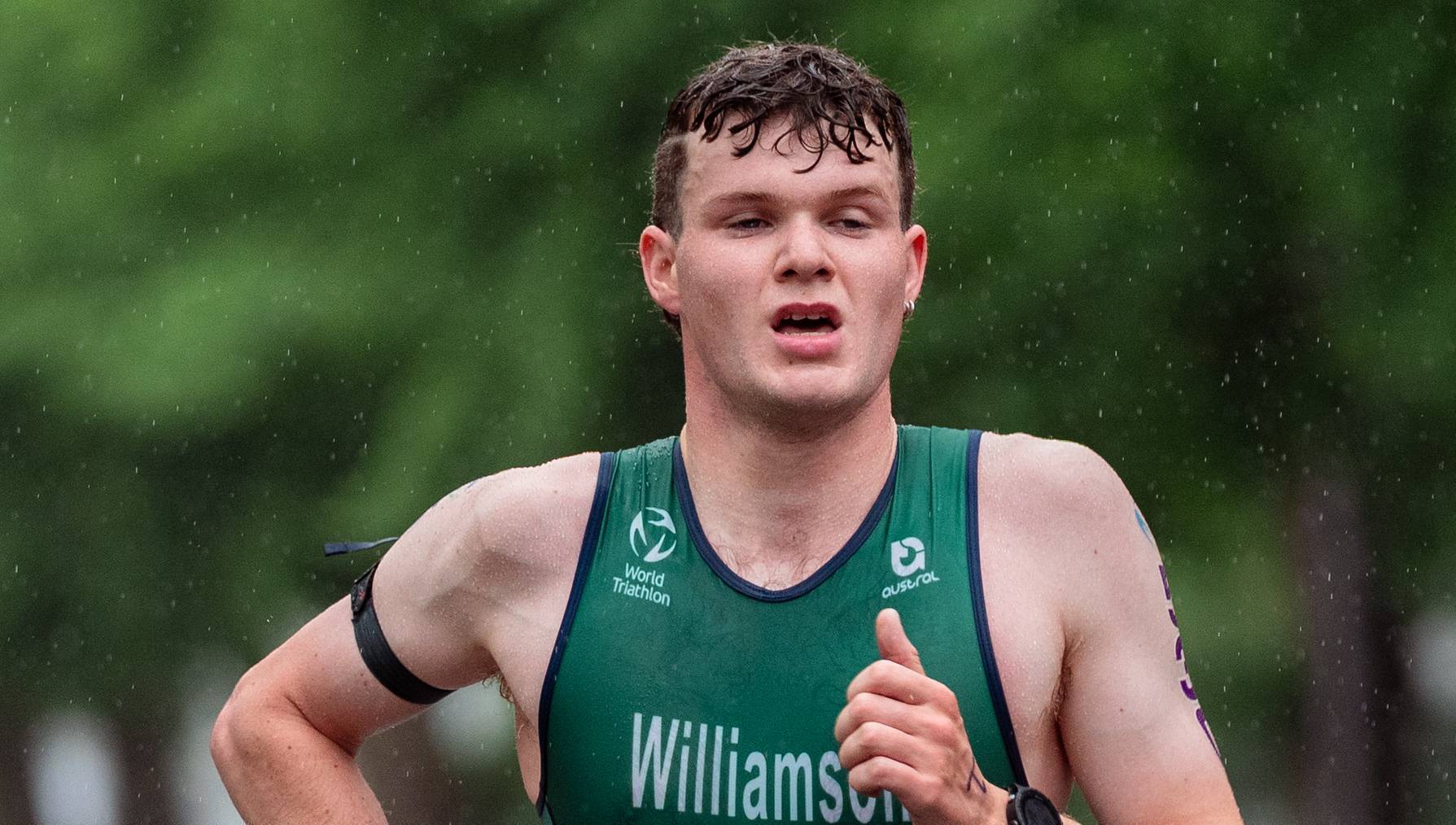
Tom Williamson, during a Triathlon event in Tokyo in May last year.
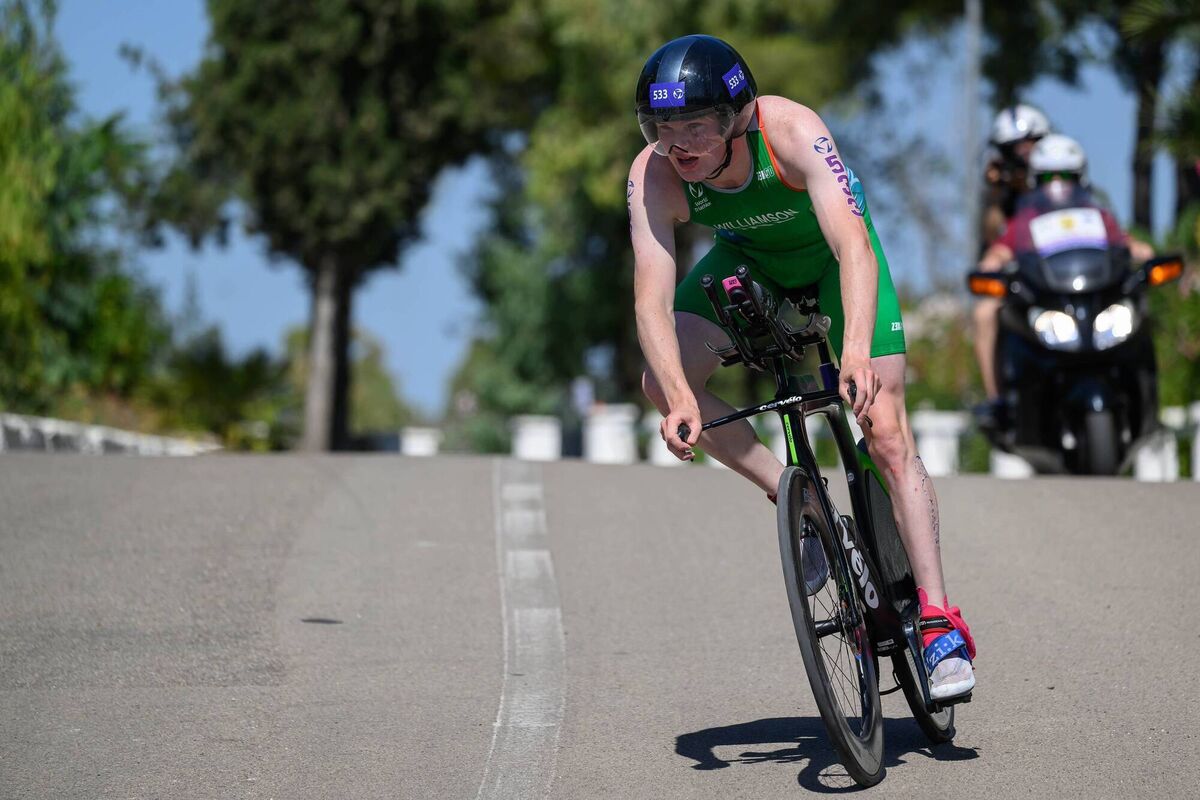
Tom Williamson regularly catches himself reflecting on how different his life might have been.
The 23-year-old from Saintfield, Co Down, is ranked sixth in the world in para-triathlon, a double European bronze medallist, and an athlete with his sights firmly set on the Los Angeles Paralympic Games in 2028.
Yet there was a time when doctors were discussing whether his left foot could be saved.
“When you reflect on the journey I’ve had up to the age of 15, all the obstacles I had to overcome at such a young age, it’s like, ‘woah, Tom, you had to overcome so much to walk’,” said Williamson. “Now I’m in a completely different place. It’s wild. People see I’m a para-athlete and me standing here now, you wouldn’t know. Like, people can’t believe I was in a wheelchair.”
He was three years old when, out of nowhere, he ran into the path of a ride-on lawnmower that reversed over his foot in the family garden, severing his Achilles tendon and destroying much of his heel bone.
The injuries were so severe that amputation was considered.
Two decades later, speaking from his digs in Stirling, Scotland, just days before the European Triathlon Para Championships in Tarragona, he still carries fragments of memory from that time.
“I’ll not remember the trauma of what my family went through that day, but I know from the stories,” he said. “It is what it is and all things align, and here I am now talking to you.”
Williamson underwent surgery every day for a fortnight as doctors worked to save his foot. They preserved just enough tissue to avoid a full amputation.
“My Achilles is attached to an obscure spot on my foot,” Williamson explained. “The point on the foot which is the ball of your tib and fib, that’s kind of my heel now.”
Over time he was fitted with an ankle-foot orthosis (AFO), designed to keep his foot at a right angle, and used various prosthetics throughout childhood. He spent periods in a wheelchair — recently he found a photograph on his phone showing him attending a concert at the age of 13 while in one.
But his life changed again with his biggest reconstructive surgery as doctors attempted to create a functioning heel. Fat was taken from his hip and grafted beneath the foot, while skin was taken from his right foot to complete the procedure.
“So both feet look particularly interesting,” he laughed.

Some of the tissue failed to establish blood flow. “They were putting 15 leeches a day on my foot. When they fell off, they’d put more on until the tissue took,” Williamson recalled.
“Obviously as a young lad you think, ‘this is absolutely class’. I was in a room to myself and I’d say it was the most looked-at foot in Ireland, or at least in the Ulster Hospital.
“People were coming from all sorts of wards to look and the student nurses had never seen or heard the likes of it. I was practically a lecturer.
“But it’s funny, there were clowns going around the wards at one stage and they looked through my wee window and saw all these creatures attached to my foot. They just walked away. They wouldn’t come in.”
After unsuccessful attempts at learning the piano, Williamson found swimming and became competitive in the pool into secondary school.
The next step came through neighbour Desi McHenry, a noted triathlete who was later inducted into the Triathlon Ireland Hall of Fame. McHenry introduced Williamson to cycling. During a conversation over dinner in the Williamson’s house one evening, he suggested triathlon.
The chat lit a fire. Williamson was 15.
The last step was get running. Swimming and cycling are non-weight bearing activities but running was a different world to him before now. He dove in with his first-ever run — a 5k around the local cricket pitch.
“I just thought, ‘I need to do a 5k because I’ve got to do a 5k in the triathlon race’,” he said. “It took me 32 minutes. It just snowballed from there.”
One triathlon that year was followed by several more the year after. His career snowballed from there. He no longer requires a prosthetic and instead relies on custom insoles.
“I’ve got an Ikea bag full of stuff and you can see each stage I’ve gone through over the years, the different ideas of prosthetics that surgeons had at the time,” he said. “It’s pretty cool to look back on.”
Williamson moved to the University of Stirling to study sports science and will remain there after graduating. The set-up and support network, inside and outside his coaching group, have convinced him it is the ideal base as he builds towards the LA Paralympics.
For now, his focus is on Tarragona. The European Championships will see him take on top-ranked Martin Schulz (Germany) and Filipe Marques (Portugal) once more.
However, finishing second behind multiple world champion Stefan Daniel and ahead of Paralympic champion Chris Hammer at the World Triathlon Para Series event in Montreal last year is a game-changer for Williamson.
“People can look at medals and think you’ve got X amount of medals, but sometimes you’ve got to look at the calibre you’re racing,” he said.
“Honestly, Montreal was one of the greatest races I’ve had, my most complete triathlon to date. It kind of cements myself into that arena. It makes me believe that on my day I can compete with these guys. Having the opportunity to race these guys is always an honour and it’s what makes it fun.
“It was a surreal feeling in Montreal and I can’t imagine what it would feel like to get over the finish line first, but I’m looking forward to that day.”

Cancel anytime
CONNECT WITH US TODAY
Be the first to know the latest news and updates