The fake virus: How to separate the fact from the fiction
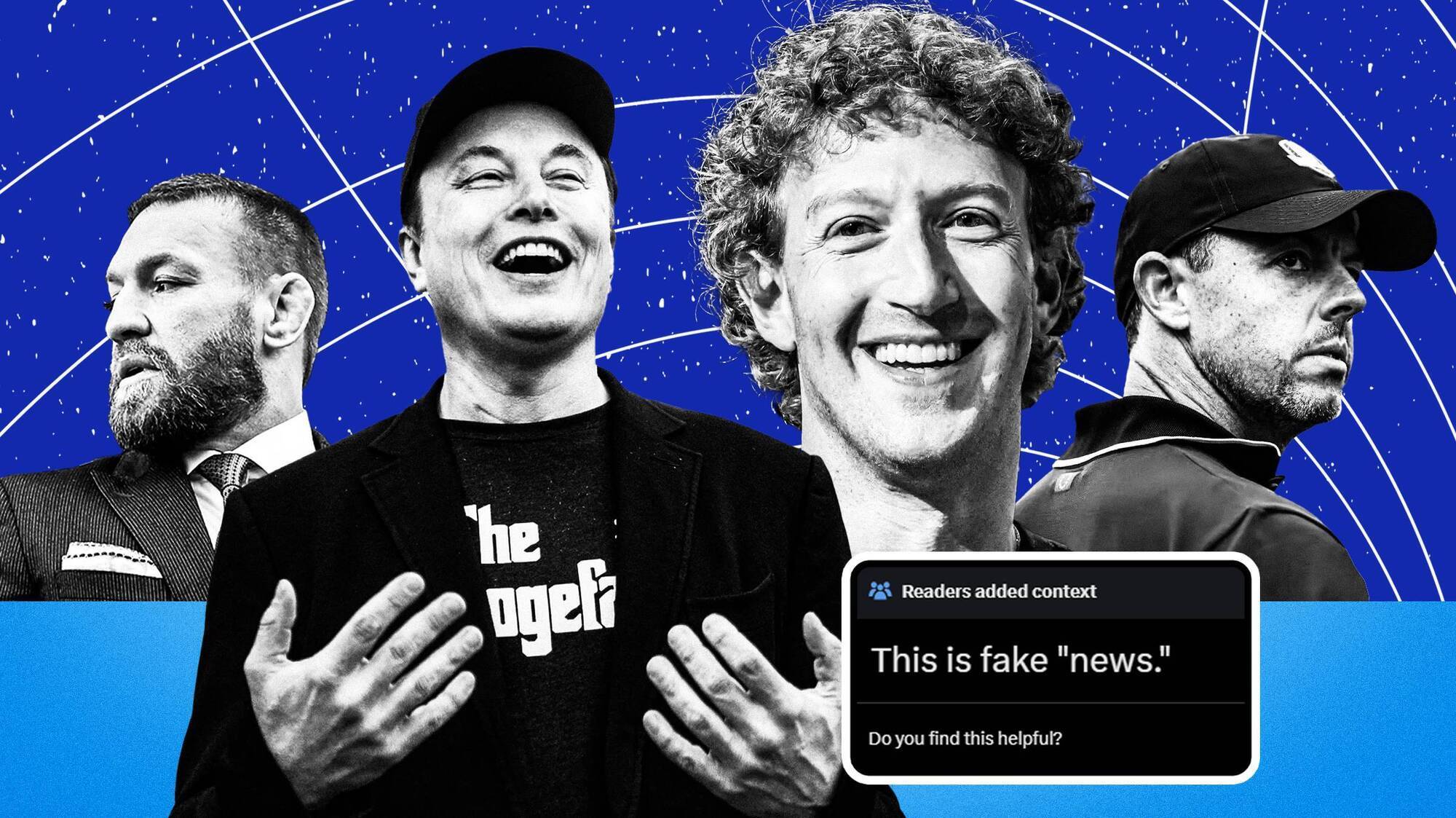
Recent examples of phoney sports stories going viral are as numerous as they are concerning.
If you’ve been finding it increasingly difficult to separate fact from fiction online, you’re not alone. It seems like social media is flooded with fake news these days, and the rise of AI has muddied waters that were already pretty murky to begin with. It can be hard to know what, or whom, to believe.
Recent examples of phoney sports stories going viral are as numerous as they are concerning. At least three involving the golfer Rory McIlroy gained huge traction in the aftermath of the Ryder Cup, which took place in the United States in late September.
According to widely shared social media posts, McIlroy donated his $10.9m tournament bonus to a homeless charity in Northern Ireland; he met a seriously ill girl on a flight, gave her his seat in business class, and offered to pay her medical bills; and he vowed to never play golf in the USA again.
Each of these eye-catching stories spread like wildfire, attracting thousands of likes and millions of views across Facebook, Twitter/X, Instagram and TikTok. All three of them are completely made-up.
The misleading posts, along with many others like them, are part of an online trend that sees users concocting fake news in a calculated attempt to “farm” (intentionally cultivate) engagement. Sharing popular content can earn these anonymous accounts significant sums of money from the social media sites in question. And it appears as though sensational but fictional tales like the ones about McIlroy are working a treat.
The post claiming that the Irish golfer had made a massive charitable donation seems to have been originally published by a golf content page on Facebook. “GOOD NEWS,” the story starts, “‘Rory McIlroy has donated his entire $10.9m bonus from the Ryder Cup… to fund a series of homeless support centres in Northern Ireland, his hometown area.”
The replies under the text and images (which show McIlroy in one frame and a homeless person in another) are flooded with well-wishers congratulating him on his philanthropic deeds. “Give that man the Nobel Peace Prize,” one user comments. “As if Rory couldn’t get more classier!” adds another.
But the story is false. For one thing, McIlroy and his European teammates didn’t get paid to play in the Ryder Cup. Nevertheless, the post went viral on Facebook, racking up 100,000 likes. It was later shared on Twitter/X via a screenshot and it went viral all over again, gathering millions of views. Tennis legend Boris Becker was one of the thousands of people who unwittingly helped to widen its reach. He reposted the screenshot to his 627,000 followers, commenting: “Unbelievable gesture Rory”.
Remarkably, this has all happened before, as recently as seven months ago. In April, the mental health charity Mencap released a statement confirming that an online story about McIlroy handing over his Masters purse to them was untrue.
“Rory McIlroy has been a tremendous supporter of Mencap, supporting the build of our children’s centre in Belfast a few years ago,” a spokesperson said. “However, we would like to clarify that reports stating he donated winnings from a recent tournament to Mencap are not accurate.”
That lie also appears to have originated from Facebook.
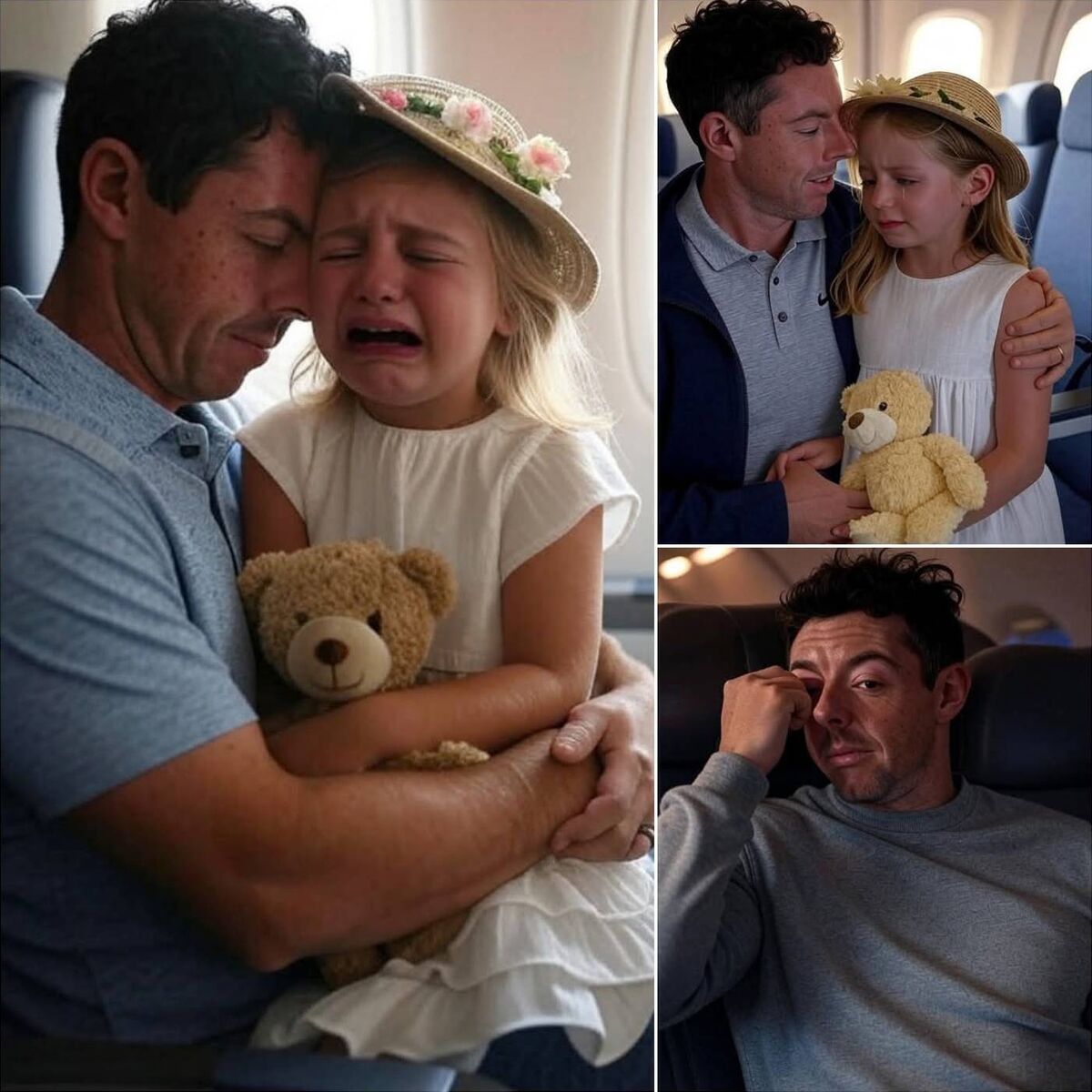
AI-powered picture and video generators have made it easier than ever to create fake visuals and some dishonest individuals are using this new technology to their advantage. The fake post about McIlroy meeting a sick child on a flight, giving up his seat and paying her medical bills came with AI-generated images of the golfer embracing a crying girl on an airplane. There are telltale signs that the pictures were “created” using artificial intelligence – they are uncanny and riddled with inconsistencies – but these clues are understandably not immediately obvious to all. For some, the images may even help verify the story.
The third example mentioned above – the one about US-based McIlroy never playing in the US again – is perhaps even more disconcerting. A pretty convincing AI video published on Instagram on September 30 purports to show McIlroy speaking about the Ryder Cup at a press conference.
“I will never participate in tournaments held in the United States again,” the fake Rory begins, speaking in an eerily accurate version of the real Rory’s distinctive, slightly Americanised accent. As clips from the Ryder Cup roll, the voice continues: “I can accept people insulting me but I cannot accept them hitting my wife on the head with a drink bottle.” The AI rendering of one of the world’s top golfers goes on to criticise the American fans, saying their “piercing insults stabbed into my ears like daggers”.
Erica McIlroy was, indeed, hit with a drink at the Ryder Cup, and her husband did speak out about the American crowd’s poor behaviour, so the events referenced in the fake video are grounded in reality. The AI video leans on these real, high-profile incidents and sensationalises McIlroy’s actual comments to maximise engagement.
This exercise in farming must be considered a resounding success from the original poster’s point of view. The 60-second video has been seen by 18m people. To put that figure into some kind of context, around 5m viewers watched the Ryder Cup itself on Sky Sports.
Half a million people have liked the AI reel, and over 30,000 have left replies. It’s clear from the comments that many believe the content to be genuine. One popular reply reads: “Good Rory. U r absolutely correct. Such disgusting behaviour from the Americans. Disgraceful. God bless you and your beautiful family”. Another says: “Words well spoken”.
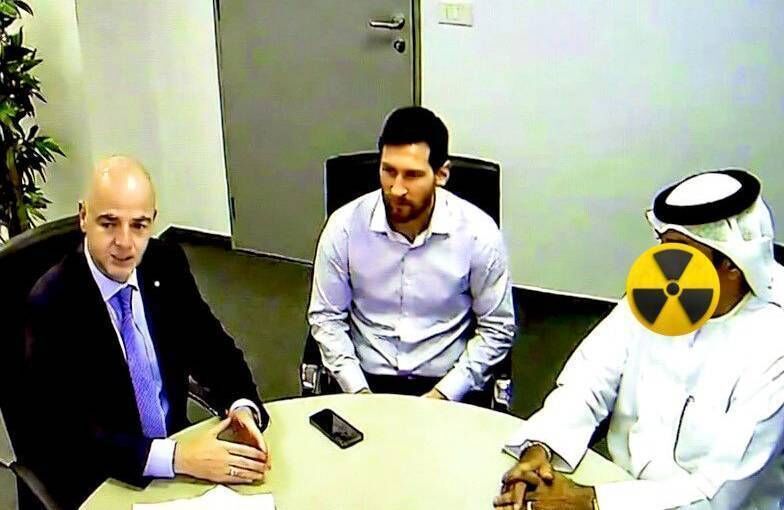
In recent days, an AI-generated image purporting to show Lionel Messi in a secret meeting with FIFA President Gianni Infantino and “high-ranking Qataris” prior to the last World Cup garnered huge attention on social media. The implication is that the tournament was somehow fixed – an outrageous claim – yet one such post on Twitter/X has accumulated 30k likes and 8.7m views.
The terminally online (this writer included) might gently scoff at those who fall for this kind of stuff, and some of it might be quite blatantly fake if you have an eye for it, but who amongst us has not been hoodwinked at least once?
Simply posting a “quote” with a photo of the individual who allegedly said it is often enough to catch people out. Last week a supposed comment by Cristiano Ronaldo, ostensibly taken from his one-to-one interview with Piers Morgan, was widely shared online. According to several tweets by several different accounts, the Portuguese forward said: “I don’t agree [that Messi is better]. I don’t want to be humble.” One such post has earned 14k likes and almost 10m views.
While it does sound like something the ultra-confident Ronaldo might say, the “I don’t want to be humble” line was actually part of his response to Morgan asking how many cars he owned. He answered a question about Wayne Rooney’s insistence that Messi is better than him by stating: “No problem… I’m not mad with that. For me, it’s okay. You can choose whatever you want.”
In this instance, the fake quote may have stemmed from an official promo video for the interview which edited various clips together in quite a misleading manner. Either way, engagement farmers didn’t need a second invitation to spread the mistruth far and wide, capitalising on the ever-divisive Messi v Ronaldo debate for clicks.
Last Saturday, a completely made-up comment attributed to Alejandro Garnacho caused a stir. A tweet posted by a Chelsea fan account asserted that the out-of-favour Manchester United player, who is currently on loan at Stamford Bridge, was asked by a reporter if moving from United to Chelsea represents progress. “Go and check the table,” Garnacho supposedly replied. (Chelsea are third in the league; United are seventh.) Of course, Garnacho said nothing of the sort, but the post blew up, earning 25k likes and over 5m views.
Fake quotes like this have been doing the rounds for years. Roy Keane has often been the unwitting subject; the outspoken pundit is, in many ways, the perfect avatar for mischief-makers in this scenario. Occasionally the figures involved speak out and issue a denial. In 2024, the former England footballer Eni Aluko threatened legal action when a number of accounts falsely claimed she had suggested that female players should be playing in the men’s Premier League. Some of the accounts in question issued grovelling apologies and deleted their posts, but one of the viral tweets is still visible over 12 months later.
Now these fabricated quotes are so common, one imagines it would be difficult for the individuals involved to refute them all.
However, last month Swimming Australia did feel it was necessary to intervene when a similarly styled post falsely attributed controversial comments to one of their swimmers, Mollie O’Callaghan. The fake quotes indicated that the world champion would refuse to participate in the 2028 Olympics in Los Angeles if transgender swimmer Lia Thomas is allowed to compete.
“There are currently fabricated quotes attributed to Mollie O’Callaghan appearing on social media posts,” the Australian sporting body said. “At no stage has O’Callaghan been interviewed and provided commentary on transgender athletes. Meta [the owners of Facebook and Instagram] have been advised of the fake news, and O’Callaghan and Swimming Australia have requested the posts to be taken down.” One of the viral posts that was shared on Facebook is no longer visible, but another on Twitter/X is still up and has been viewed over 7m times.
Shortly after this incident, another viral post made virtually identical claims, this time using the name of Australian swimmer Kyle Chalmers instead of O’Callaghan’s. Swimming Australia were again forced to clarify that the quotes were fake and that Chalmers had made no such comments.
Incidentally, Thomas isn’t even eligible to compete in the Olympics. She has been barred from elite women’s swimming since 2022 when World Aquatics updated their rules regarding transgender swimmers.
The O’Callaghan/Thomas example may also hint at another reason we’re seeing so much bogus information, and it goes beyond farming and what might loosely be described as “banter”. In some cases, it appears as though certain agendas are being deliberately pushed into our feeds by bad faith actors.
On Twitter/X, the O’Callaghan/Thomas content was published by a large account that describes itself as “anti-woke”. The account regularly shares far right talking points and conspiracy theories to an audience of over 260k. The majority of the replies to the fabricated post are vehemently anti-trans. One of the most liked comments shows an image of a trans woman with the caption: ‘Transgender – when being a regular f****t doesn’t get you the attention you deserve’.
Closer to home, it seems plausible that an entirely different type of agenda was at play when an unpleasant and unverified rumour went viral in the aftermath of this year’s All-Ireland hurling final.
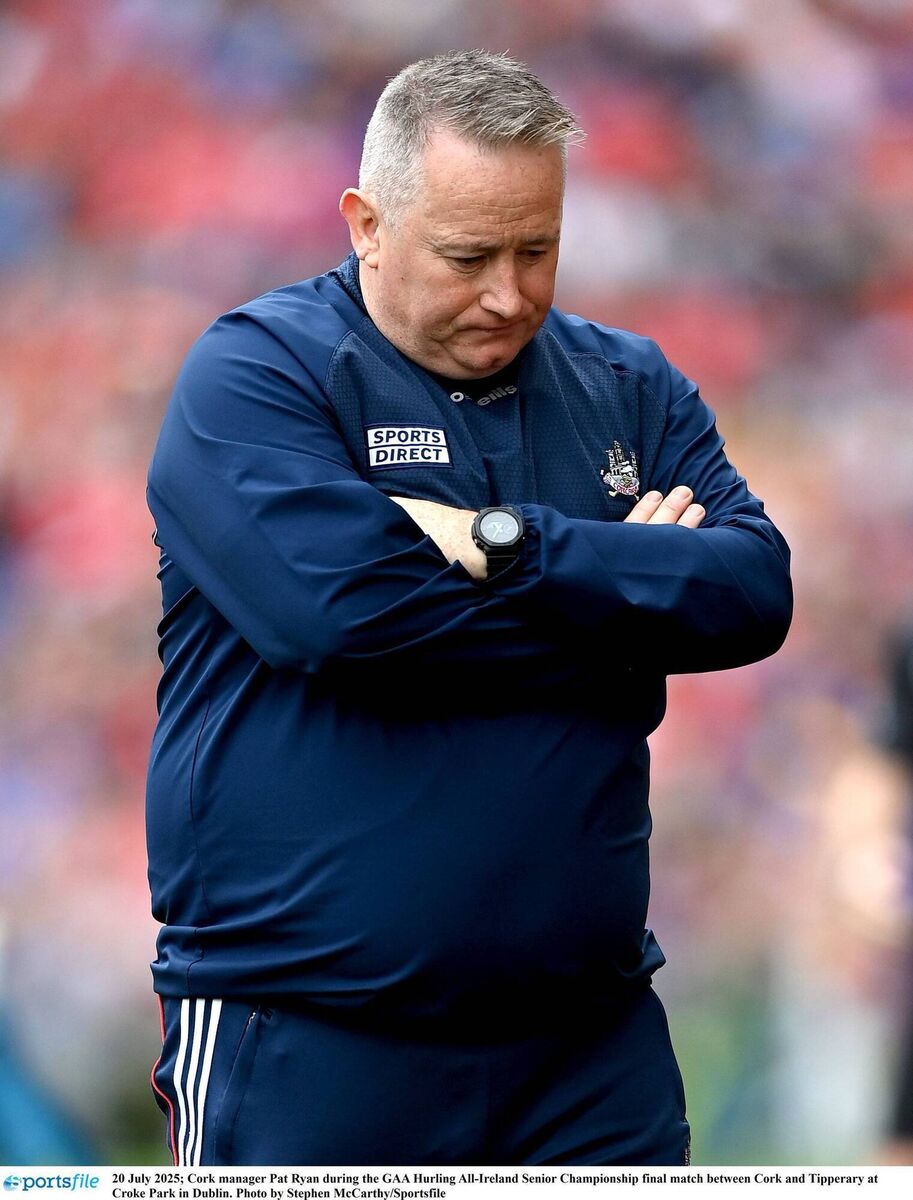
Following Cork’s second-half collapse against Tipperary, a story was ‘forwarded many times’ on WhatsApp before making its way to social media. Tempers flared in the Cork dressing room at half-time and certain teammates became embroiled in a bust-up – or so the story goes. The gossip became a national talking point in the days and weeks after the final. It was used as ammunition to target a group of players who had just suffered one of the roughest GAA defeats of all time.
Outgoing Cork manager Pat Ryan later told the that the story was “absolutely, totally false”.
“To be honest, sometimes fellas think when you're the manager that you hear everything that's going on. I didn't hear [about the supposed fight] until I went back into work on the Thursday or the Friday… Absolutely no truth in it. And look, the disgusting point from my part is that they were totally made-up stories, and then individual names were attached to it.” Speaking to Colm Parkinson on the Smaller Fish podcast, Cork hurler Patrick Horgan described the story as “rubbish”.
More serious again were the false allegations made against then Irish presidential candidate and former Dublin football manager Jim Gavin. The claims, which were personal in nature and cannot be repeated due to defamation laws, were published on Twitter/X by an individual described by Taoiseach Micheál Martin as seemingly “part of the far right political movement” and subsequently shared by other accounts across all the major social media platforms, where they were seen millions of times.
The activist had separately voiced support for another presidential hopeful, Maria Steen.
Gavin responded by saying the allegations were “utterly false” and warned of the “threat posed by online hate and disinformation”.
“It is one of the forces driving the growing division and conflict in many societies,” he said in a statement. “I refuse to accept that the price of participating in public life should involve having to put your family and friends through waves of online abuse and malicious smears. This is not the cost of service – it is a failure of our digital culture.
“I will continue to take whatever action is necessary to confront this appalling feature of social media. We all need to call it out for what it is: Totally unacceptable. Social media companies must do far more to protect people from such nasty and destructive behaviour online.”
After receiving letters of complaint from Gavin, Meta removed certain posts from their sites, but the original claims are still visible on Twitter/X. One of the activist's tweets containing false allegations against Gavin has been viewed over 750,000 times with over 200 replies. While some of the comments either reject the allegations or express doubts about the poster, the majority of users in the replies accept or at least go along with what is said, despite the lack of evidence or corroboration provided. Gavin later withdrew from the race over a completely different matter.
Meanwhile, another Áras hopeful with sporting links, the former MMA fighter Conor McGregor, was himself found to have spread misinformation to his 10.7m Twitter/X followers during his failed presidential campaign.
According to a report by the European Digital Media Observatory (EDMO), 58% of McGregor’s posts between January and September of this year contained “false claims about the Irish presidency, constitution, or history”. Some posts also featured “ethnonationalist rhetoric” and “implied political violence”.
The report is critical of Twitter/X’s safeguards. It notes that 23 of McGregor’s posts attracted suggested fact-checks via the crowd-sourced content moderation function known as Community Notes, but none were activated.
“Since he acquired Twitter/X in 2022, [Elon] Musk has actively dismantled standards of content moderation,” the report reads. “While there is some merit to [Community Notes] when combined with professional moderation, its implementation on Twitter/X is often inconsistent and lacks transparency.” (The aforementioned fabrications about McIlroy’s donation and O’Callaghan’s quotes have now been flagged as fake by Community Notes.)
On a related note, a study published by Sky News last week shows that Twitter/X effectively favours right-wing content, pushing more of these posts into people’s ‘For You’ feeds even if they only follow left-wing accounts.
***
With so many people acting in bad faith online, the need for vigilance should be obvious. But how can we tell what’s real from what’s fake?
Martina Chapman is the National Coordinator for Media Literacy Ireland (MLI), “an informal alliance of people and organisations working together to promote media literacy”. It is funded and facilitated by Ireland’s media regulator Coimisíun na Meán.
“False information has always been around,” Chapman tells the Irish Examiner. “What’s different now is the speed and reach at which it can circulate, and how targeted it can be through the use of personalised data and algorithms designed to keep us engaged.” MLI encourage us to ‘Stop, Think and Check’ that the information we read, hear and share is accurate and reliable.
“Read more than the headline – headlines are designed to catch your eye but they won’t give you the full story,” Chapman suggests, citing MLI’s Be Media Smart campaign.
“Don’t assume that a picture or image is giving you an accurate picture. Tools like Google Reverse Image Search can help to fact-check images. Just because information goes viral or is trending, that doesn’t mean it’s accurate. Information can spread really quickly and easily on the internet.
“And find out who the author or publisher is. Knowing who created the information might help you judge their motivation for creating it.”
When we apply these tactics to the AI-generated Rory McIlroy video, for example, it doesn’t take long to figure out it’s fake. If we take a screenshot of McIlroy speaking at the start, the first thing we might notice is that he’s sitting in front of US Open signage. The US Open takes place in July – not in the weeks following the Ryder Cup, when the clip went viral.
If we run the screenshot through Google Reverse Image Search, one of the first results is a tweet by Golf.com senior social media manager Claire Rogers pointing out that the viral video is AI. If we scroll down, we will also find a YouTube link to the real video before it was manipulated. It was actually a press conference following the 2020 US Open in which McIlroy discusses the playing style of rival Bryson DeChambeau.
Now let’s look at the publisher of the viral video: an anonymous Instagram account that uses the platform to promote gambling. Not exactly a trusted or reputable source by most people’s standards. Crucially, a quick Google search of the key words will show us that not a single news outlet has reported that McIlroy has vowed to never play in the United States again. This would be a major story if accurate so its total absence from the news feed must be considered a significant clue.
The next time you see a viral post on social media, take a moment to ‘Stop, Think and Check’. It has always been the case but it seems truer now than ever before: not everything is as it seems.
CONNECT WITH US TODAY



Be the first to know the latest news and updates