Jessie Barr the sports psych who has been there and done it
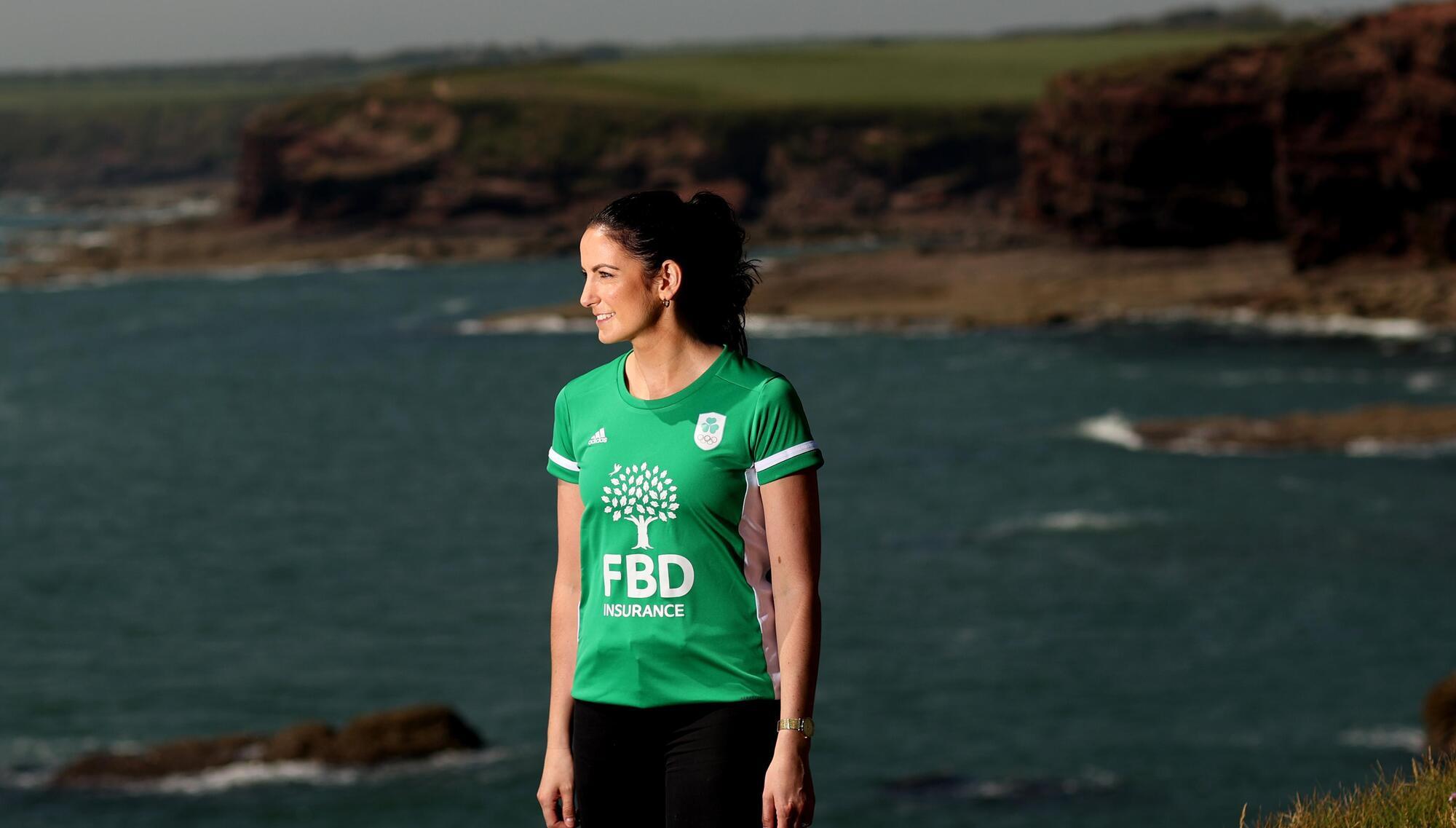
RAISING THE BARR: Pictured is Team Ireland Sports Psychologist Jessie Barr, launching the FBD “Sound Support” campaign. Pic: ©INPHO/James Crombie
Mum knows best. She might not have all the facts or know the mechanics of what you do, but, for most of us, no-one knows us like our mothers and so many of them have an uncanny ability to cut through the vines of life and see the clearing beyond.
Jessie Barr first hurdled for Ireland as an 18-year old at the European Junior Championships in 2007. There were World University Games and World Championships. In 2012 she ran a PB in making the final of the senior European Championships in Helsinki.
Later that year Barr was a member of the Irish 4x400m relay team at the London Olympics. She is still the national U23 record holder for the 400m hurdles, eleven years after setting the mark in Gothenburg. All of which is a long-winded way of saying Barr was pretty good.
It was an athletics career ran parallel to studies in psychology, which you might think was a highly complementary arrangement, and yet the Waterford athlete never once sought advice from an actual sports psychologist at any point on the track.
“I will hold my hands up now and admit that my mum used to be nagging and nagging me. ‘I said it and said it you’. I studied psychology for my undergraduate and then a Masters in sports psychology so I thought I knew it. Stubborn, know-it-all, teenager and early 20s.
“I knew better. ‘I know what they are going to tell me, I don’t need this’. There wasn’t the same accessibility either so it wasn’t as easy to see a sports psychologist even as a carded athlete. There wasn’t a psychologist in situ.”
That distance between athlete and support services like psychology has been minimised in the years since. Barr has been working full-time in that space with Sport Institute Ireland since 2019 and has a wide stable of athletes under her case who will perform in Paris.
The work banked stretches back years. Countless conversations, emails, texts and seminars have been had, but these last few days before the biggest event of their young lives can be the longest, an enervating pause before the gun is fired.
There is no canned recipe to deal with any of this.
Barr is a considered talker about her specialist subject but here answers to questions start time and again with the reminder that people are individuals with unique problems and perspectives and that holds for any last-minute jitters.
“Sometimes people come in and say, ‘I get nervous and I want to change that’, but actually is that a bad thing?" says Barr whose younger brother Thomas will be running at this third Games.
"Are you getting the better of the extra adrenalin and the focus that can come with that, or are you completely overwhelmed by negative thoughts and focusing on all the wrong things?” A key message across the board is the need to focus on the process rather than the product. That’s all the more applicable for an Olympics when the focus can veer away from the self to what everyone else is doing.
That’s equally the case in booking the ticket in the first place. Once a qualification window opens for the Games then it’s only natural for athletes to zone in on the value on the extra value in every point or win or place.
If that’s the case then you need a strategy to focus on the process and taking their attention away from the outcome.
We’ve heard it before but controlling the controllables is more than just a cliché. Barr stresses the need for goal-setting. Breathing, emotional regulation, mindfulness, self-talk, visualisation and imagery are all basic ingredients in the pie.
If there is an end-goal in what is really a process that never ends then it is the hope that an athlete will step out onto a track, into a ring or dive into a pool – even an Olympic one – feeling like this is something they have done before. Something familiar.
Sport leaves no grey area when it comes to measuring performance. Your time is your time, same with your ranking. The same can’t be said for psychology. There are no graphs or bars or blood tests that can grade the effect of the work done.
Barr was listening to a podcast with one of her clients one time when she was asked what it was exactly that she did with Barr. “I kinda just have a chat,” she replied. Barr was left wondering whether the athlete didn’t get what they were doing or if it just felt natural.
There’s little doubt but that the work is bedding in.
Danielle Hill, one of Ireland’s swimmers at the La Defense Arena at these Games, told Eoghan Cormican of this parish recently that working with an ex-Olympian was an invaluable resource for someone dealing with the realities of elite international sport.
Hill spoke about the myriad thoughts that can swirl around someone’s mind and how she would wonder if she was just making some of it up. Sharing this with Barr brought confirmation that she was not the only athlete harbouring these issues.
Barr’s work won’t be done once the Games pack up its tents. In some ways, the conversations she has with athletes post-Paris will be the most important of all given what we know now about how Olympians can struggle when their race is run.
For now it is about reassuring the track and field athletes, and badminton players and gymnasts that she works with, reiterating the fact that the work has all been done and that this is time to take a deep breath and be patient.
The urge for some will be to keep the motor running and the gear stick in fifth even as D-Day approaches. Feelings of guilt and doubt can kick in as the tapering begins. The message to these athletes is simple: recovery is crucial, “You are trying to teach them that doing nothing towards your goal is actually doing something towards your goal. That if you were to do up a job description then rest and recovery would be right up there in the list of demands.
“It’s seeing that as part of it. But you have Instagram and whatever showing what everyone else is doing. There is that old-school mentality that still exists, that you need to be doing something so your competition isn’t to get ahead.”


CONNECT WITH US TODAY



Be the first to know the latest news and updates